Monday
The Chelsea flower show opened with photos of Prince William and Kate’s three children generally being angelic and useful in the garden their parents had helped create. I’m not quite sure how they became that well-trained. I was always desperate for my kids to take an interest in the garden, but not even bribes helped. Their attitude was always: “It’s your garden, you fix it.” I think one of them might have once spent 10 minutes during the past 25 years helping me to unwrap the winter fleeces from the bananas and the agave, but that’s about it. Chelsea always brings out mixed feelings in me. I’ve been several times and, apart from it always being so rammed you have to queue for everything, it’s always felt as if there were two shows taking place in parallel. One for posh people from the shires for whom it was an essential part of the summer season and one for people who just liked gardening. I’ve also often been rather underwhelmed by the so-called star attractions of the show gardens and have spent most of the day in the vast tent where growers from all over the world display their plants. As someone who has stuffed the front garden with palms, grasses and semi-tropical plants – my wife gets to choose what goes in the back – I have never failed to find some amazing specimens I’ve seldom seen elsewhere. Naturally, I can’t resist them. Some have died within a year, but others have done well. No thanks to my children.
Tuesday
The current paralysis in government has clearly taken its toll on both the prime minister and the country’s mental health. It’s also producing a great deal of anxiety in the 17 and counting Tory MPs who are lining up to take Theresa May’s job. Though, to misquote Joseph Heller, the mere fact that all of them believe they can make a success out of Brexit ought to be enough to disqualify them. But there are two people in government who are positively blooming the worse things get. The first is the chief whip, Julian Smith. He used to pace around the Commons, his face lined with tension, as he tried to strongarm Tory MPs through the government lobby. Now he looks totally relaxed. He’s given up pretending he can win a vote and just mooches around with a smile on his face. Also demob happy is Philip Hammond. He isn’t after May’s job, knows he will be sacked as chancellor whoever becomes prime minister and is entirely reconciled to his fate. Rather than trying to manage the economy, he now devotes all his time to doing his best to wreck the chances of the leadership contenders he dislikes most. Particularly those who are keen on a no-deal Brexit. Hammond has some unlikely allies. At Treasury questions, the shadow chancellor, John McDonnell, normally likes to make things difficult for him. This week, though, he merely invited Fiscal Phil to read out extracts from his upcoming speech to the CBI in which he explained why Dominic Raab and Boris Johnson were unfit to run the economy. Hammond was happy to oblige. Strange times.

Wednesday
A billboard advert emblazoned with a Tudor rose and the words So Now Get Up appeared in London’s Leicester Square, and my Twitter timeline went mad with speculation that the final part of Hilary Mantel’s Thomas Cromwell trilogy might be imminent. I quickly emailed Nicholas Pearson, my editor at Fourth Estate, who also happens to be Mantel’s editor, to ask whether the rumours were true. His lack of reply that afternoon rather confirmed my suspicions. Sure enough, he eventually got back to me the next day once the press release that The Mirror and the Light would be published in March next year had been sent out. I can’t remember having ever waited for a novel with such anticipation. I did initially struggle with Wolf Hall – as a personal aside, my first girlfriend lived at Wolf Hall, just outside Burbage in Wiltshire, close to where the original manor had been situated – mainly because I hadn’t realised it was the first part of a trilogy and couldn’t work out how I was three-quarters of the way through the book and Henry hadn’t even met Jane Seymour. If anything, Bring Up the Bodies was even better realised, the voices, tone and pacing pitch perfect. Both books deservedly won the Booker prize. The question for next year’s judges is whether they will have the nerve to complete the hat-trick.
Thursday
With the football season having all but ended – there’s still the small matter of Spurs’ appearance in the Champions League final in a week’s time and the playoffs at Wembley this weekend – my sporting attention is beginning to turn to the Cricket World Cup, which starts next week in England. It promises to be a slick, thoroughly entertaining tournament with the added attraction of a likable England team playing outrageously good cricket, but for me it will still be hard to beat the 1992 World Cup that took place in Australia and New Zealand. Cricket was far less professionally organised then than it is now and, having been given a small advance to write a book about Wasim Akram and Waqar Younis, I was more or less able to attach myself to the Pakistan team for the entire six-week duration. Initially many of the players kept their distance from the lone English journalist who kept appearing at net practice and in hotel foyers, but by the time we reached Perth I was virtually a team mascot. I was even invited to have a bowl at the end of each net session and once managed to induce an edge from opener Zahid Fazal. To date my only Test wicket. After a poor start in which Pakistan looked dead and buried half-way through the tournament they fought back to beat England in the final at Melbourne, and once the game was over I was allowed into the dressing room to celebrate with the team. I had become an honorary Pakistani and couldn’t have been more thrilled to have failed the Tebbit test.
Friday
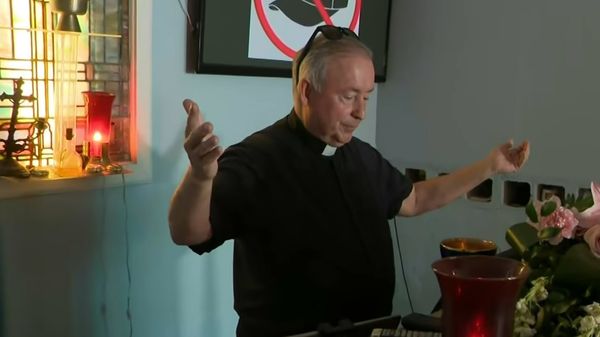
Westminster lobby reporters have spent much of the past few months wondering what on earth it would take to get Theresa May to actually resign. Today we found out. But what took her so long? It must have been as obvious to her as it was to everyone else that she had lost the support of her cabinet, backbenchers and most of the country, and every day must have been an ordeal of personal humiliation. Some commentators put May’s limpet-like qualities down to her father having been a vicar, but as a vicar’s son myself I can assure you that resilience is not a heritable trait. For me, being brought up in a vicarage was an alienating experience. I felt that all my interactions with people who lived in the parish, particularly those my age, were seen through the prism of my father’s job. I felt alone, unseen, weighed down by expectations I knew I could not meet and struggled to make any friends. Trust me, if I had to endure even a fraction of the daily levels of May’s failure, I would have quit my job long ago. Rather, I suspect what has kept the prime minister going has been stubbornness and denial. A belief that she could have achieved a legacy of sorts by getting at least part of her Brexit bill through the Commons if she hung around long enough.
Digested week digested: This is the End (Part 4)