Die Stadt ohne Juden – “The City without Jews” – was the title of a novel published in Vienna in 1922, whose author Hugo Bettauer wanted to highlight growing anti-Semitism. Its plot sounds familiar: a fictional politician in his fictional city of Utopia orders the expulsion of all Jews, with the government borrowing special trains to help carry out the order. The citizens’ initial delight turns sour as theatres go bankrupt and businesses close down. With the economy tanking, the populace demands the return of the Jews; the Nazi party collapses, the expulsion law is repealed, the Jews are welcomed back home.
All very prophetic, until the happy ending: in 1924 the director HK Breslauer turned the book into a film whose popularity inflamed the anti-Semitic masses to such a degree that Bettauer was assassinated (with impunity) by a young Nazi. Breslauer was a lifelong opportunist who later joined the Nazi party, but at the time of making the film his vision of the gathering political storm was clear-eyed. While the wealthy Jews of his story escape abroad, his Jewish poor are herded into trucks or sent on death-marches, exactly as the real-life victims would be two decades later.
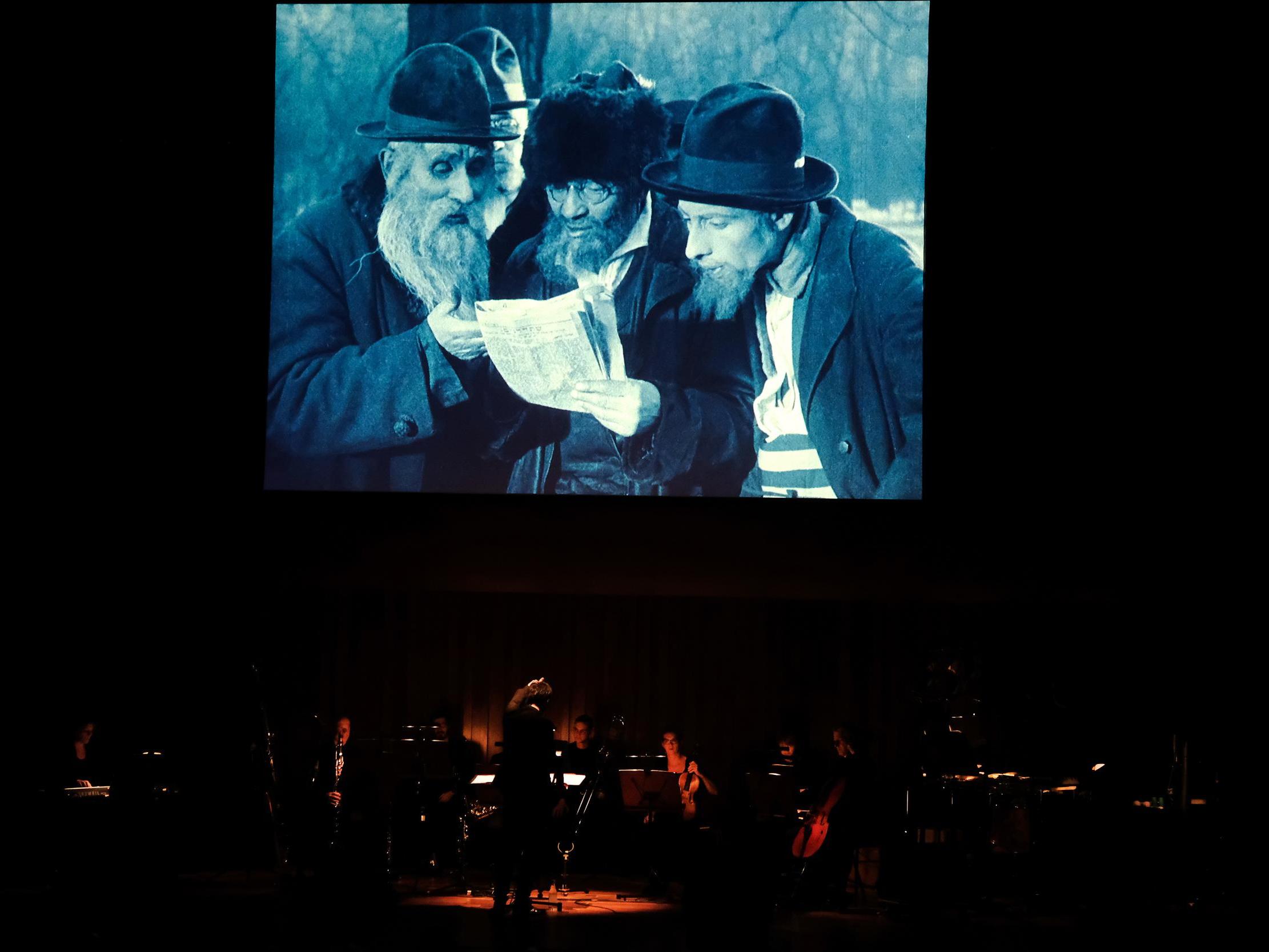
Utopia = Vienna = Budapest/Warsaw/Washington? Since this fable about racism is becoming more relevant with every day that passes, the Barbican’s decision to commission a live score to accompany a restored print of the now-forgotten film seemed a good idea, but the result was disappointing. With crudely stereotyped characters and a jerky dramatic pulse the film is no masterpiece; its main interest lies in its portrayal of Jewish life before the deluge.
Meanwhile, Olga Neuwirth’s score – valiantly performed by a small ensemble under the direction of Nacho de Paz – was an ambitious (and in itself quite interesting) piece of modernist concert music, but it had absolutely nothing to do with the film. There was no hint at any point of a marriage of sound and image: far from serving the film, the score seemed to be trying to attract attention to itself in every bar. Come back Carl Davis: but I doubt if that master of cinematic sound would have felt this mediocre film was worth the bother.