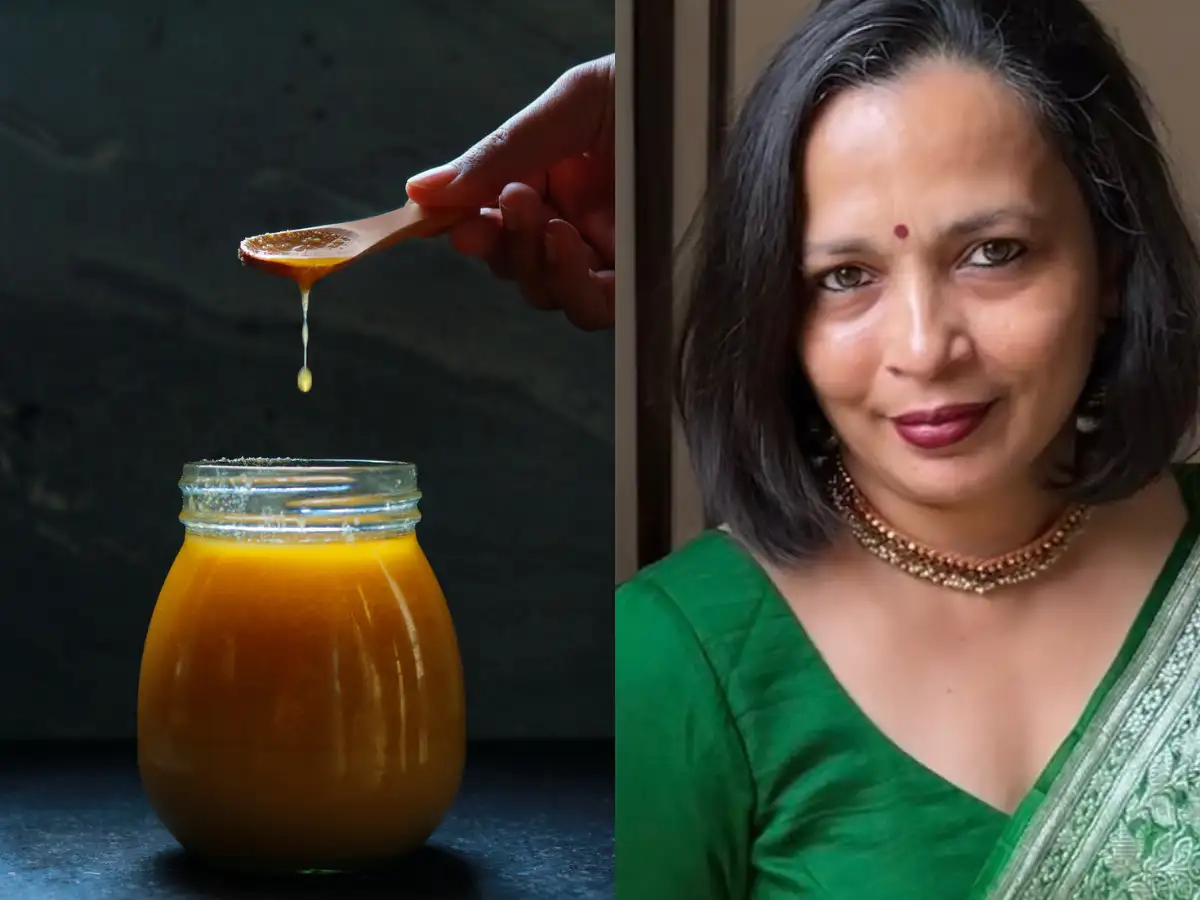
Celebrity nutritionist Rujuta Diwekar has once again sparked conversation around traditional Indian eating habits after explaining why diabetics should not completely avoid desi ghee. In a time when low-fat diets and calorie counting dominate health discussions, Diwekar continues to advocate simple, balanced Indian meals that include everyday staples like ghee, dal, rice and rotis.
In one of her Instagram videos, the nutrition expert explained that adding desi ghee to wheat rotis may actually help people with diabetes by lowering the glycaemic impact of the meal. According to her, traditional eating practices often have nutritional logic behind them, especially when foods are consumed in moderation and alongside balanced meals.
What is desi ghee and why is it so widely used in Indian diets?
Desi ghee, also known as clarified butter, has been part of Indian kitchens for centuries. It is commonly used for cooking, topping rotis, preparing parathas or simply mixed into dal and rice for flavour. Many households also use a small amount of ghee on toast or traditional sweets.
Despite its rich texture and calorie content, desi ghee contains fat-soluble vitamins like vitamin A and healthy fats. In Ayurveda, ghee has long been considered beneficial for digestion, immunity and overall wellness when consumed in sensible quantities.
According to Rujuta Diwekar, the problem is not necessarily ghee itself but excessive ultra-processed eating habits and poor dietary balance. Her approach focuses more on mindful eating rather than completely eliminating traditional foods.
Why does Rujuta Diwekar recommend ghee for diabetics?
In her video, Rujuta Diwekar explained that applying a small amount of desi ghee on wheat rotis may help reduce the glycaemic index of the meal. The glycaemic index refers to how quickly foods raise blood sugar levels after being consumed.
Foods with a lower glycaemic impact release sugar more gradually into the bloodstream, which can help avoid sudden spikes in blood glucose levels. This is particularly important for people living with diabetes, where stable blood sugar management plays a major role in long-term health.
Diwekar said ghee slows digestion slightly when paired with carbohydrates like wheat rotis, potentially helping the body process glucose more steadily. However, experts generally advise moderation, especially for people managing diabetes, cholesterol issues or calorie intake.
Can eating desi ghee every day be healthy?
According to nutrition experts, moderate amounts of desi ghee can form part of a balanced diet for many people. Ghee contains fats that help absorb certain vitamins and may support satiety, meaning people feel fuller for longer after meals.
Rujuta Diwekar also highlighted that ghee is traditionally valued in Ayurveda for supporting digestion and reducing inflammation. She added that it may help with gut health and can also enhance the flavour of simple home-cooked meals.
However, health professionals continue to stress portion control. Excessive intake of saturated fats may not be suitable for everyone, particularly those with existing cardiovascular concerns. Most dietitians recommend consuming ghee in moderation as part of an overall healthy eating pattern rather than treating it as a superfood.
How much desi ghee should you actually eat?
In the Instagram discussion, Rujuta Diwekar said the quantity of ghee should depend on the type of food being consumed. For example, a teaspoon may be enough for dal and rice, while millet-based meals may require slightly more for balance and digestion.
She also pointed out that ghee should complement food rather than overpower it. The idea, according to her, is to improve both nourishment and flavour without excessive consumption.
The nutritionist’s comments have once again reignited debate online around traditional Indian foods and modern diet culture. While many social media users praised her practical approach to eating, others reminded people that dietary needs vary from person to person.
Why traditional Indian eating habits are making a comeback
In recent years, nutrition conversations in India have increasingly shifted towards traditional foods, regional diets and minimally processed ingredients. Experts often point out that older Indian eating patterns relied heavily on balance, seasonal foods and moderate portions rather than extreme food restrictions.
That is partly why voices like Rujuta Diwekar continue to resonate with many people. Her approach encourages people to eat familiar home-cooked meals sensibly instead of fearing foods like rice, ghee or rotis altogether.
For diabetics especially, the larger message remains clear: balanced meals, portion awareness, regular physical activity and professional medical advice matter far more than cutting out single ingredients entirely.
Disclaimer: This article is for informational purposes only and not a substitute for professional medical advice. Always seek the advice of your doctor with any questions about a medical condition.