BENGALURU: The high court passed an order reserving liberty to the petitioners who had challenged the July 14, 2022 notification regarding delimitation of Bruhat Bengaluru Mahanagara Palike (BBMP) wards to approach the Supreme Court seeking certain clarifications.
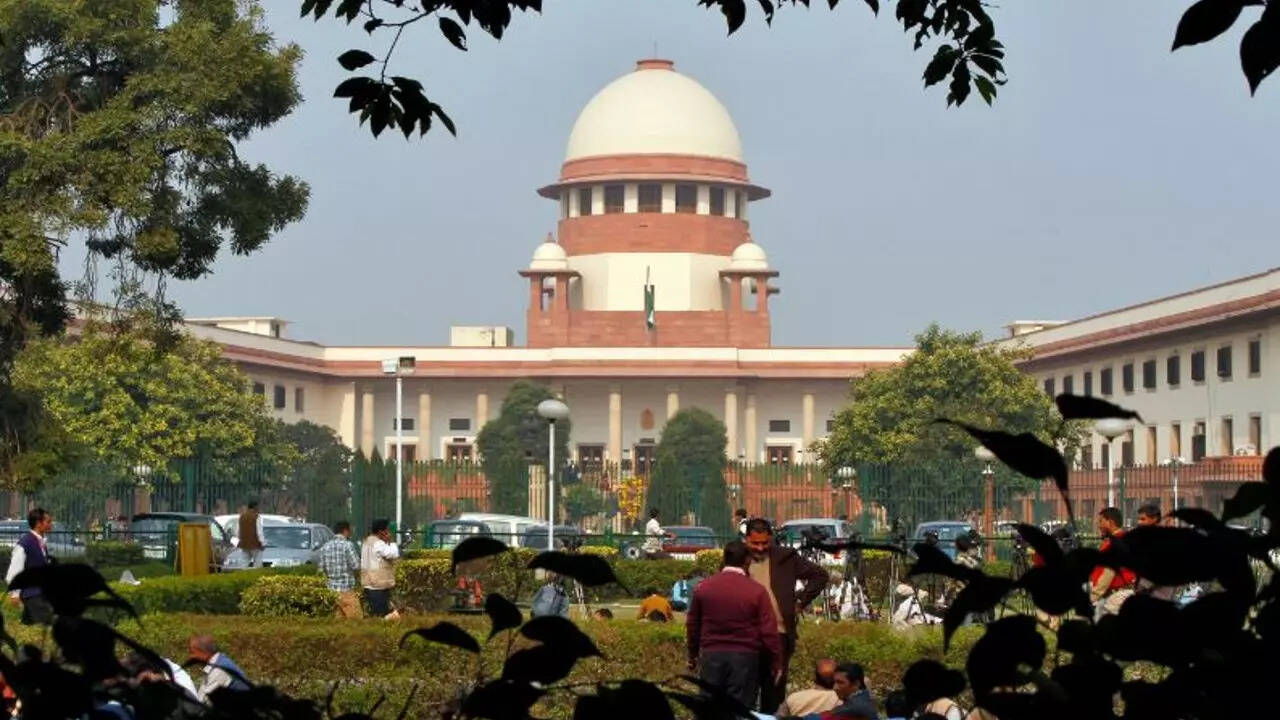
Justice Hemant Chandanagoudar noted that in the case of Suresh Mahajan, the SC had observed that if delimitation was not done by Madhya Pradesh, the State Election Commission should give effect to the order directing that elections which are already due cannot be delayed on that count, in view of the constitutional mandate (to hold polls), and it's extended to other states as well. "Section 13 of BBMP Act-2020 specifies that general elections should be held for the constitution of a new corporation before expiry of the existing one or on dissolution. The term of the councillors had expired on September 10, 2020 and elections haven't been conducted till date. Hence, it would be appropriate to reserve liberty to the petitioners to approach the apex court to seek clarification as to whether the interim prayer/relief sought for in these writ petitions can be considered by this court," the judgesaid while posting the matter to August 29.
The SC is scheduled to take up BBMP election matters on August 26. These are arising out of SLPs filed against the December 4, 2020 order of the high court wherein a direction was issued to hold elections to the then existing 198 wards, instead of 243, and sought to be increased by application of the new BBMP Act and resultant delimitation exercise. In the petitions filed before the HC challenging the July 14, 2022 delimitation notification, the petitioners contended that there is variation of over +10% or -10% in the population determined for each ward and the same is contrary to section 7(1)(a) of the Act, 2020 which specifies that the population should, as far as practicable, be the same throughout the city.
Another argument was that delimitation gives an unfair advantage to the ruling party by reducing the number of wards in assembly constituencies represented by MLAs of the opposition and increasing wards in constituencies represented by MLAs of the ruling party, a typical case of gerrymandering.