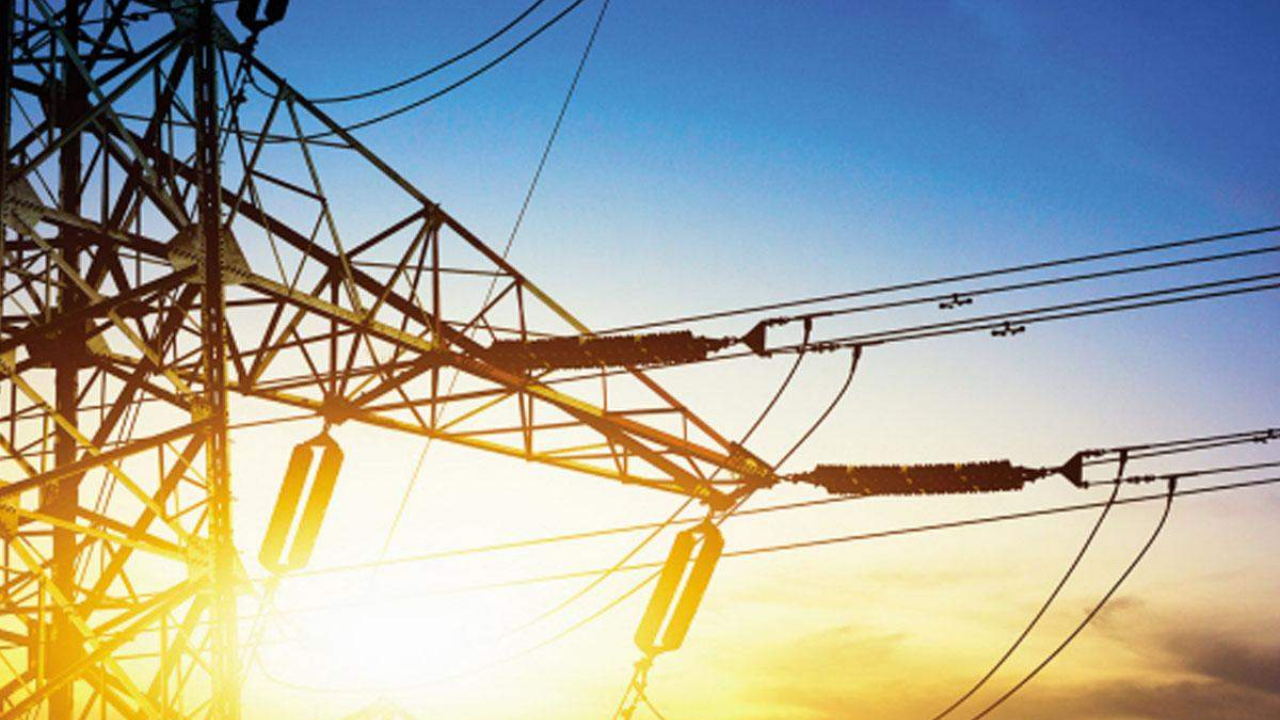
NEW DELHI: With the temperature inching towards 40 degrees Celsius in Delhi and almost all Covid-19 restrictions removed, this summer, the city’s peak power demand is expected to breach the 8,000 MW-mark for the first time.
After an all-time high peak power demand of 7,409 MW, recorded on July 2, 2019, 2020 saw the peak power demand dip to 6,314 MW due to decreased demand caused by the Covid-19 outbreak. Last year, however, the peak power demand climbed up to 7,323 MW, again on July 2. Sources said that with almost all Covid-19 restrictions removed, this summer might see Delhi’s peak power demand clock up to 8,200 MW.
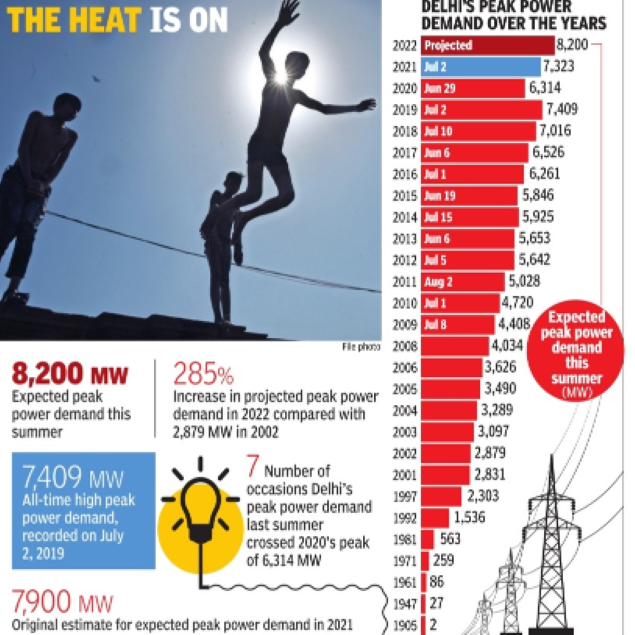
Delhi’s peak power demand had first breached the 7,000 MW-mark in 2018 and if it clocks the expected peak power demand of up to 8,200 MW this summer, it would be an increase of around 285% over the peak power demand of 2,879 MW in 2002.
Even if Delhi clocks the historical high, power discoms claim that they are prepared to meet the demand and ensure uninterrupted power supply. “BSES discoms are geared up to source adequate electricity to meet the power demand of over 1.8 crore residents in south, west, east and central Delhi. These arrangements include long term PPAs and banking arrangements with other states, including Tamil Nadu, Himachal Pradesh, Meghalaya, Sikkim, Goa and Arunachal Pradesh,” a BSES spokesperson said.
“We are expecting the peak power demand to reach up to 2,350 MW in our area this summer season due to the predicted heatwave. We are fully prepared to provide an uninterrupted power supply to several critical and essential service providers to power the collective fight against corona,” said Ganesh Srinivasan, CEO of Tata Power Delhi Distribution Limited (TPDDL), which supplies electricity to a population of 70 lakh in north Delhi.
BSES added that this summer, ‘green power’ would play an important role in ensuring reliable power supply with the BSES discoms set to receive around 600 MW of solar power from SECI, 300 MW of wind power, and 31 MW from waste-to-energy. It also receives more than 126 MW from roof-top solar.
Both BSES and TPDDL said that in case of any contingency, short-term power would be bought from the power exchange, which is available at competitive rates during summer months, depending on the timeslot. Adding to these efforts are the advanced load-forecasting statistical and modelling techniques, which use Artificial Intelligence and Machine Learning to help the discoms accurately forecast the power demand, they added.
“During the year, BSES discoms have invested substantial resources to strengthen the network. A large part of the augmentation, which is necessary to carry the additional power load during summer months, has already been undertaken,” the BSES spokesperson said.
TPDDL said that its battery energy storage systems at Rohini and Rani Bagh would also support in providing power to key consumers during any emergency.