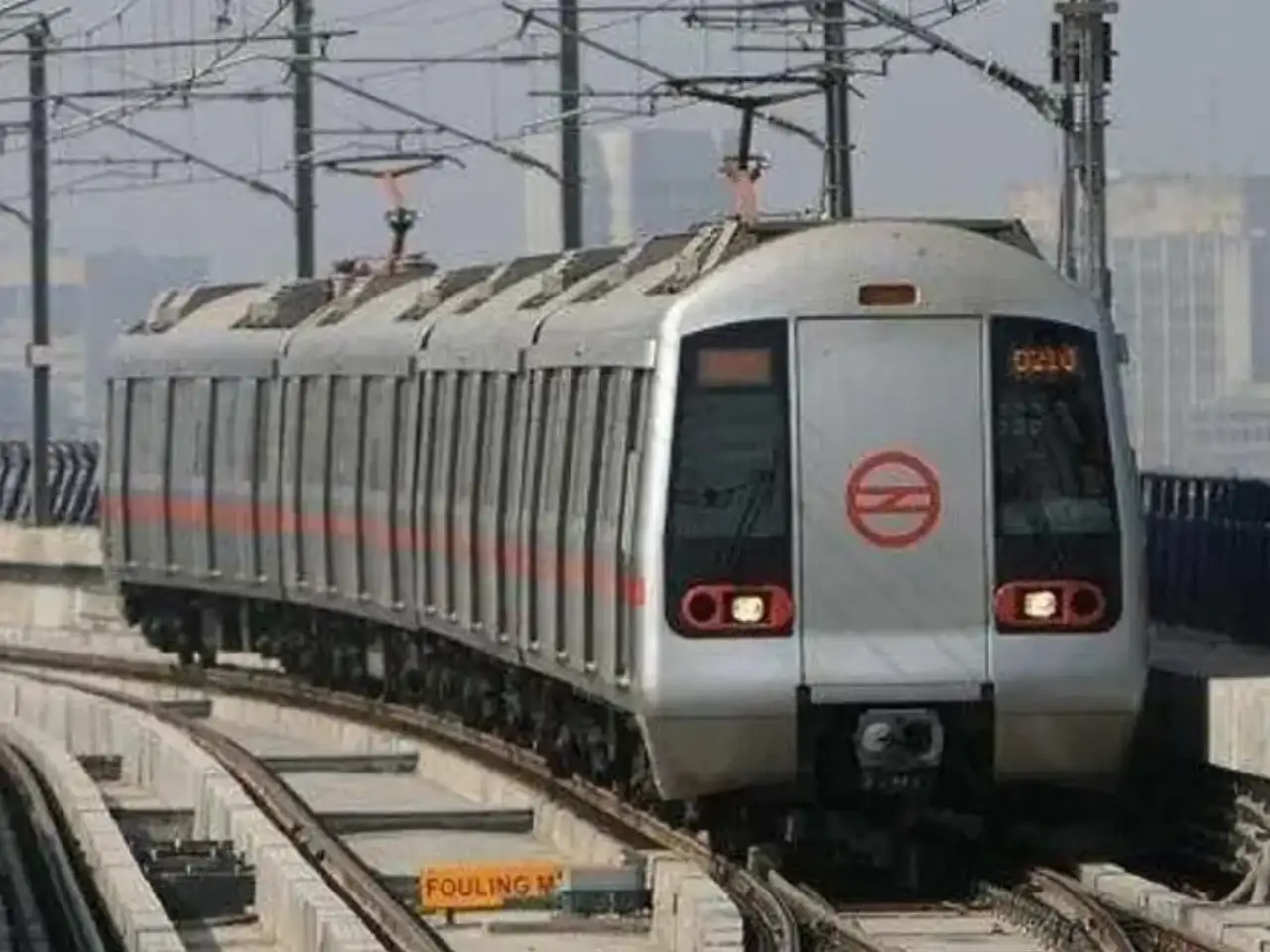
New Delhi: The Delhi Metro Rail Corporation (DMRC) will launch a hydrogen-powered shuttle bus service in the Central Vista area from Friday to promote public transport use among government employees in view of the Centre's energy-saving measures.
The shuttle service will provide last-mile connectivity between Central Secretariat and Seva Teerth metro stations and key government offices in the Central Vista region, DMRC said in a statement.
According to DMRC, Indian Oil Corporation Limited (IOCL) has provided two hydrogen-fuelled buses each with a seating capacity of 35 passengers. The buses are equipped with GPS tracking and CCTV systems for monitoring and passenger safety.
Also Read: Delhi minister takes e-rickshaw heeding Modi's advice to shun fuel-driven cars
The service will operate on all working days from Monday to Friday, excluding gazetted holidays, during peak office hours between 8.30 am and 12.30 pm and from 3.30 pm to 6.30 pm, the statement said.
With a frequency of one bus every 30 minutes, one bus will run in the clockwise direction and the other anti-clockwise, covering key government offices and landmarks, including Kartavya Bhawan, Vigyan Bhawan, Nirman Bhawan, Akbar Road, Baroda House, National Stadium, National Gallery of Modern Art, India Gate, and Seva Teerth metro station, it stated.
Passengers will be able to pay fares through National Common Mobility Card (NCMC), UPI, and cash. The fare has been fixed at stage-wise rates of Rs 10 and Rs 15, DMRC said.
DMRC will oversee operations, ticketing, and passenger support, while IOCL will provide drivers and hydrogen fuel support.
The corporation described the initiative as a step towards promoting green mobility, clean energy adoption, and sustainable public transport infrastructure in the national capital.
Also Read: Delhi makes 2-day work from home mandatory for government employees
Prime Minister Narendra Modi, on May 11, urged citizens to curb the use of fuel driven vehicles amid the global energy crises triggered by tensions in West Asia.
The prime minister suggested reducing petrol and diesel consumption, using metro rail services in cities, car pooling, increased use of electric vehicles, utilising railway services for parcel movement, and working from home to conserve foreign exchange.