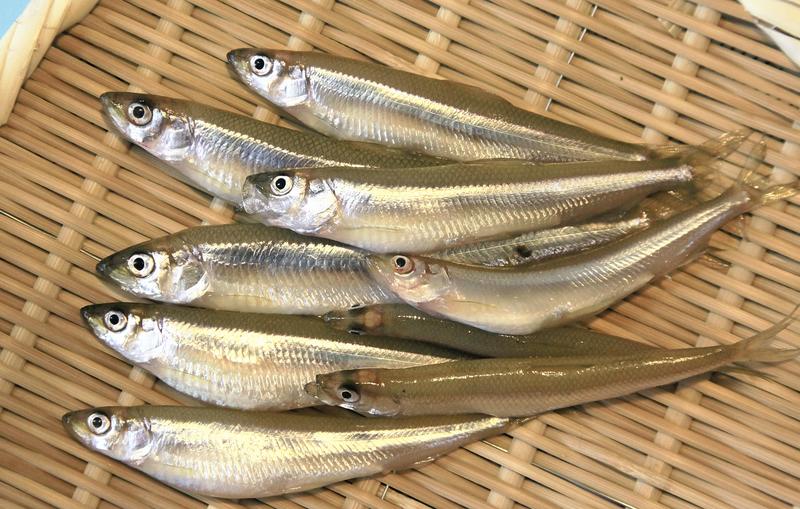
A pesticide that has been used in Japan since the 1990s might be behind the sharp decline of wakasagi smelts and eels in Shinjiko lake, Shimane Prefecture, according to the results of a recent study.
It is believed that neonicotinoid pesticides (see clip) killed the prey that such fish feed on.
A research group including the National Institute of Advanced Industrial Science and Technology and the University of Tokyo has announced the results of their study ahead of its publication in U.S. journal Science.
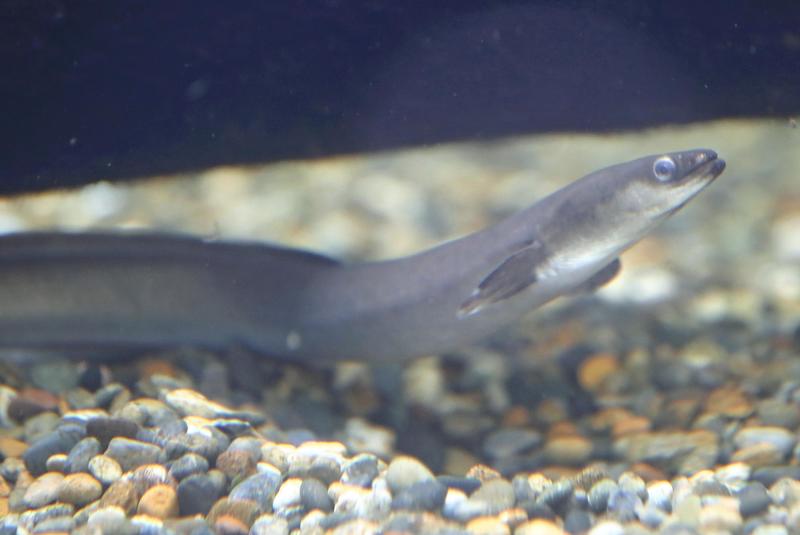
According to Masumi Yamamuro, a joint appointed fellow at the institute and a member of the research group, the annual average catches of wakasagi smelts and eels in the lake reached 240 tons and 42 tons, respectively, from 1981 to 1992. However, catches have declined sharply since 1993. From 1993 to 2004, the annual average catch of wakasagi smelts was 22 tons, or one-tenth that of 1981 to 1992. For eels, the figure was 10.8 tons, a quarter of that in the previous period.
The use of one of the first neonicotinoid pesticides registered in Japan began in 1993. The water-soluble pesticides are believed to be effective only on insects.
According to a survey of the larvae of buzzer midges that live at the bottom of the lake, in 1982, 121 larvae per square meter were found, but none were found in 2016. The number of a kind of zooplankton was less than one-fifth that of in the 12 years before and after 1993.
Eels and wakasagi smelts, whose catches have plummetted, feed on these organisms.
Meanwhile, a decrease was not found in the catches of shirauo Japanese icefish, whose juvenile mainly feeds on phytoplankton that is not affected by neonicotinoid pesticides.
Hiroshi Yamamoto, deputy director of the Center for Health and Environmental Risk Research at the National Institute for Environmental Studies and an expert on ecotoxicology, said, "Changes in climate and the local environment could have caused the decreased fish catches. However, neonicotinoid pesticides have become an issue because they are suspected of being one of the causes of a worldwide decline in honeybees. We need to look at their impact on ecosystems more broadly."
clip
Neonicotinoid pesticides
Insecticides chemically similar to nicotine in tobacco, they dissolve easily in water and are absorbed by crops through their roots. Neonicotinoid pesticides interfere with the normal functioning of the nerves of pests that have eaten crops treated with such pesticides. They are not thought to be a human health risk, but there are moves overseas to restrict the use of neonicotinoid pesticides due to concerns about their effect on ecosystems.
Read more from The Japan News at https://japannews.yomiuri.co.jp/