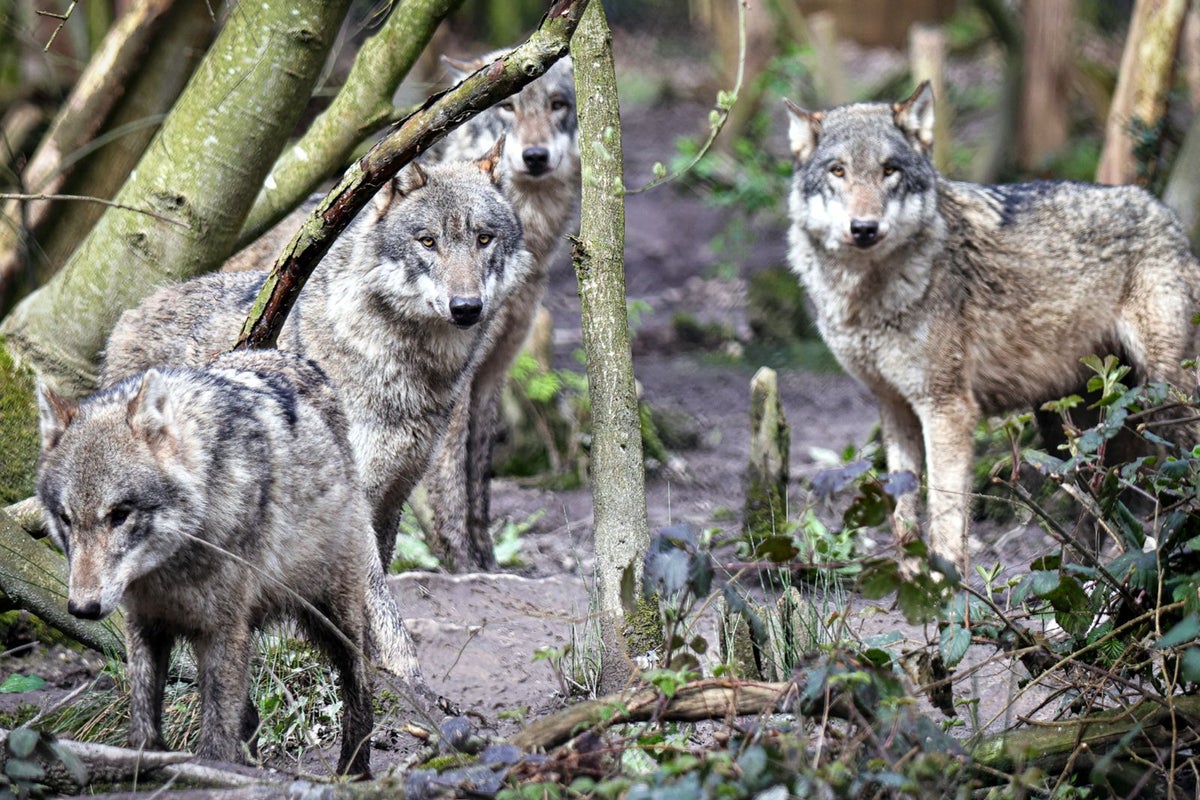
The director of Kent’s Wildwood Trust is questioning whether wolves should be kept in captivity after putting down the park’s entire pack to stop them from killing each other.
The five wolves – Odin, Nuna, Minimus, Tiberius, and Maximus – were euthanised following a sudden and unexpected surge in violence within the pack.
The park had kept wolves for several years to educate visitors, but director general Paul Whitfield said this practice would now be reviewed.
He said: “A few weeks ago, the level of aggression within the pack really exploded, completely unexpectedly. It went from a harmonious pack, to animals that were just fighting each other and causing each other quite serious harm. It was really distressing for everyone to see it, and for the animals.:
He added that “if nothing was done to intervene, (the wolves would) eventually kill each other, which was a really horrible and worrying situation”,
After three wolves sustained severe injuries, the park consulted external experts before concluding that euthanasia was “the only thing” it could do.
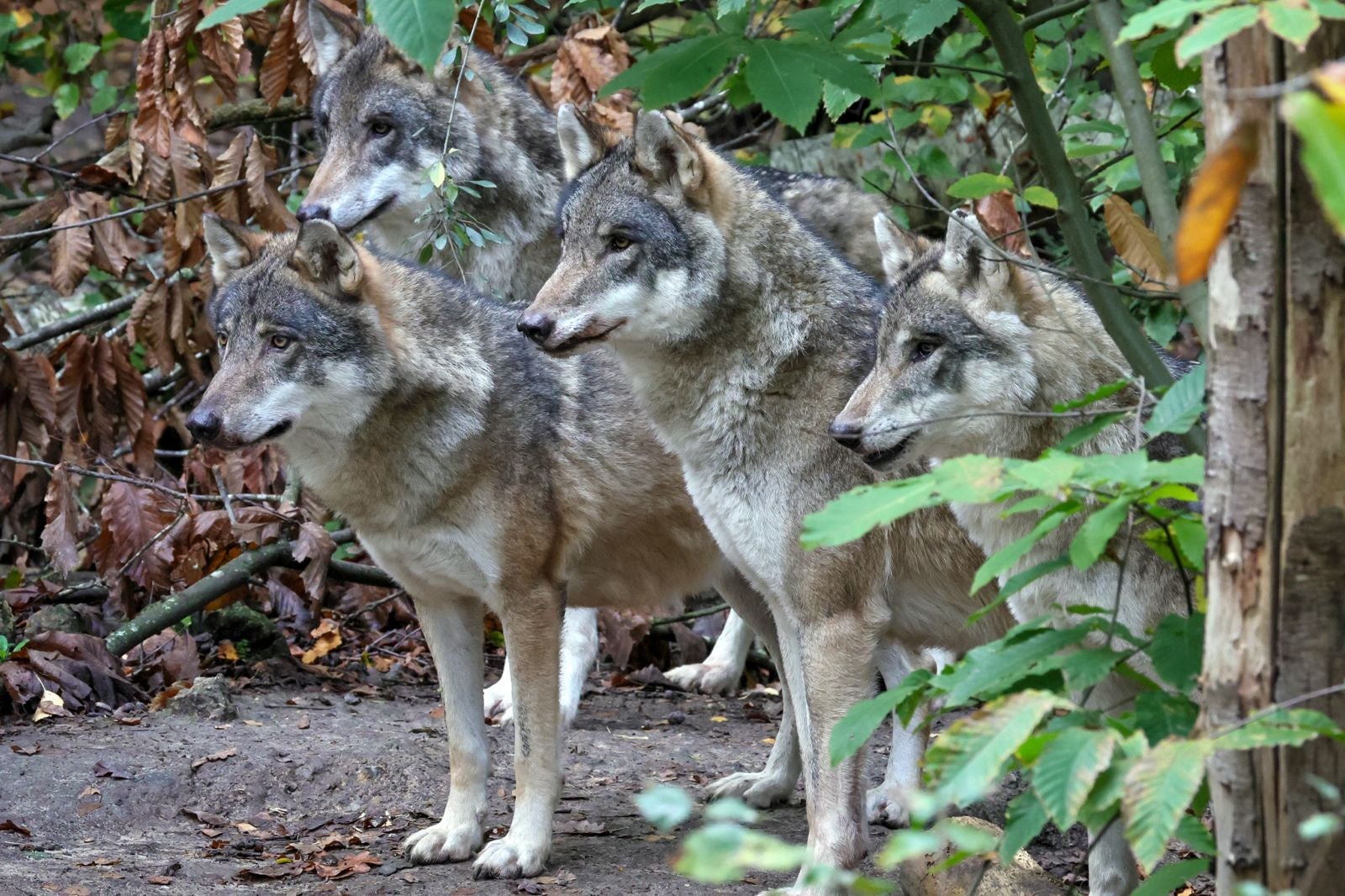
Mr Whitfield said: “Because the pack had broken down to the point it had, if we were to euthanise those (three) animals and then leave the other (two), those (two) would just continue to fight in the same way.
“It was just an awful situation to be in. At that point, the decision was taken that the only humane thing to do would be to euthanise all five of them at the same time.”
“It was heartbreaking, to be honest. It was absolutely the last thing that anyone wanted to do,” he added.
The incident has promoted some concern among animal welfare organisations that campaign against keeping animals in captivity.
In response, Mr Whitfield said: “The truth is, they’re not an easy animal to keep in captivity. They are a complex social group and if people are going to keep them, they really need to understand that and talk to experts about that.
“I wouldn’t say they should never be kept in captivity, but I think a lot of thought needs to go into whether they should be in any case.”
As to whether the benefits of keeping wolves in captivity outweigh the risks, Mr Whitfield said: “That’s exactly what we’re going to review. That’s been our position in the past.
“Until this event, we’ve been very good at managing wolves successfully and they’ve been a really important part of the way we’ve been able to educate people.
“But given that this has happened, I think that we need to review that… I think it’s only right that we review that after something like this has happened.”
He added: “We didn’t want at all to cover this up or hide what has happened.
“It’s an awful situation and we wanted to be very frank about what had happened… we’ve got nothing to hide, we can understand that people are upset, we’re all deeply upset here.
“There’s no upside for us in this.”
Richard Morley, director of the Wolves and Humans Foundation, said that while the incident raises such questions, captive wolves “contribute significantly” to education, and support conservation of the species in the wild.
He said: “If we hope to have wolves back in the UK one day, it is important that people can see them in the flesh and learn more about them, particularly at places like Wildwood, which has an excellent record in supporting conservation and reintroduction of native species.”
But Chris Lewis, captivity research and policy manager at Born Free, said it is “almost impossible” to maintain the “complex and hierarchical” social groups of species such as wolves in captivity, which have “nowhere to escape” from conflict.
Mr Lewis said: “It is yet more evidence as to why species with complex social structures should never be kept in captivity for the sake of public entertainment.”
Elisa Allen, vice-president of the Peta Foundation, said: “These wolves did not belong in captivity, where their ability to spread out and form agreeable social groups is restricted to the point of causing them harm and, in this case, costing their very lives.
“If the Wildwood Trust cares not to repeat this tragedy, these will be the last wolves bred into a life of confinement. Society has surely evolved enough to recognise that animals are emotional individuals with complex group behaviours, not things to gawk at on a Saturday.
“The only ethical focus is on protecting habitats so that wild animals can live where they belong.”
Vatican urged to follow Church of England’s example on ordaining women
What we know about the bacterial strain at centre of Kent meningitis outbreak
Rain, wind and hail to hit UK this weekend - but sunnier weather is on the way
UK consumer confidence plunges amid ‘twin threat’ fallout from Iran war
Readers share ‘soft prepping’ tips as Iran war escalates
Fashion director sued over £5.5m Notting Hill home ‘plagued by floods and mice’