With the generous and imaginative support of my business partners Adrian Simpson and Jess Stack, the Trico Foundation and The British Council, I recently completed a two-week tour of the US and Canada, taking in South By Southwest (SXSW) in Austin and then on to San Francisco, Vancouver and Calgary sharing insights and stories from my experiences as an employee, founder, leader, mentor and investor in a wide range of social enterprises.
I was also (of course) shamelessly plugging my new book, The Social Entrepreneur’s A to Z.
Meeting with a wide range of social entrepreneurs, start-ups, philanthropists, students, investors, observers, dabblers, passionate advocates and sceptics, I was bowled over by the enthusiasm and willingness to learn of the people I met.
Everywhere there was a hunger to hear honest, warts-and-all stories about the opportunities and challenges of social enterprising business models. (I also encountered some Tea Party cowboys in Texas who were baffled by my pride in the UK’s free-at-the-point-of-use healthcare system. But they did buy me beer and let me wear their hats – but that’s another story.)
From the many speaking events, the innumerable one-to-one conversations, and the group mentoring sessions I was lucky enough to be part of, there were two big clusters of issues which kept coming up: evidence, impact and accountability and the role of the government in the promotion of social entrepreneurship.
On evidence, impact and accountability
Where is the evidence that social enterprises are better? Who is to say that this or that social entrepreneur and their business model is what is right for the homeless people or excluded youth they say they want to help? How do social enterprise leaders assess the unintended consequences of their business activities?
These questions, emerging on the work of social entrepreneurs, have no easy answers to them. They are great questions that go to the heart of the impact of social entrepreneurship – by talking about the culture of the organisations themselves.
Truth is there are very few examples I could give my North American audiences of the scaled-up UK social enterprises which 1) really take assessment of impact seriously and 2) that hold up their evidence to independent scrutiny.
On the role of government
There is no doubt that in the UK the political and financial backing by successive governments since the mid 1990s has helped shift social enterprise towards the mainstream. The establishment of Big Society Capital has been key to the emergence of new private funds like Impact Ventures UK, and this simply would not have happened without the enthusiastic support from the occupants of Number 10.
I was a co-founder of the Social Enterprise Coalition which became Social Enterprise UK and we made a big mistake in getting way too close, way too soon to government. Generous Cabinet Office funding removed the urgency of having to build a vibrant grassroots membership willing to pay for support. We ended up with a set of intermediary agencies urging grassroots social entrepreneurs to sell into real markets when they themselves were wholly dependent on grant funding.
When the chop came after the 2010 election many of the regional networks collapsed – including Social Enterprise London which had hosted legions of overseas visitors who came to marvel at the UK social enterprise miracle.
There has been too much of a fixation by many of these intermediaries in the UK with public sector service provision and state procurement practices and nowhere near enough time and energy spent developing cross sector collaboration.
So I warn my American and Canadian friends to be careful and not allow yourselves get smothered by government. Warm handshakes but no hugging. Kiss but no tongue.
I strongly urge my US and Canadian hosts not to slavishly follow the UK lead, but rather to be critical friends and call us on our tendency to hyperbole and gloss over our mistakes.
The social enterprise scene in the UK – and particularly, the emergent social investment marketplace – is highly contested and a messy work in progress. It suits the leadership of our intermediary bodies and consultancies to talk it up and not dwell too long on the ambiguities and strongly held differences of opinion. Don’t let them!
At the events at which I spoke about the book, I gave away free copies to audience members who asked the best questions – ones that stop me in my tracks and really made me think. Here are some of the best:
Isn’t setting up a social enterprise – which will struggle to find money and a market like all start-ups – precisely the wrong way to scale a social innovation?
What’s the one social enterprise mistake you are really pleased to have made?
You talk a lot in your book about ego. Aren’t you trying to have it both ways: standing up there on a stage getting your ego massaged by us whilst telling us to watch out for ego?
I can’t decide Liam if are you really funny or it’s just your funny British accent. What do you think?
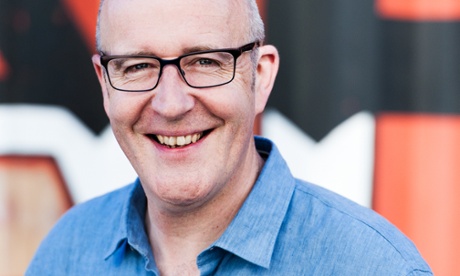
About Liam Black
Copies of Liam Black’s The Social Entrepreneur’s A to Z can be ordered here.
Black is co-founder of Wavelength, which runs leadership programmes for the corporate and non-profit worlds whose purpose is to “change the world for the better through business.”
Black is one of the UK’s best-known social entrepreneurs, having led some of the country’s most successful social enterprises, including Fifteen which, with Jamie Oliver, grew into a global brand with businesses in Europe and Australia.
He is author of There’s No Business Like Social Business and The Social Entrepreneur’s A to Z, President of the Friends of Grameen, an adviser to Impact Ventures UK and Centrica’s Ignite fund, and speaks and writes widely on leadership, enterprise and social change.
Contact him via thesamewavelength.com or on Twitter.
Content on this page is paid for and provided by the British Council, sponsor of the international social enterprise hub



.jpg?w=600)