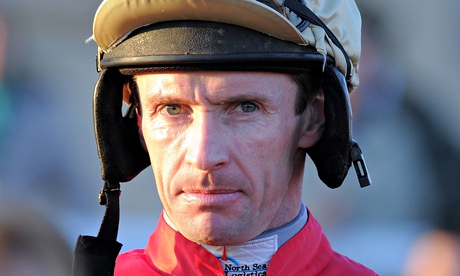
On a slow news day in the racing world the disciplinary panel’s verdict in the case of Richie McGrath might have made headlines in several newspapers, so disturbing were its conclusions. Conveniently for the British Horseracing Authority and its seemingly hapless investigations department, that 8,000-word verdict was released to the media on Thursday afternoon, about two hours before the running of York’s Dante Stakes, the key trial for the Derby, which predictably dominated the next day’s coverage.
It is easy to be cynical about such coincidences of timing. The BHA’s main spokesman has been asked before about the timing of the release of other verdicts and has always maintained that the BHA has no control over when the panel submits its verdict, which is then published immediately. Doubtless that is the case again here, though it is a pity, with reputations at stake, that publication came almost two months after the hearing was completed on 27 March, even allowing for the fact that “not guilty” verdicts had been issued in late April.
In view of the minimal coverage readers may not know what a foul-up the preparation of this case appears to have been. The main revelation on Thursday concerned the BHA’s allegation – eventually found to be untrue – that McGrath had been willing to stop six of his mounts to suit the betting of his co-accused, Mark Aspey. Thanks to the panel, it is now known that that allegation was made for the first time in November, well over two years after the BHA began its investigation.
The stopping allegation had not been put to McGrath in his interviews with BHA investigators. By the time it was made, in relation to races that had taken place up to five years before, it was plainly too late to ask the trainers of the horses involved to recall what instructions they had given McGrath on the day.
It was also too late, it turns out, to recover the full security recordings of most of the races concerned, which, as they would have shown them from several different angles, would have been very helpful to the panel in assessing McGrath’s rides.
It seems that, even though vast quantities of data can now be stored cheaply, BHA policy has been to keep race recordings for only two years. This is now being reconsidered, though any change will be subject to “cost implications”.
The BHA thought the broadcast footage would be enough to show McGrath had made insufficient effort but this appears a misjudgment, since the panel dismissed such arguments in relation to five of the six rides. The jockey was found to have given his other mount a schooling ride but the panel did not accept that he did so for any reason linked to Aspey’s gambling. Both men were cleared of corruption.
The panel also pointed to two other instances in which they felt McGrath manifestly did everything he could to win races where, the evidence showed, Aspey had bet that his horses would lose. It is a detail which calls into question the decision to pursue this case in the first place, an issue which was also raised when the BHA abandoned its case against five other accused people a fortnight before this hearing.
“It was an investigation which took too long and it failed to meet the required standards of an investigation by a governing body,” said one solicitor at that point, and those words now have even greater force. The BHA has insisted it is “committed to learning lessons”.
It must be hoped so as racing folk will lose all confidence in the regulator if every case is handled as badly as this one. It is now seven years since Dame Elizabeth Neville told the BHA through her independent review that it must speed up its investigations. It appears that no progress has been made.
The BHA has a fairly new chairman and a brand new chief executive. Here’s hoping they can find a way to improve the work of their investigations team.