Cynthia Erivo is ready to talk about anything other than Wicked.
The 39-year-old British star spent the last two years on a whirlwind press tour for her Oscar-nominated role as Elphaba in Jon M. Chu’s Wicked and Wicked: For Good, opposite Ariana Grande as Glinda, and is ready to — respectfully — move forward.
Sitting down for a recent episode of Variety’s YouTube series “Know Their Lines,” in which actors are tested to see if they remember their lines from past projects, Erivo was handed a card asking her to perform her iconic “Defying Gravity” riff.
“No,” she said curtly, handing the card back. When a voice off-camera laughed, asking, “No?” she replied: “No.”
After reading over a second card, Erivo responded: “Oh, we’re really trying to get one from Wicked, aren’t we?”
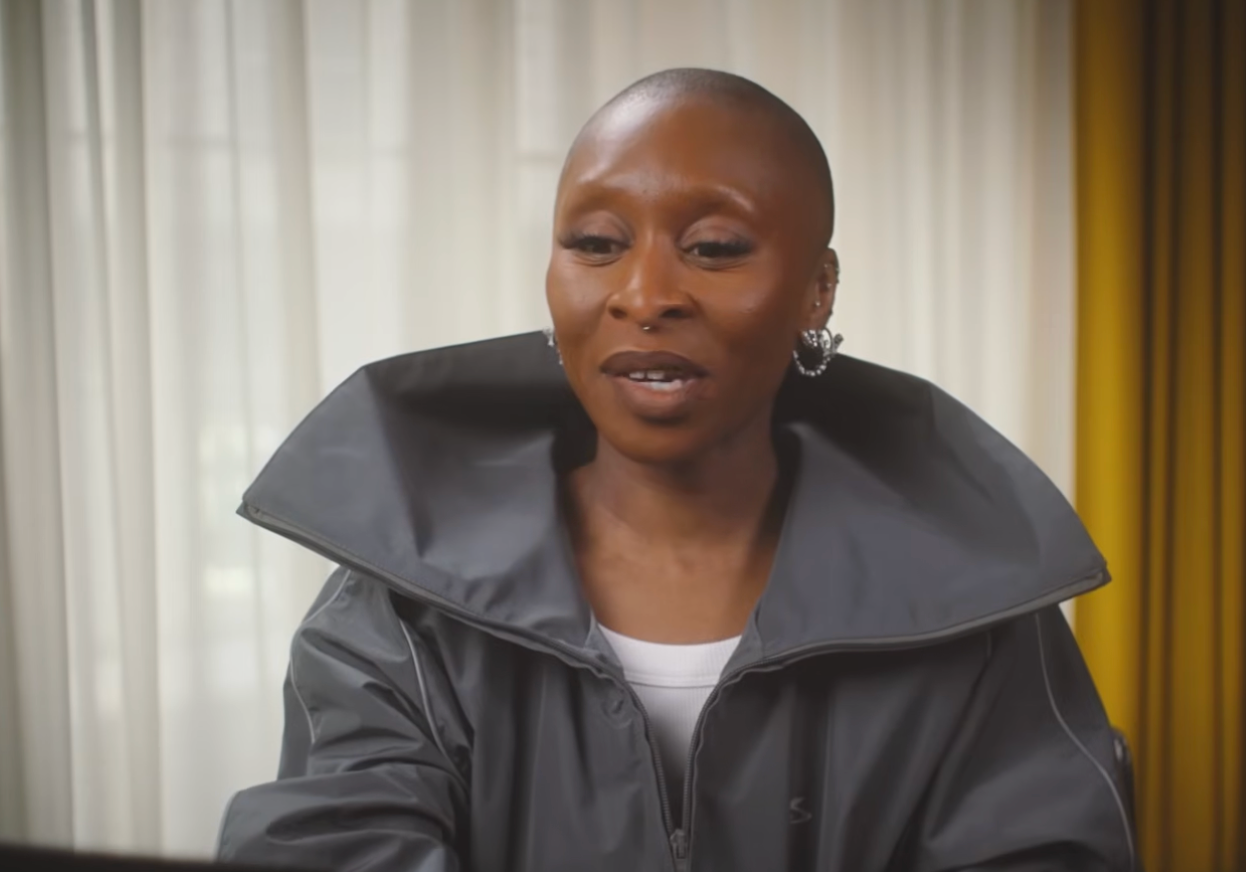
Reading the line, “You’re the only friend I ever had,” she answered, “This is Elphaba in Wicked.”
Before moving on to the next question, the Harriet actor said: “Do you mind if we do another question that isn’t about Wicked? Because I feel like I’ve spent the last two years talking about it and I think we have an opportunity to start talking about something else.
“Because I love Wicked,” Erivo clarified, “but I’ve just talked about it... ad nauseam.”
Speaking to Variety in a separate interview published Wednesday about the Wicked press tour, the Broadway and West End star criticized the public response to a viral incident in which she protected Grande from a fan at the Wicked: For Good premiere in Singapore.
During the November event, an apparent “fan” — later revealed to be a TikTok prankster who posts videos mobbing celebrities — jumped over the barricade onto the carpet and grabbed Grande.
Erivo pushed the man away before security intervened, with fans praising her and joking that she had acted as Grande’s “bodyguard” or “security guard.”
Of the online response to her actions, she took issue with the way in which she had been painted as Grande’s “protector,” saying that it perpetuated ideas around Black strength and white fragility.
“I think that we haven’t really come to terms with the insidious nature of how we view Black women,” she told Variety. “And I’m sure people will read this and think, ‘Oh, for goodness’ sake, it’s not about that.’ But it is.
“Because that’s what was being made fun of. It was my physique; it was my shape; it was the fact that I was bald; it was about what I looked like,” she continued. “And because of that, there was this assumption that I was bigger than my co-star and so I had to be controlling or protecting, and that was my role. I would hazard a guess that it would not have been the same had it been the other way around.”