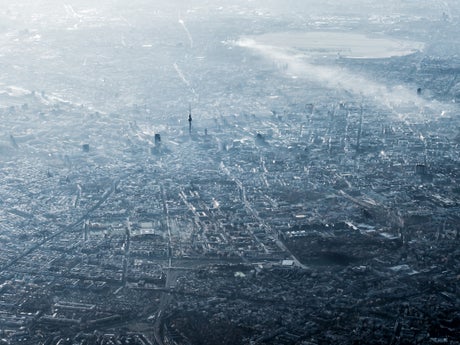
Reducing air pollution in cities to the maximum levels recommended by the World Health Organisation could prevent more than 50,000 deaths a year across Europe, new research suggests.
Across the EU around one in eight deaths has been linked to air pollution, with around 400,000 dying every year, and worldwide, it is the fifth greatest risk factor for global mortality. But despite these headline figures, the exact extent of the wider health effects of air pollution at the city level remains largely unknown.
A new study has ranked 1,000 European cities on various air pollution measures, including for pm2.5 (fine particulate matter) and nitrogen dioxide (NO2). It also estimated numbers of preventable deaths if cities reduced air pollution to below WHO recommended levels, and preventable deaths if each city reduced pollution even further - to the lowest levels recorded in the study.