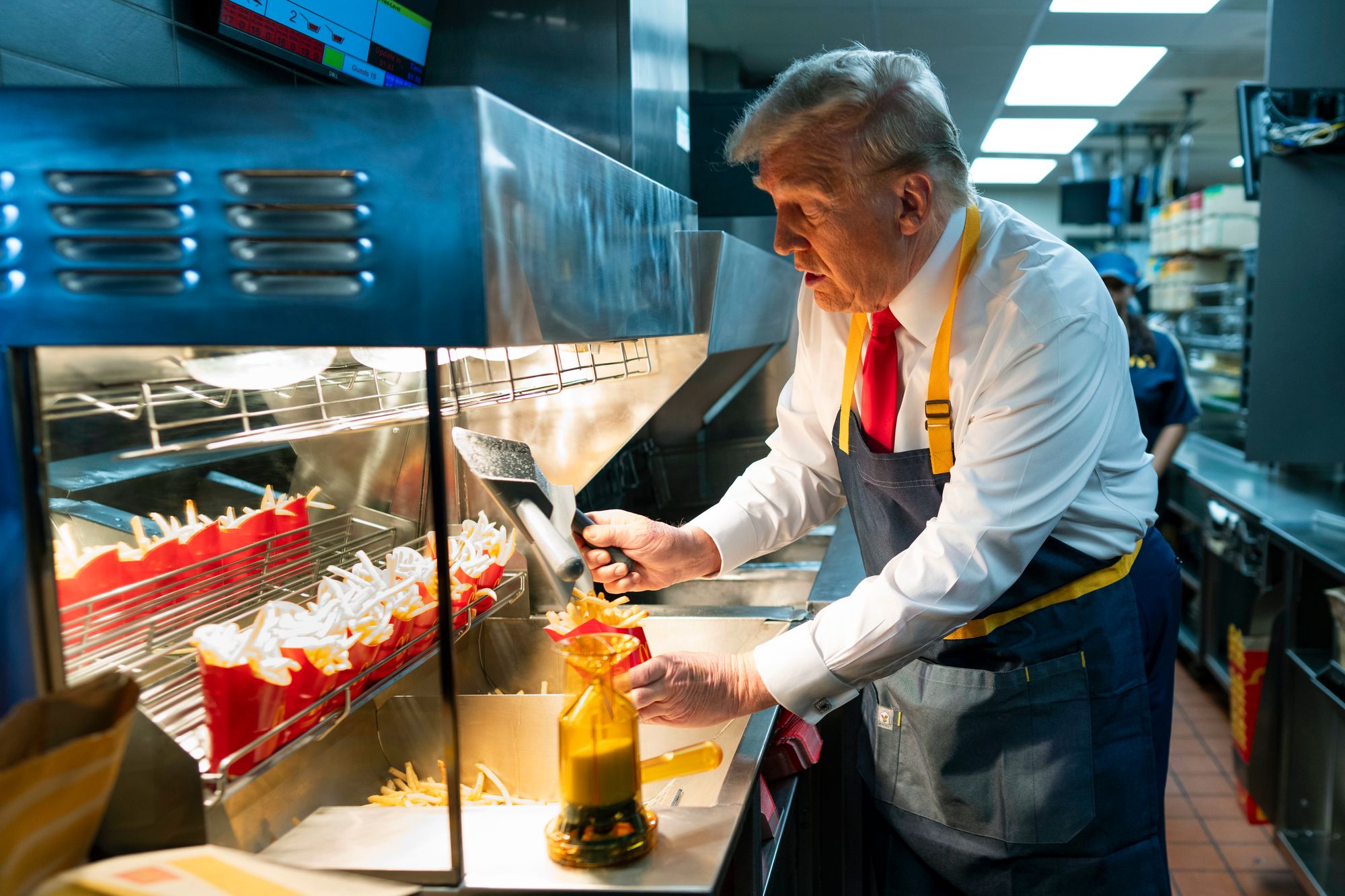
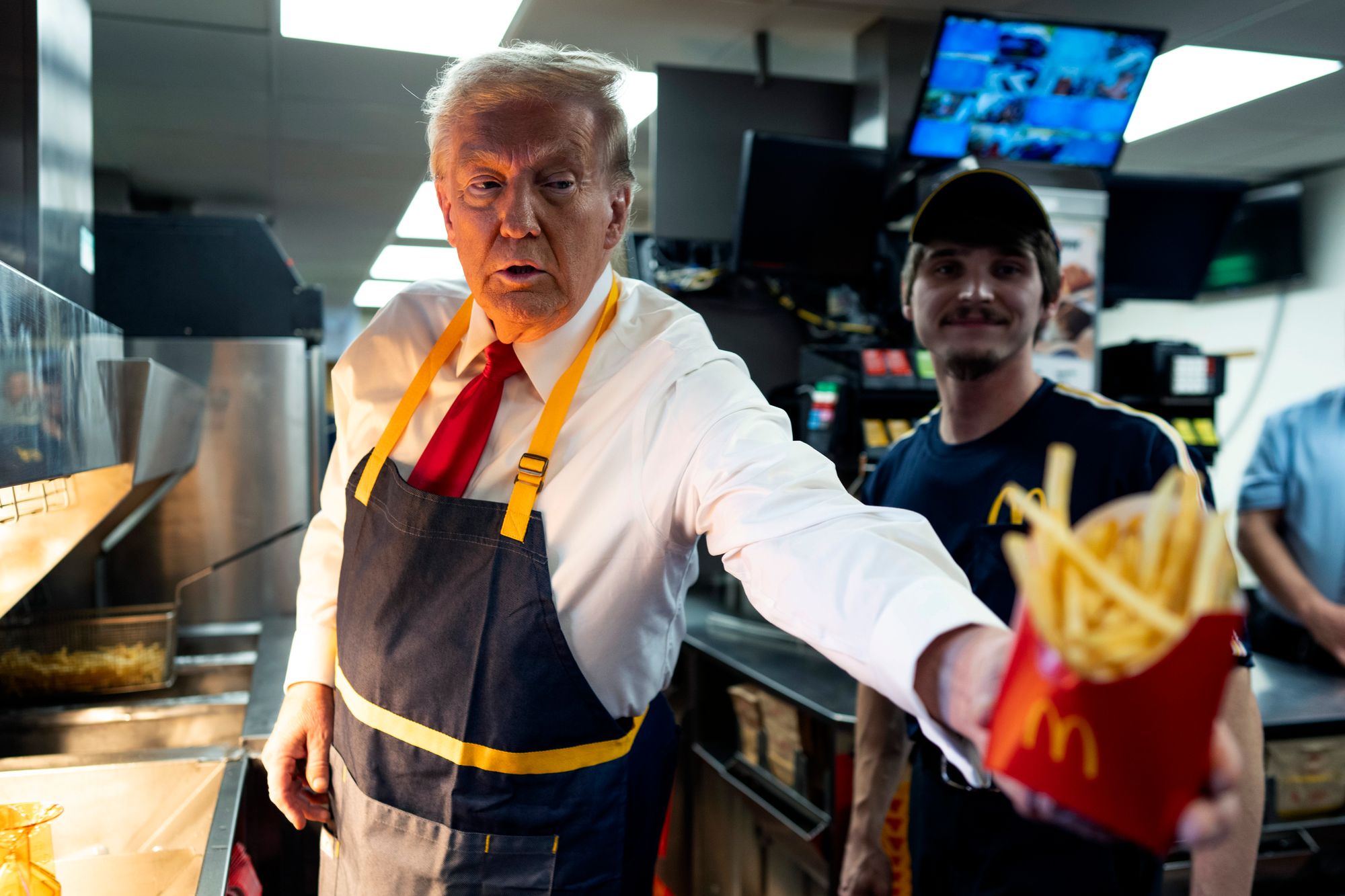
Customers at the McDonald’s restaurant where Donald Trump staged a campaign photo op are echoing concerns felt across the U.S. — that everything is becoming too expensive.
“It has gone up,” David Teeling, a 70-year-old who carries a newspaper clip of Trump’s infamous appearance in his wallet says when asked about the cost of living. “No question about that. But Trump is a CEO. He can turn these things around. It’s going to take a year, maybe two,” he added.
Other patrons at the location in Feasterville, Pennsylvania, which drew huge crowds back in October 2024 to watch the then-Republican nominee shovel fries and serve customers through the drive-thru, acknowledge the price hikes too.
But some say that the policies Trump and his administration have implemented still need time to take effect.
“It’s going to slowly go down,” Janice Hall, a retired Philadelphia City employee, told NBC News. “We haven’t given it any time yet. It’s not even been a year.”
New polling by NBC’s Decision Desk survey shows that 53 percent of adults have recenly changed their habits with grocery shopping to stay within budget, and 55 percent have stopped paying for as many “extras,” including entertainment, to focus on essential items.
Trump has continued to insist that prices are going down, despite evidence to the contrary, and has described a nation-wide affordability issue as a “hoax” being pushed by the Democrats.
Writing on Truth Social last week, the president wrote that “affordability, just 13 months ago, was a disaster for the American people, but now, it’s totally different! Prices are coming down fast."
However, while prices of items such as eggs have now dropped 29 percent overall since Trump returned to office, products like beef are up by around 13 percent, while chicken is up by 2 percent, according to Nieslen IQ data in the NBC News grocery price tracker. Meanwhile, the price of orange juice has shot up by 28 percent.
Federal Reserve Chairman Jerome Powell also said that economic policies such as Trump’s sweeping global tariffs are partially to blame for a higher-than-expected inflation rate, which rose rose to 3 percent in September for the first time since January.
.jpeg)
Recent polling from AP-NORC, found that just 31 percent of U.S. adults currently approve of Trump’s handling of the economy, the lowest rating out of either of his presidential terms.
Back in Feasterville, others are less confident about the president’s ability to reduce prices.
“I used to eat a lot of beef; I can’t afford that," a 76-year-old regular, who wished to remain anonymous, told NBC News. “Even when I see reduced prices at different supermarkets, they’re still on the expensive side.”
The patron also pointed to U.S. unemployment rates, which climbed to a high of 4.4 percent in September.
“A lot of the people who voted for him, they didn’t vote for the layoffs,” he said.
As a company, McDonald's has faced pressures from what its CEO called a "two-tier economy." A steep drop in traffic from lower-income customers played a part in the company's decision to revive its "Extra Value Meal" combos this fall, according to chief executive Chris Kempczinski.
Struggling with medical costs? You’re not alone
Trump’s tariffs are having an uneven effect on holiday prices
Fed cuts interest rates but signals pause in further reductions
Alarming number of companies planning layoffs this holiday season, survey shows
Merry mind games - why experts say cash holiday gifts are complex
Looking to buy a car? Three reasons December is a great time to shop