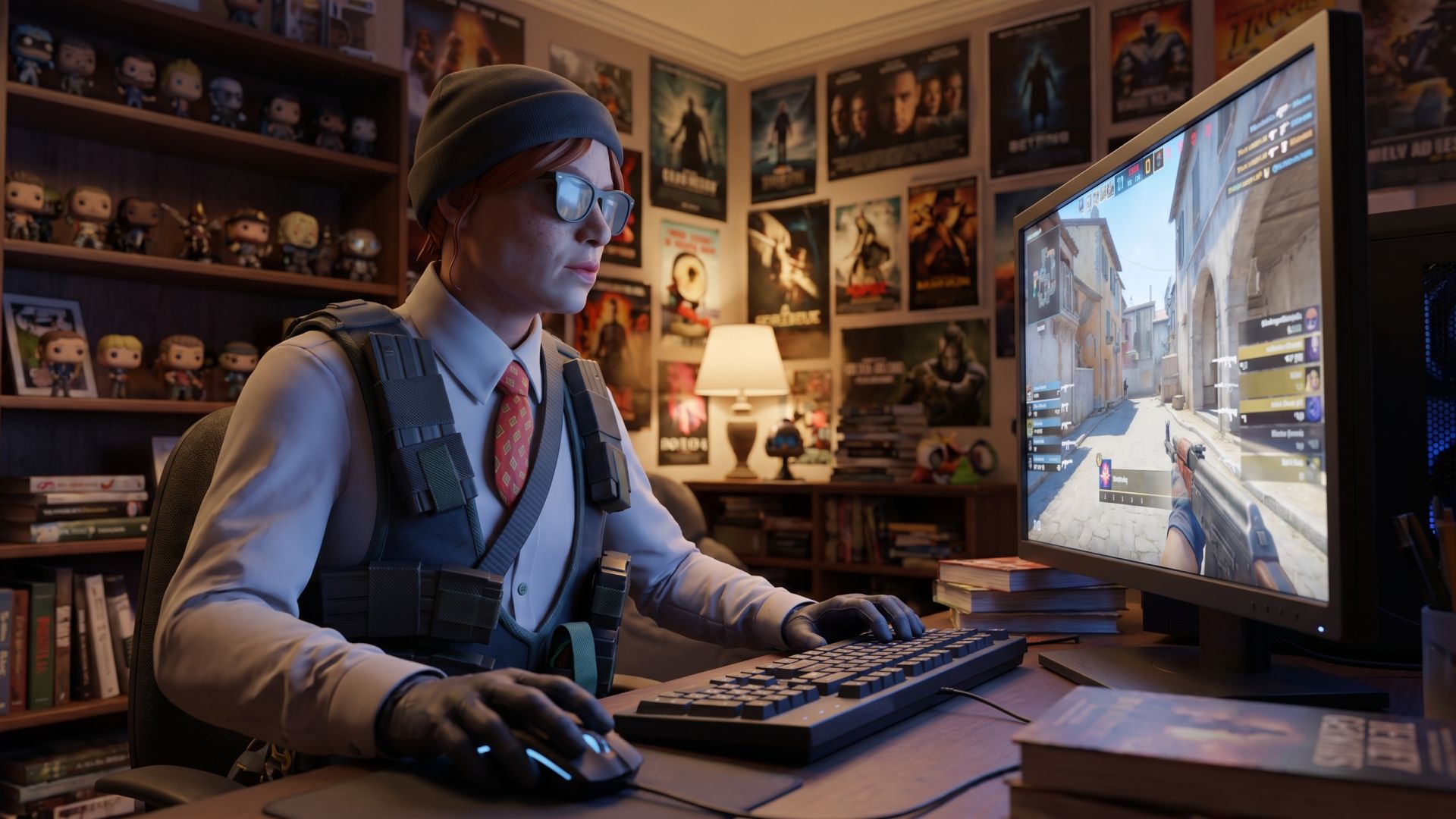
From the outside, Counter-Strike 2 looks like a normal game. A player opens the Steam client, presses Play, and loads into a match. Once that player spends more time with CS2 and starts blending into the community, that simple picture disappears. The game starts to look more like an iceberg with several layers. At the top sits esports. Below it are FACEIT grinders and Premier climbers, standard matchmaking players, community server regulars, and people opening the fifth Kilowatt Case in one evening. The more hours a player puts into CS2, the more clearly its layered structure starts to show.
The Pros and Tier One Esports
What This Level Looks Like
This is professional CS2 as most people see it on Twitch, HLTV, arena broadcasts, match highlights, and team content. The active tier one scene usually includes around thirty teams in and around the top rankings, with examples such as Vitality, NAVI, MOUZ, FaZe, G2, Spirit, Astralis, and The MongolZ. These teams play through the IEM, ESL, BLAST, and Valve Major circuit. Valve usually runs two Majors per year, and each Major has around $1.25 million in prize money.
Why It Does Not Match Regular CS2
For professional players, CS2 is a full time job. A normal workday can include eight or more hours of scrims, demo review, server practice, tactical work, media duties, and recovery. Large organizations may also use analysts, sports psychologists, dietitians, and performance staff. Top players can earn six figure salaries, and Major sticker money can be higher than salary during strong Major windows. For 99.9% of CS2 players, tier one esports is something to watch, not a realistic path to reach.
FACEIT Grinders and Premier Climbers
Between pro CS2 and normal matchmaking are players who treat ranked CS2 seriously. This group includes former pros, semi pros, academy hopefuls, high ELO grinders, and regular players who want fair matches every day. They often avoid standard matchmaking because of smurfs, cheaters, weak punishment for griefing, and lower trust in Valve VAC. Instead, they play FACEIT or Premier Mode.
FACEIT is the main third party ladder. It runs from level 1 to level 10, with level 10 starting at 2,001 ELO, and its anti cheat is treated as stricter than VAC. When a player says high ELO, they usually mean FACEIT, not Casual. Above level 10, FPL and FPL-C are used as a path toward tier two esports. Premier Mode launched with CS2 in September 2023 as Valve’s answer to FACEIT, with MR12, map vetoes, and ratings past 30,000. Real competitive grind usually happens here.
Standard Matchmaking Where Most Players Actually Live
Premier, Competitive, Wingman, and Deathmatch
Standard matchmaking is where millions of CS2 players spend most of their time. Premier gives one CS Rating across the active map pool and unlocks after ten placement matches. Competitive keeps the old skill group style from Silver I to Global Elite, with a separate rank for each map. Wingman is a 2v2 mode with a shorter match format, which makes it useful for duo queue. Deathmatch sits outside the ranked climb and is mostly used for warmup, aim practice, or short sessions.
How CS2 Ranks Actually Work for Regular Players
Premier rating is the clearest number for most players. Many players sit around 5,000 to 15,000 rating, while anything above 20,000 already points to a smaller group of stronger players. For most players, rank shows how much their aim, grenade lineups, crosshair placement, and game understanding have improved. When players discuss the full cs2 ranks system, many note that the distribution is more uneven than they expected.
Casuals and Community Servers
Not every CS2 player cares about rating. Many players spend their time in Casual mode, Arms Race, Demolition, Deathmatch, Workshop maps, or private lobbies with friends. Casual mode gives larger 10v10 matches, less pressure after lost rounds, and fewer reasons to think about team tactics every second. Workshop maps also matter as many players use aim_botz, recoil_master, and other training maps more often than ranked modes.
Community servers are a separate part of CS2 culture. Surf, KZ, bhop, retakes, 1v1 arenas, jailbreak, and zombie escape all have their own regular players, local names, rules, maps, leaderboards, and habits. Some of these communities have existed since CS:Source and stayed active through multiple versions of Counter-Strike. A surf player may not care about Premier rating at all. A KZ player may laugh at it as movement skill matters more there than match rank. For many long time players, this is the main version of CS2.
The Skin Economy and Case Openers
The CS2 Market Outside Matches
Some CS2 players spend more time on inventories than on matches. Prime players can receive weekly care packages, and cases are often one of the reward options. Keys usually cost about $2.50. The chance of getting a knife or gloves from a case is about 0.26%, which is why case openings are built around low odds and quick dopamine hits. Around that math sits a multibillion dollar economy with the Steam Marketplace, third party markets, trade bots, sticker crafts, pattern hunting, and Major capsule investing.
Case Openers, Collectors, and Investors
Case openers chase the pull, then often forget the item a week later. Collectors can spend years building one perfect loadout with matching skins, stickers, gloves, and knives. Investors treat tier one stickers, rare knives, capsules, and gloves like assets. The Case Hardened blue gems, low float skins, and rare Doppler phases can move for serious money. Gloves and elite knives regularly trade for $5,000 to $50,000+, while legendary items can reach six figures in private deals. A real part of CS2 players barely finish competitive matches in a month because they're here for the inventory first.
Where a CS2 Player Really Lives
Every CS2 player starts from the same Steam client and the same Play button. After that, the game splits fast. One player follows Major matches, another pushes FACEIT level 10, another checks Premier rating after every loss, another spends the night on surf or KZ maps, and another opens cases for one rare pull. CS2 works because all of those habits fit inside the same game. Most players move between two or three of them without thinking about it. When CS2 stops being fun, the place a player returns to first usually shows where that player actually belongs.