The $31.2 million written off in this year’s Budget for a failed Immigration New Zealand biometric upgrade may not be the end of the wasted spending.
RNZ immigration reporter Gill Bonnett, who has been asking questions about the escalation of this project for several years, says there’s still something not right about the figures, and there could be several more million unaccounted for over the life of the project the minister describes as “doomed from the start”.
Officials kept the spending off the radar of Cabinet scrutiny by splitting it into two parts.
The independent review that finally blew the lid on what was going on suggested the amount spent was $40m, and said there was another $8m in a second part of the project.
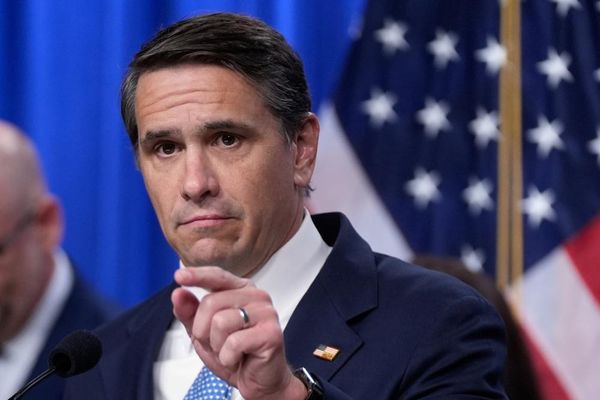
Immigration Minister Erica Stanford has said the review has raised more questions, and her confidence in MBIE, which was in charge of the project, has been knocked. She’s asked the Public Service Commission to look at the integrity issues it uncovered.
After the Public Service Commission’s investigation, MBIE promised to investigate any employment matters relating to the Biometric Capability Update (BCU) project.
Bonnett used the Official Information Act to find out about the financing of the project and what it actually involved, and got the information that the cost had gone up to $40 million. That figure was above the $35m cut-off for having to put in a Cabinet paper so she asked about that.
“It all went quiet for a little while and then I had an interview later in 2024 explaining (the completion date) was again being put back.
“I think at that point looking at the report it seems that the two projects they talk about … had been separated and therefore the budget for the BCU had gone back under the magical $35m.”
But it’s not just about wasted money – the integrity of the public service has been called into question over the way officials ducked and dived to avoid telling ministers how badly wrong the project was going.
Stanford used stern language on Tuesday in talking about the review, saying ministers had been misled and the findings were “almost as bad as it gets”.
“Not only do we have nothing to show for it, but we are now in a position of having to maintain the existing aging infrastructure while a new solution is sought.”
The aim of the BCU project, which launched in 2019, was to improve New Zealand’s outdated identity management system, says Bonnett.
“It was just an upgrade at that point, hence the name,” she says.
“It was a couple of years later that it morphed into something that was bigger, and that’s when it didn’t go through its due diligence and the case that would have had to have been made for this bigger project.
“In terms of what it wanted to do it was identity fraud, making sure that they could match the biometric and biographic details like photographs and fingerprints, and so it was a very complex project and I’m not sure how much of it will still be able to be used – from what the minister says, it’s been wasted.
“It’s an incredibly big deal, both that it’s gone so badly wrong, but also that we now don’t have a system that we presumably really need.
“A lot of the problems were with the cyber-security element of it. There were bugs within the system, so they were trying to resolve them. I think the over-riding issue is that this was meant to be an out-of-the-box solution and it ended up being a kind of system that had to be very much morphed into an INZ system. The problems that cropped up from that, particularly from 2024 onwards, seem to be at the base of it.
“The other issues – I mean there are so many, it’s kind of littered with things they could have and should have been doing, or checking.”
Check out how to listen to and follow The Detail here.
You can also stay up-to-date by liking us on Facebook or following us on Twitter.