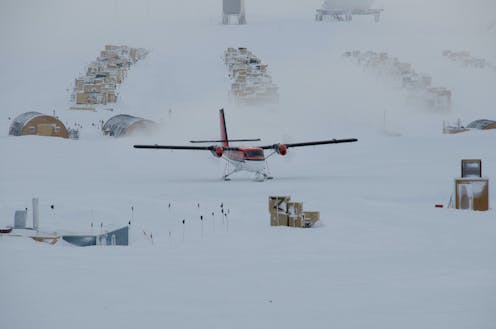
Until the pandemic hit, academics from a wide range of disciplines relied heavily on work out in the field for their research. Not being able to carry out such fieldwork has had a negative effect on both increasing scientific knowledge and making progress.
Many academics have had to rethink their data collection methods. Some have had to change them altogether. You cannot undertake an archaeological dig in Upper Egypt, geological sampling on the Galapagos Islands or an ethnographic study on the protest movement in Belarus without being there.
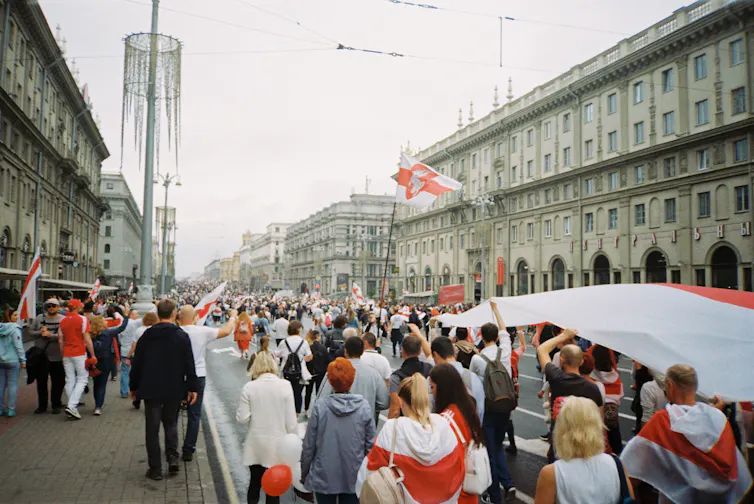
However, social distancing and other COVID-safe measures have made field-based data collection practically impossible – especially for scholars whose research is tied to other countries. But even those who work closer to home have been constrained by lockdown measures.
Long-term consequences
Researchers have had to put their studies on hold where they could, or scrap them entirely, when they couldn’t be delayed. Many research projects have been lost as a result, and cannot simply be picked up again in a year or two.
This is especially problematic for doctoral candidates, for some of whom the pandemic could spell the end of their dissertation projects. It is also tough for early career researchers, many of whom were already working under difficult conditions due to the instability of academic employment.
Many will be forced to reorient their projects toward other kinds of questions, data and methods. Transforming a scientific project in progress is a mammoth task for a young researcher with little experience and limited funding.
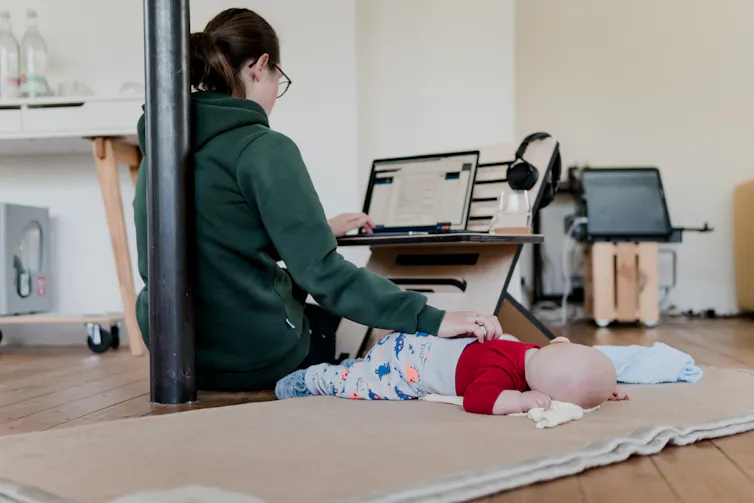
The limitations have affected research productivity across the board, but female scientists have seen the worst of it. As in many sectors, they have been more severely impacted than male colleagues by nursery and school closures, and need more direct support from supervisors and funders as a result.
Academic freedom
The scientific community is exploring new data collection methods and tools, like ethnography for online communities instead of ethnography on the ground, or online interviews and focus group discussions to avoid in-person meetings and travel to the field site.
However, the pandemic has also resulted in heightened control of information – whether online or through partners on the ground. Even before the pandemic, scientists studying issues including environmental pollution, inequality, protest movements or human rights violations routinely had trouble accessing field sites. This was due to authorities or companies who had an interest in stopping research on such critical issues.
Now, pandemic-related travel and visa restrictions are being used by governments to restrict access for independent researchers. The case of the WHO research team tasked with investigating the roots of COVID-19 in Wuhan and its recent trouble to gain access to China serves as a warning example.
It also shows that visa or travel restrictions can serve as a pretext for preventing research that clashes with the viewpoints of local or national authorities. And this could get worse. There is the fear that the pandemic will be used as an excuse to deny researchers access to regions that are, for instance, heavily polluted or agitated by political protests.
This has consequences reaching far beyond scientific efforts to increase human knowledge. Information gained through field research regularly informs political debate and decision-making. The current near-total halt on fieldwork will therefore negatively affect debate around development, security and foreign policy.
Fewer researchers looking into issues as sensitive as human rights violations, for instance, means even less scrutiny in place than before COVID-19. And there wasn’t much anyway. This is of particular concern when it comes to the global response to COVID-19 itself. Any efforts will be less effective if data collection on the ground is hindered as governments seek to control the narrative around the pandemic.
Flexibility and support
Scholars who rely on fieldwork urgently need greater flexibility and more support. Supervisors and funders should allow their research staff considerable leeway – and all the time necessary – to refocus their projects. Experienced scholars should provide support to more junior scientists to do so, as well as lobby for additional funding or necessary contract extensions.
The pandemic is set to continue to hamper most forms of fieldwork. For the next few years, universities will likely be expected to discourage or even ban research trips to certain areas, depending on travel warnings, new mutations and infection rates.
There was already a growing trend, especially in areas affected by conflict such as Darfur and Mali, for university administrations and review boards to frame field-based research as a security concern. Consequently, for several years already, fieldwork missions have incurred increasingly complex admin and clearance protocols to insure against risks and liability. This is likely to continue or even get worse.
Universities and new disciplinary standards are pushing for greater transparency in fieldwork-based data collection efforts. But administrators and editors need to make sure that any new disciplinary or regulatory standards do not become another hurdle for field researchers. Instead they should work toward making even difficult research projects both possible and safe for scholars. Fieldwork has always been fraught with risk, but it remains indispensable for scientific progress.

Ilyas Saliba is also a research fellow at the Global Public Policy institute. He received funding from the Open Society Foundation, the Bucerius Zeit Foundation, the German Academic Scholarship Foundation (Studienstiftung) and the the German Academic Exchange Service (DAAD). He is affiliated with the European Coordinating Committee for Academic Freedom Advocacy.
This article was originally published on The Conversation. Read the original article.