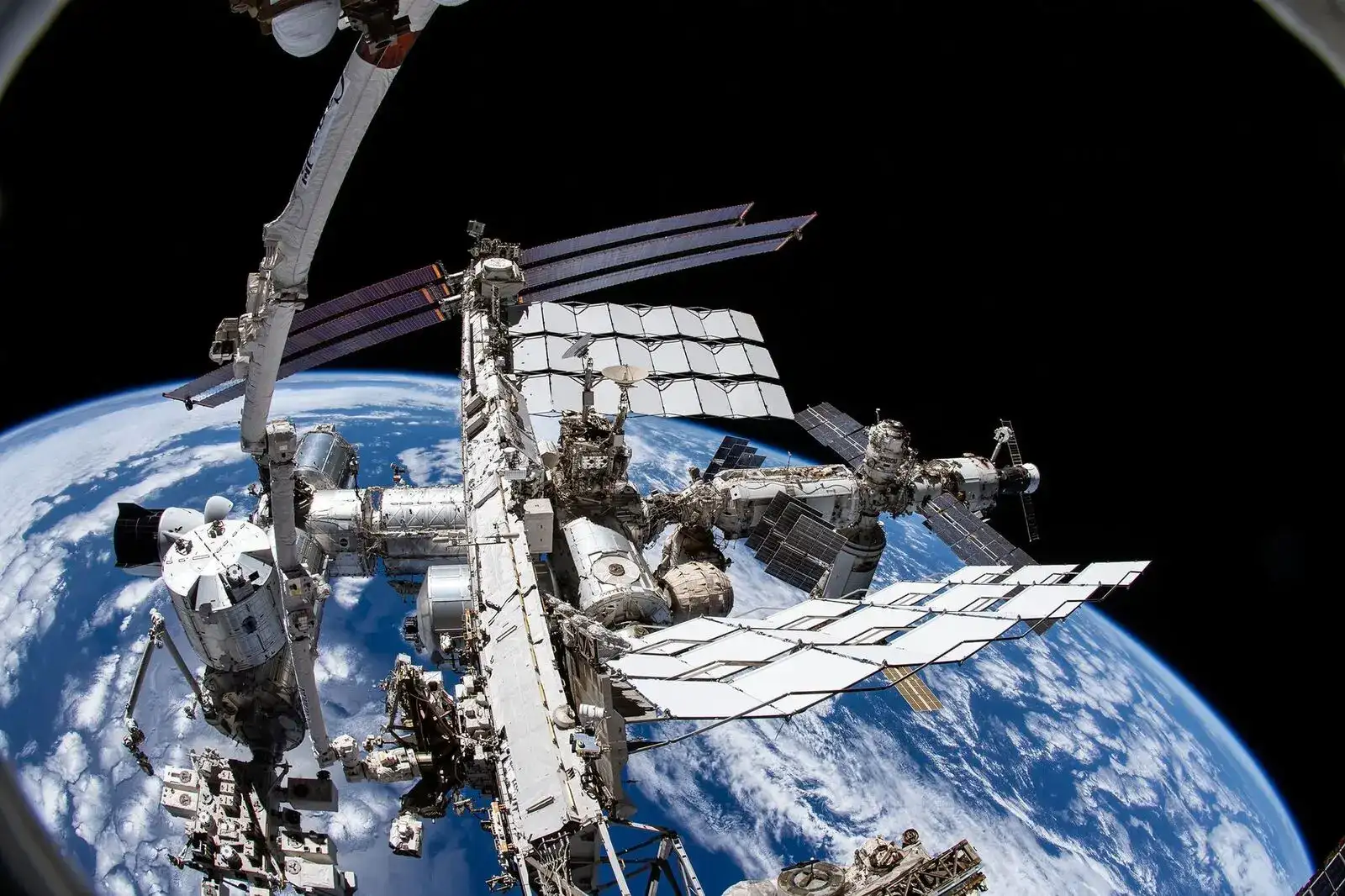
Space stem cell research is becoming one of the most important scientific breakthroughs in modern medicine and biotechnology. Scientists aboard the NASA and the International Space Station are studying how stem cells behave in microgravity conditions, helping researchers understand cancer growth, tissue regeneration, immune responses, and human biology beyond Earth. The unique environment inside the ISS allows scientists to observe biological activity without Earth’s gravitational interference. Researchers say this provides a clearer understanding of how human cells grow, organize, divide, and communicate.
Recent NASA-backed investigations revealed that stem cells grown in microgravity form three-dimensional structures more naturally than cells cultivated under normal gravity. These discoveries are now driving major advances in cancer treatment research, pharmaceutical testing, and regenerative medicine technologies.
Experts believe space stem cell research may eventually transform therapies for chronic diseases, neurodegenerative disorders, and organ damage. As global investment in space biotechnology accelerates, scientists increasingly view the ISS as a critical laboratory for future medical innovation and personalized healthcare development.
Why microgravity changes everything for stem cell research in space
Gravity fundamentally controls how cells grow, divide, and organise themselves on Earth. In microgravity aboard the ISS, those forces disappear — and so do the constraints they impose. Stem cell research in space exploits this to observe cellular behaviour that is otherwise hidden. Without gravity pulling cells downward, they freely aggregate into three-dimensional spheroid structures that closely mimic how tissues form inside the human body.
Studies published in Cell Stem Cell (October 2025) confirm that microgravity promotes this 3D cell aggregation, allowing cultured cells to grow without scaffolds — something standard 2D Earth cultures cannot achieve. This single breakthrough makes stem cell research in space far more medically relevant than lab-bench experiments.
Researchers at the University of Bristol's School of Cellular and Molecular Medicine, in a December 2025 study published in npj Microgravity , found that stem cells in space exhibit distinct proliferation patterns, enhanced spheroid formation, and modified differentiation pathways compared to Earth-grown controls. Microgravity also triggers changes in cytokine secretion — signalling proteins that regulate immune responses and inflammation.
Stem cell research in space and the fight against cancer
One of the most urgent applications of stem cell research in space involves cancer treatment. Cancerous cells grown in microgravity develop more complex 3D structures that accurately mimic tumour architecture inside the human body. This matters enormously because flat, 2D tumour cultures used in standard labs often fail to predict how drugs will behave in real patients. Stem cell research in space solves this problem.
NASA researchers have long pointed to the microgravity environment as uniquely capable of modelling disease progression. The 3D tumour models grown during stem cell research in space allow pharmaceutical companies to test drug candidates against realistic tissue structures, dramatically improving the predictive accuracy of pre-clinical trials.
Studies from the University of Bristol — one of the leading institutions in this field — show that cancer cells exhibit more intricate structural formation in outer space, providing data that could accelerate drug development timelines by years.
The InSPA-Stem Cell EX-H2 investigation: A landmark in space biomanufacturing
A major milestone in stem cell research in space is the Hematopoietic Stem Cell Expansion in Space investigation, known as InSPA-StemCellEX-H2. This experiment aims to demonstrate large-scale production of blood-forming stem cells aboard the ISS for direct pharmaceutical and clinical use — a world first. Hematopoietic stem cells are critical for regenerating healthy blood and immune cells. Their expansion in microgravity, if successfully scaled, could revolutionise treatments for leukaemia, bone marrow failure, and immune deficiencies.
Research published by Mayo Clinic scientists in npj Microgravity (2024) found that mesenchymal stem cells expanded in microgravity demonstrated greater immunosuppressant capabilities than those grown on Earth. This is significant for autoimmune disease treatment.
The ISS National Lab reports that microgravity improves stem cell proliferation rates while preserving their genetic and functional integrity — a critical requirement for safe clinical applications. Stem cell research in space is therefore not just advancing basic science; it is building a roadmap toward manufacturing therapies directly in orbit.
FAQs:
Q1. Why is space stem cell research important for cancer treatment?Space stem cell research is helping scientists understand how cancer cells grow and organize in microgravity conditions aboard the International Space Station. Researchers discovered that tumour-like structures formed in space closely resemble those inside the human body, allowing better drug testing, disease modelling, and development of advanced cancer treatment techniques. These findings could significantly improve precision medicine and future oncology therapies.
Q2. How does microgravity improve stem cell research on the ISS?
Microgravity removes the constant gravitational force affecting cells on Earth, giving scientists a clearer view of stem cell behaviour and tissue formation. Studies conducted by NASA show that stem cells grown in space can develop more naturally into three-dimensional structures, improving regenerative medicine research, organ repair studies, and future treatments for chronic diseases and immune disorders.