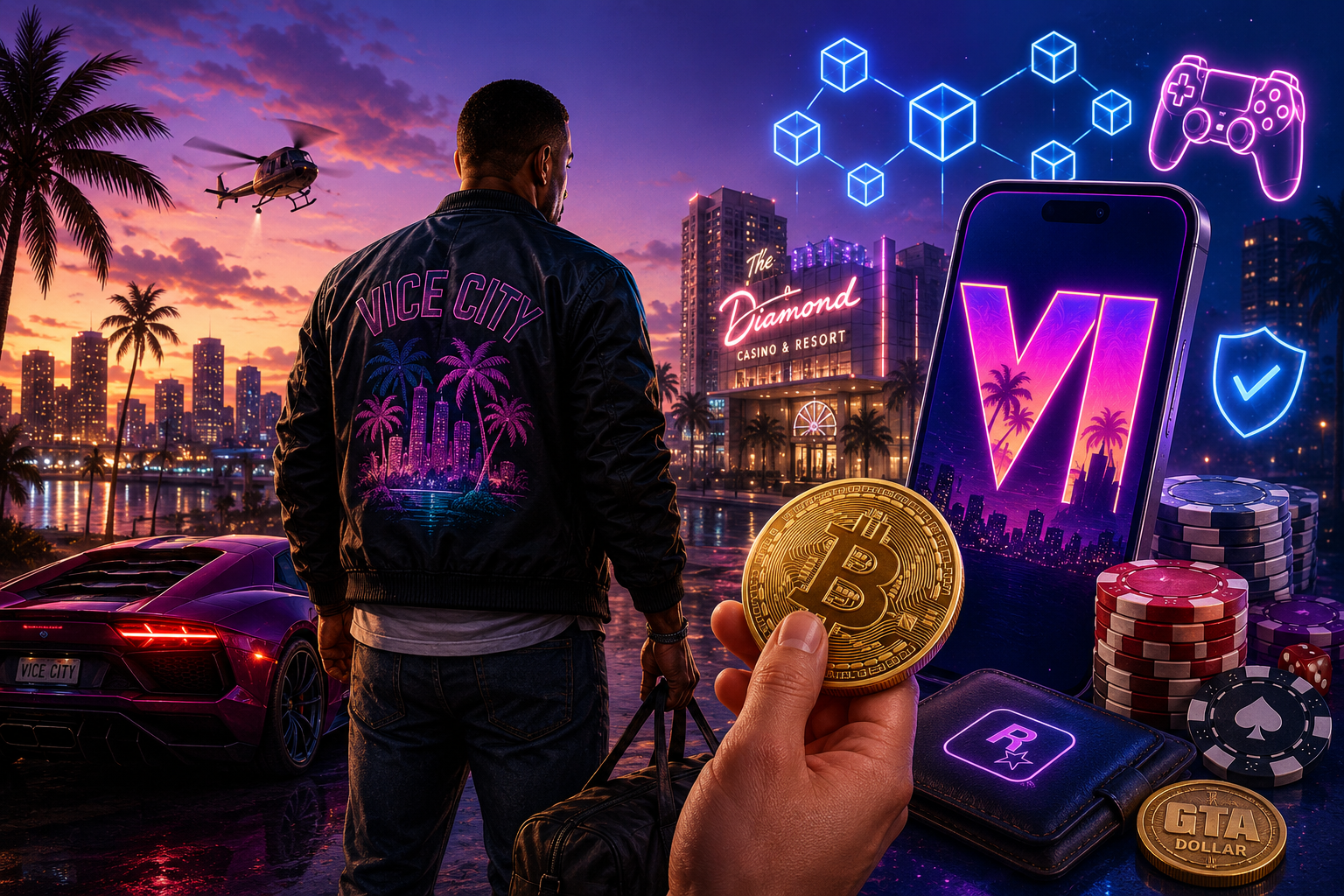
As anticipation for Grand Theft Auto VI (GTA 6) continues to grow, discussions have expanded beyond graphics and gameplay to the game's in-depth economy. Rockstar has spent years refining the systems that keep players invested, from businesses and luxury real estate to vehicles, missions, and casino activities. Unlike many online games, GTA's economy isn't an afterthought; it's one of the franchise's defining features.
This naturally raises an interesting question: Could GTA 6 inspire the next generation of play-to-earn (P2E) games?
The answer is both yes and no. Rockstar has made it clear that GTA 6 is not expected to feature cryptocurrency, NFTs, or blockchain-based ownership. However, the way the studio designs engaging virtual economies could influence developers exploring blockchain gaming in the future.
GTA's In-Game Play-to-Earn Shows Why Virtual Economies Work
Although GTA isn't a play-to-earn game in the blockchain sense, it already follows a similar gameplay loop. Players earn GTA Dollars through heists, missions, races, and businesses before spending that currency on casino games, luxury properties, vehicles, weapons, and upgrades. Some blockchain gaming advocates have suggested that replacing GTA Dollars with tokenized digital assets could create a new generation of play-to-earn experiences. In theory, players could own casino chips, trade virtual assets, or even cash out their winnings using blockchain-based currencies.
However, OnlinePokiesTime, a casino review website in Australia, argues that such a move could fundamentally change what makes GTA enjoyable, and not necessarily for the better. Their analysts note that connecting GTA's casino to real-world digital assets could undermine the balanced gameplay loop Rockstar has spent years refining.
The website also highlights broader concerns, such as accessibility and regulatory issues. Authorities in different countries already take very different approaches to cryptocurrency, play-to-earn games, and online gambling. Combining both within one of the world's largest gaming franchises could invite increased scrutiny from regulators concerned about money laundering, taxation, licensing, and consumer protection. Although the franchise is intended for mature audiences, younger players have historically found ways to access GTA Online. Introducing blockchain-backed casino mechanics into such a popular title could create new challenges around age verification, responsible gambling, and player protection.
Blockchain could add transparency to transactions, verifiable ownership of digital assets, and greater confidence in how in-game funds are managed. However, the history of play-to-earn gaming shows that blockchain alone isn't enough to build a successful ecosystem. From high-profile rug pulls and unsustainable token economies to the recent wave of Telegram-based tap-to-earn games that saw rewards shrink or token values collapse after launch, many projects prioritized speculation over gameplay rather than creating lasting player experiences.
Instead of integrating blockchain into GTA, the play-to-earn industry could take a more practical lesson from Rockstar's success: build immersive gameplay, balanced progression, and sustainable virtual economies first, and treat blockchain as an optional supporting technology rather than the game's primary attraction. Even with Rockstar's opposition to blockchain monetization, the popularity of GTA has attracted numerous unofficial blockchain projects.
Beware of Unofficial GTA Crypto Projects
Despite Rockstar's clear position, the popularity of GTA 6 has inspired numerous unofficial "GTA-themed" meme coins, particularly on blockchain networks like Solana. These cryptocurrencies often attempt to capitalize on the excitement surrounding the game but have no affiliation with Rockstar Games or Take-Two Interactive.
As with many meme coins, these projects are highly speculative and can carry substantial financial risks. Their existence should not be interpreted as evidence that GTA 6 will include blockchain features or cryptocurrency integration.
The Real Lesson for Play-to-Earn Games
Many early play-to-earn games focused heavily on token rewards while overlooking what keeps players engaged over the long term. Rockstar has taken the opposite approach by building an economy that exists to support gameplay rather than profit.
Whether players are running businesses, buying luxury properties, completing heists, or spending time at the casino, every activity contributes to a larger sense of progression. Money functions as a gameplay mechanic instead of a financial asset, allowing Rockstar to maintain a balanced and enjoyable experience.
Future blockchain games could benefit from adopting the same philosophy. Rather than making earning money the primary objective, developers should first create immersive worlds, compelling progression systems, and vibrant communities. Digital ownership should enhance those experiences, not replace them.
Final Thoughts
GTA 6 is unlikely to become a play-to-earn game, and Rockstar has repeatedly demonstrated that it prefers traditional virtual economies over blockchain-based monetization. Yet the franchise's sophisticated economic systems, including its businesses, real estate, and casino, offer valuable insights into what makes virtual worlds engaging.
As blockchain gaming continues to evolve, developers may find that the most important lesson from GTA isn't how to tokenize assets, but how to build an economy players genuinely enjoy participating in. After all, a thriving virtual world is built on great gameplay first. Rockstar has already demonstrated that millions of players will willingly spend thousands of hours building virtual wealth that has no real-world value. That alone suggests compelling gameplay is a stronger driver of engagement than tokenized rewards.