NORRISTOWN, Pa. _ Prosecutors accused Bill Cosby's attorneys on Tuesday of attempting to intimidate more than a dozen accusers the government hopes to call as witnesses in his sexual assault trial next year, setting off a bitter exchange at a pivotal pretrial hearing.
Voice raised, Montgomery County District Attorney Kevin Steele bristled at defense attempts to introduce as evidence two thick binders of background on the 13 women, objecting to the use of the women's names and attempts to use news articles to discredit them.
"What we're doing here is another simple attempt to intimidate the witnesses," he said. "I'm not going to be a party to it."
Cosby attorney Brian J. McMonagle shot back, insisting that Steele's efforts to protect those accusers was excessive and foolhardy in one of the most highly publicized sexual assault trials in history.
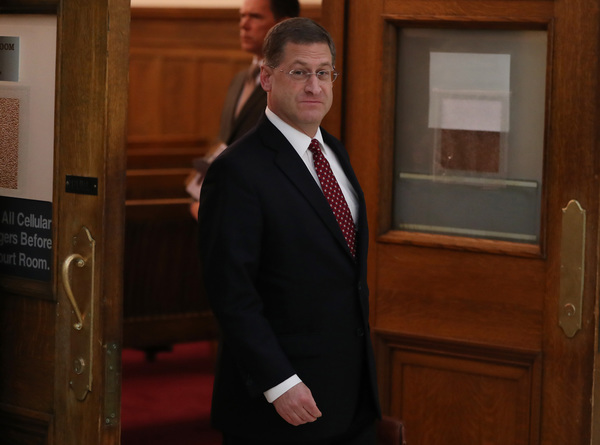
"These are witnesses in a trial. They're not children," he said. "They've given press conferences. Some of them have been interviewed for books. Some of them are on tour. What are we doing here?"
The dispute kicked off a scheduled two days of hearings in Norristown on the central legal battle in the case, one that could transform Cosby's trial from a more traditional he-said-she-said sex assault case to one that recasts an international celebrity once known as "America's Dad" as a serial sex predator.
The spat left Montgomery County Judge Steven T. O'Neill in the position of playing referee to ramming opponents fighting over every statement, news article and photograph each side sought to put before him as he made his decision.
More than once, he urged both sides to lower their voices.
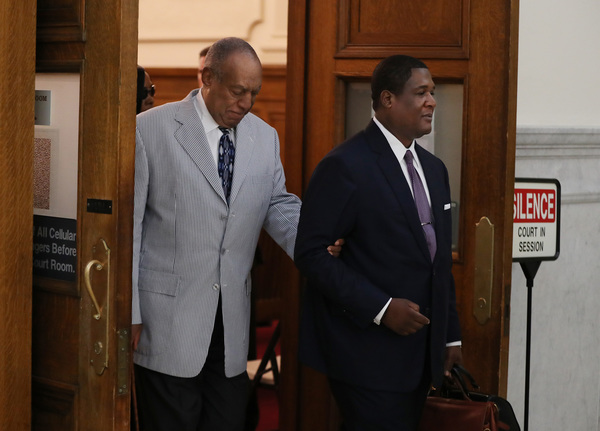
"Please," O'Neill interrupted at one point. "I don't want this to be a forum for rhetoric on this case."
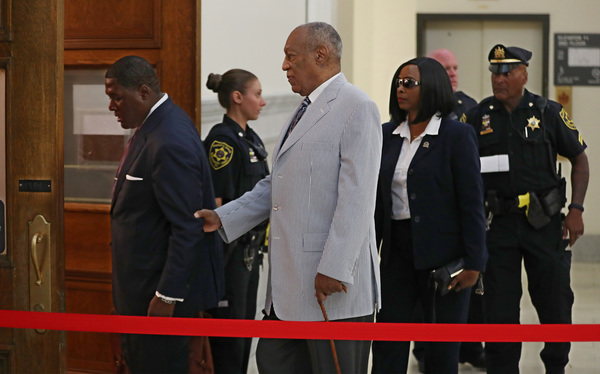
Cosby, 79, sat quietly next to his attorneys during their argument, gripping his cane and leaning back in a chair, often staring at the ceiling. He appeared in high spirits earlier Tuesday, quipping to a security guard who wanded him on his way into the courthouse: "Don't tase me, bro."
Prosecutors contend testimony from the 13 women demonstrates that Cosby's alleged attack on former Temple University employee Andrea Constand in 2004 followed a long-established pattern of drugging and assaulting women.
Cosby's attorneys have countered it would be unfair to introduce as evidence allegations that aren't just unproven but are so outdated they would be hard to disprove.
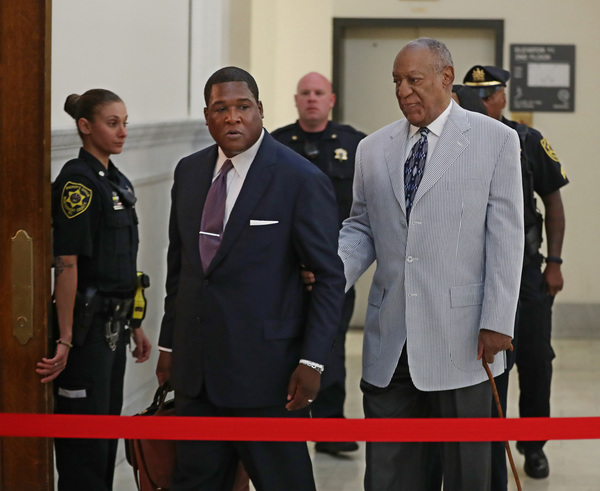
Cosby is charged with aggravated indecent assault for allegedly drugging and molesting Constand in 2004 at his mansion in Cheltenham Township. His trial is scheduled for June.
In allegations spanning from 1964 to the 1990s, the 13 women selected by prosecutors allege that Cosby drugged and sexually assaulted them _ in many cases after cultivating a relationship as a mentor or offering tickets to a show.
Some were young actresses seeking career guidance. Others met him during his travels as an entertainer. Some had agreed a decade ago to testify against him in the civil case brought by Constand that ended in a settlement before trial.
O'Neill will not hear testimony from the women this week; the hearings will be limited to arguments from lawyers.
But how the prospective witnesses were chosen is likely to become a key part of the debate.
In a hearing last month, District Attorney Kevin R. Steele offered some insight into the process, asking the judge to take "a practical look" at how the women were drugged in a setting where Cosby "controls the environment" and had established relationships with them.
Constand, now 43, got to know Cosby when she worked as operations director for the women's basketball team at Temple University, where Cosby was a member of the board of trustees. The two became friends over time, and she later told police that she saw him as a father figure. Cosby says their 2004 sexual interaction at his Cheltenham mansion was consensual.
Pennsylvania law allows testimony about so-called prior bad acts if it establishes a common scheme or pattern of behavior by a defendant.
It can also be used to show "absence of mistake" in committing a crime. Despite Cosby's claim that his sexual contact with Constand was consensual, prosecutors could use other women's accusations to argue the pattern of behavior proves his intentions.
Defense lawyers have argued that Cosby, now blind and frail, is at a disadvantage to recall details and allegations stemming back decades, especially ones that were not reported to law enforcement at the time.