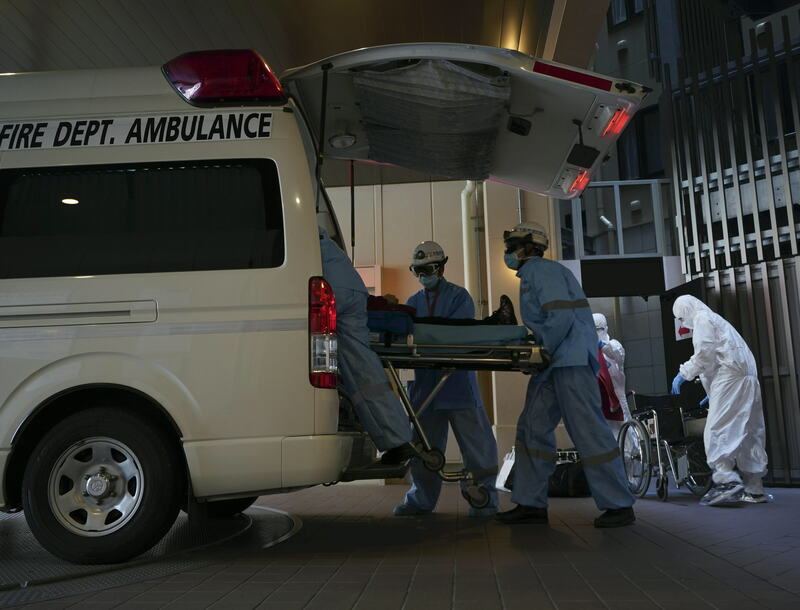
The medical system in the Kansai region is struggling as novel coronavirus variants said to be highly infectious have spread throughout the area.
People infected with the variants are more likely to become seriously ill, as well as develop severe symptoms quickly, leading to a shortage of hospital beds. With variant infections increasing across the nation as well, it is urgent to secure enough hospital beds and medical workers to prepare for a further surge in cases.
"People infected with the virus haven't been able to receive the treatment they need. The situation remains severe," said Masaya Yamato, director of the Rinku General Medical Center's Infectious Diseases Center in Izumi-Sano, Osaka Prefecture.
The center increased its beds for seriously ill COVID-19 patients from 10 to 15 on April 21, but has not been able to keep up with the rapid rise in patients, leaving the beds fully occupied.
In Osaka Prefecture, the spread of infections has continued unabated. The daily number of new infection cases in the prefecture hit a record high of 1,262 on Saturday, and the daily tally topped 1,000 for six consecutive days through Sunday.
As of Sunday, the number of severely ill patients had surged to an all-time high of 425, far exceeding the 361 beds for such patients, meaning an effective occupancy rate of 118%. Some of the seriously ill COVID-19 patients have been treated in beds allocated for people with mild or moderate symptoms, and Osaka Prefecture has had one patient accepted by a hospital in neighboring Shiga Prefecture.
-- 3 times faster
The second state of emergency issued for Osaka Prefecture was lifted at the end of February. Daily infections had dropped to 54 in the prefecture at that time, leading the medical system to be downsized.
After that, however, the British variant, which has the N501Y mutation that is considered highly contagious, began to spread, pushing up the number of COVID-19 patients.
According to the prefectural government's analysis, the number of seriously ill people is growing three times faster in what is now apparently the fourth wave -- caused mainly by variants -- than it did in the third wave.
To cope with the surge in severely ill patients, Osaka University Hospital has designated all the beds in its intensive care unit for COVID-19 patients, as a temporary measure in effect through next Monday.
"This will have a significant impact on our normal operations. It was a difficult decision," hospital director Yuichiro Doki said.
There were 224 beds overall in Osaka Prefecture for seriously ill COVID-19 patients as of April 12, but this had been increased to 361 as of Sunday.
Nevertheless, hospitals in the prefecture have been forced to consider priorities for providing treatment.
"In this situation, we can't even discuss how many more beds we should add," a prefectural government official said.
-- Waiting for hospitalization
As a result of the hospital bed shortage, there has been a series of cases in which ambulance personnel could not find hospitals to accept patients for emergency care. COVID-19 patients with mild or no symptoms recuperate in hotels and other accommodation facilities, but if their condition worsens, they may have to wait for nearly two days to be admitted to a hospital.
In one case, a patient died at home while arrangements for hospitalization were being made.
The prefectural government has therefore set up stations in Osaka City that temporarily accept COVID-19 patients waiting for hospitalization. By the end of April, two such stations with a total of 18 beds had gone into operation.
"The flow of people hasn't been brought under control, so infections like those seen in Osaka could spread in other areas," said Tetsuya Matsumoto, a professor specializing in infectious diseases at International University of Health and Welfare. "We should make all possible preparations to secure hospital beds, through such means as cooperation among hospitals."
Read more from The Japan News at https://japannews.yomiuri.co.jp/