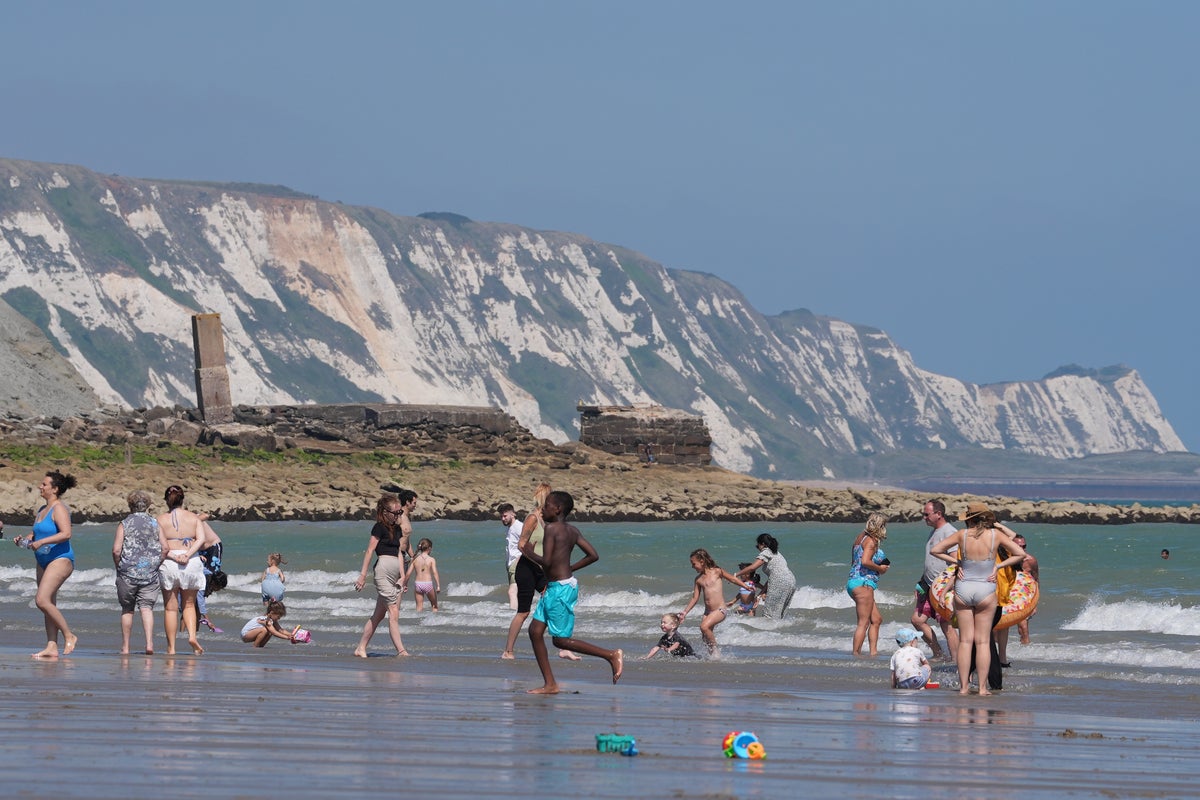
Millions of Britons are set to embark on summer getaways this weekend, with roads expected to be busy as temperatures across the UK are forecast to cool after a recent heatwave.
The RAC estimates 14.1 million motorists will make holiday or day trips between Friday and Sunday, the second-highest figure since tracking began in 2016, coinciding with school summer holidays. Saturday is predicted to be the busiest day for travel, with 3.8 million journeys, while Friday and Sunday will each see around 3.4 million.
Major travel hubs are bracing for the influx. The Port of Dover expects 7,500 outbound cars on Friday, increasing to nearly 10,000 on Saturday. The RAC warns south-west and north-west England will likely see the most significant leisure traffic.
The travel surge follows a prolonged heatwave, with the UK exceeding 30C for the 13th consecutive day on Friday, including 31C in Ross-on-Wye, Herefordshire, before temperatures are set to drop.
However, temperatures are expected to drop slightly over the weekend, according to the weather service.
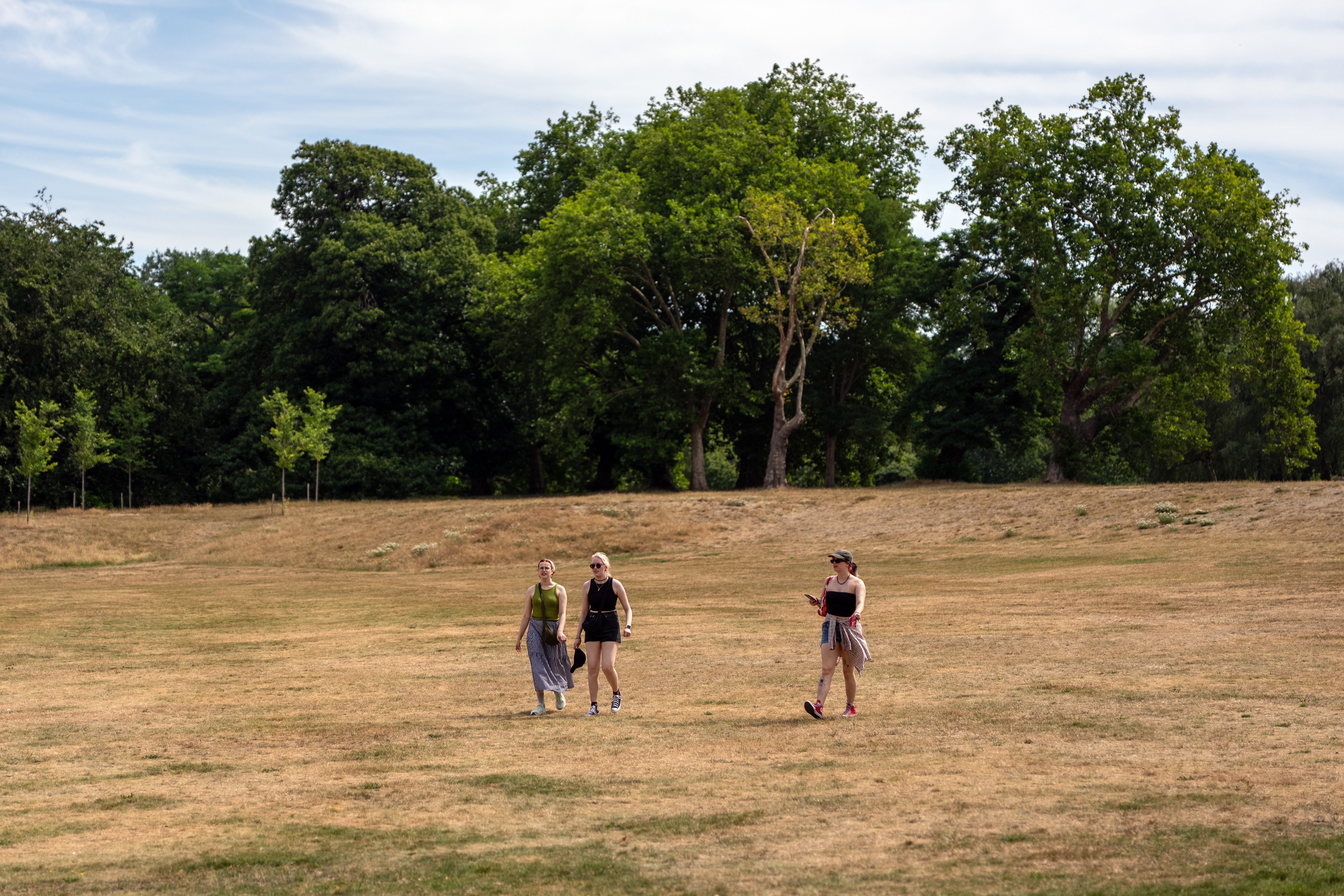
On Saturday, highs of around 24C are forecast in London and Cardiff along with 21C in Manchester and 23C in Glasgow, with similar temperatures forecast for Sunday.
It comes after there have been 28 days in 2026, consecutive and non-consecutive, when 30C has been exceeded somewhere in the UK: seven in May, eight in June and 13 in July.
The record for the number of 30C-plus days in a calendar year is 34, which was set in 1995.
As a result of the hot and dry conditions, the public are being urged to “play their part” in reducing the risk of wildfires after National Resilience data showed nearly 499 have now been recorded across England and Wales between January 1 and July 16.
While this remains well below the 748 seen at this point last year, the National Fire Chiefs Council (NFCC) said wildfire activity remains significantly higher than in recent years.
By the same point in the year, 81 wildfires were recorded in 2024, 242 in 2023 and 400 in 2022, they highlighted.
Meanwhile, central and south-east England have seen the longest unbroken spell of no recorded rainfall this century, Met Office figures suggest.
An average of zero rainfall has been measured across the organisation’s weather stations in both regions for 14 days in a row, from Thursday July 2 to Wednesday July 15, according to the latest available data.
This is the longest unbroken run of days with no rain for south-east England since a 15-day spell in April 1997.
For central England, it is the longest period since a 14-day run of no recorded rainfall in June 1996.
Data for July 16 has yet to be published, but could show the rain-free spells in both regions extending for even longer.
Scientists continue to warn that the country’s weather is changing as human-driven climate change disrupts global rainfall patterns and leads to increasingly conditions.
After successive heatwaves and a record warm spring for England and Wales, vegetation has also become increasingly dry, meaning even a single spark can quickly develop into a fast-moving wildfire, the NFCC said, adding the risk of further significant incidents remains for the coming weeks.
The NFCC is calling on people to avoid using disposable barbecues where possible, dispose of cigarettes safely, and take litter home or use the bins provided.
“Parents and carers can also help by talking to children and young people about fire safety and the importance of respecting the outdoors,” an NFCC spokesperson said.
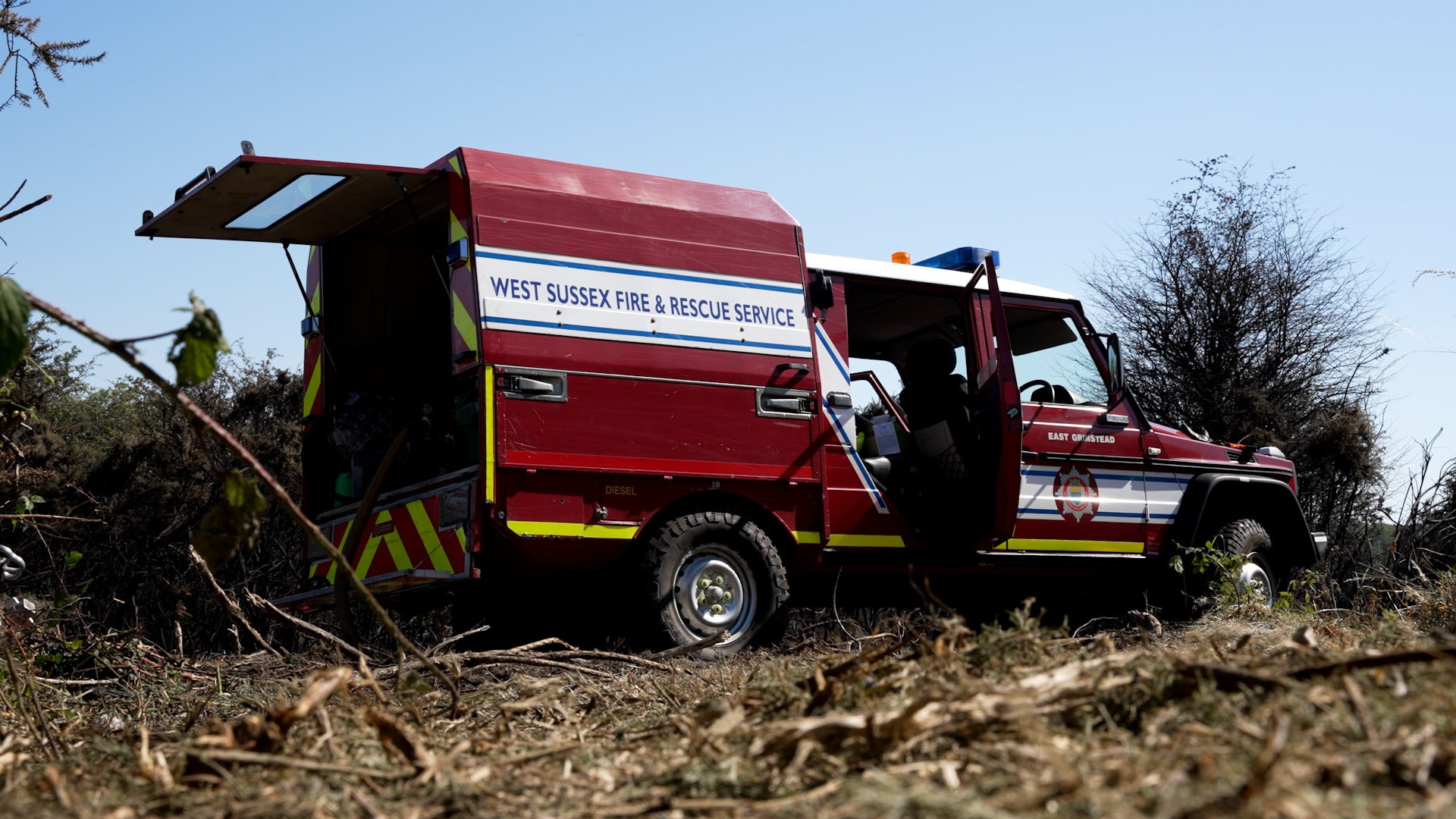
“Most wildfires are preventable. By making simple, responsible choices, we can all help protect our communities, wildlife, and natural spaces, while easing the pressure on firefighters who have already worked tirelessly to keep people safe this summer.”
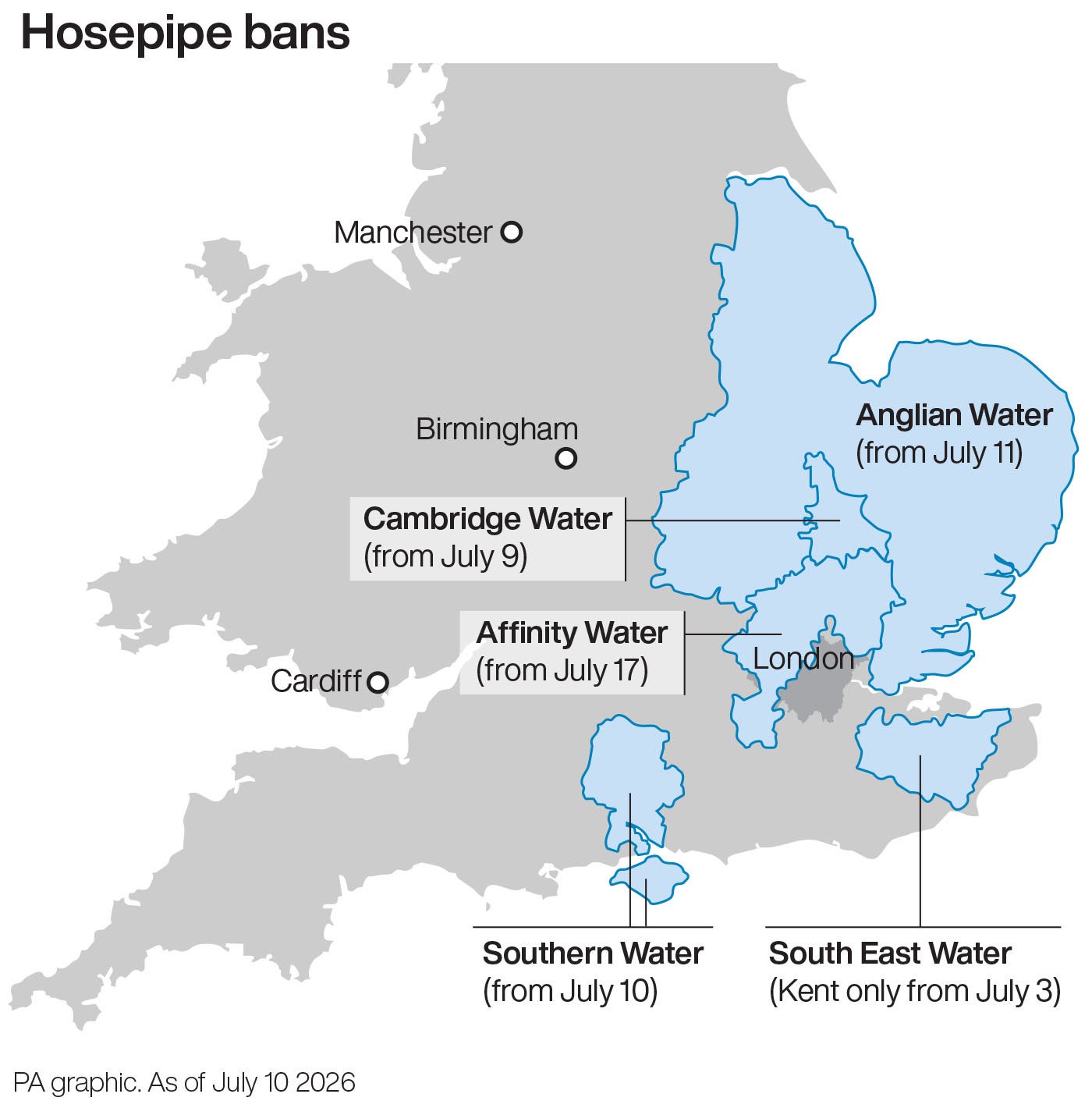
So far this summer, several hosepipe bans have been announced for large areas of southern England as strain on water supplies intensifies.
Reservoir storage levels in England are currently at 79%, around five percentage points below the long-term average for the time of year, the Environment Agency said as it released its weekly dry weather and drought report on Friday.
Six reservoirs are classed as having “notably low” levels, including Wimbleball in Somerset, Grafham in Cambridgeshire and Hanningfield in Essex, while Blagdon reservoir in Somerset is classed as being “exceptionally low”.
No areas of England are currently in drought, though the Environment Agency is “increasing its drought response activities” and the National Drought Group is scheduled to meet on July 20.