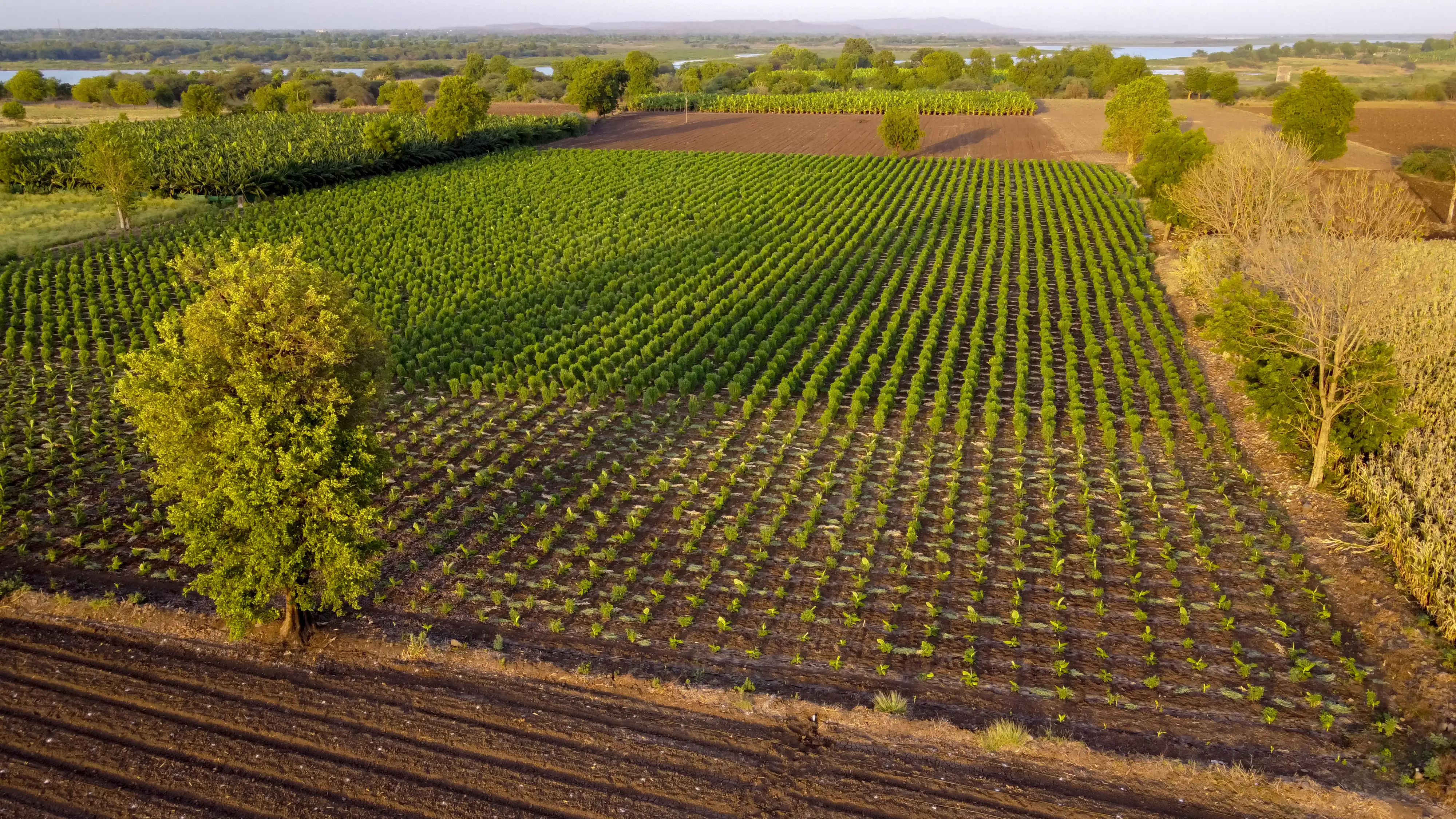
Conservation agriculture combined with subsurface drip irrigation can significantly improve wheat grain protein content while increasing crop yields and reducing water and nitrogen requirements, according to a decade-long study by researchers from ICAR-Central Soil Salinity Research Institute (CSSRI), ICAR-Indian Institute of Wheat and Barley Research (IIWBR), the International Maize and Wheat Improvement Center (CIMMYT) and SARO, Kathmandu, Nepal.
The study found that integrating conservation agriculture (CA) with precise water and nitrogen management through subsurface drip irrigation (SDI) increased wheat grain protein content by 11.8-12.3% compared with conventional farmers' practices.
For context, CA is a sustainable farming system based on the three principles of minimal soil disturbance, permanent soil cover, and crop diversification. SDI is a water-efficient system that delivers water and nutrients directly to plant roots through plastic tubes buried underground.
The research was conducted at ICAR-CSSRI, Karnal, beginning in 2009-10, and evaluated six wheat management systems involving conventional and zero tillage, crop residue retention, crop diversification and different irrigation and nutrient management practices.
The researchers found that CA combined with SDI improved protein water productivity by 117-144% over conventional farming practices. Protein nitrogen productivity also increased by 69.4-75.9%, indicating that the systems produced substantially more protein per unit of nitrogen applied.
“Regenerative agriculture practices coupled with micro irrigation based fertigation have shown multiple wins for improving productivity, resource use efficiency, soil health improvement, farm income, climate resilience, and agronomic biofortification mediated grain protein increase. This truly demonstrates an example towards one health, soil, plant, environment and human health. Scaling such innovations is our priority,” said M L Jat, Secretary DARE and DG ICAR, who is one of the co-authors of the report.
Wheat yields also improved under the CA-based systems. On average, CA-SDI systems recorded 23% and 37.2% higher grain yields than conventional farmers' practices in the rice-wheat and maize-wheat systems, respectively. The study noted that the CA-SDI systems used 20% less nitrogen than their respective flood-irrigated systems, without compromising grain yield or protein production.
According to the Ministry of Agriculture & Farmers' Welfare's third advance estimates for 2022-23, wheat in India was grown on 31.13 million hectares – nearly 14% of the global wheat area. Production hit an all-time high of 110.55 million tonnes, about 13% of world output, with record average national productivity of 3,521 kg per hectare.
The researchers attributed the gains to a combination of zero tillage, crop residue retention, diversified crop rotations including mungbean, and precise application of water and nitrogen directly to the crop root zone.
According to the study, conservation agriculture helped improve soil conditions, retain moisture and increase nitrogen availability. The inclusion of pulse crops such as mungbean also contributed biologically fixed nitrogen to the soil, while crop residues helped improve soil moisture and nutrient availability.
The study found that CA-based systems produced about 1.12 tonnes per hectare of additional wheat grain and 157.9 kg per hectare of additional protein compared with conventional farmers' practices.
The benefits could be significant if these practices are adopted at scale. The researchers estimated that adoption of different CA-based systems across 20 million hectares of potential wheat-growing area in South Asia could generate an additional 6.6-26.5 million tonnes of wheat and 1.5-4 million tonnes of protein annually. This additional protein production could potentially meet the protein requirements of an additional 70-187 million people each year, based on a requirement of 60 grams of protein per person per day.
The findings are particularly relevant for India and South Asia, where wheat is a key source of both calories and dietary protein. However, the researchers cautioned that the study was conducted at a single location under specific soil and climatic conditions, and further research is needed to assess the performance of the systems across different agro-ecological regions.




.png?w=600)