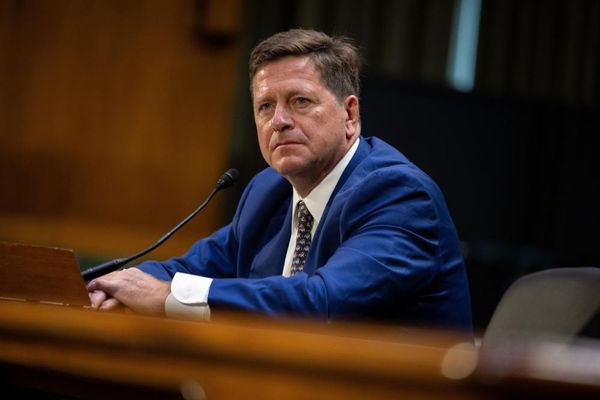
The Justice Department has officially abandoned plans to create a controversial $1.8 billion "Anti-Weaponization Fund," Acting Attorney General Todd Blanche told lawmakers Tuesday, ending weeks of political and legal turmoil surrounding one of the Trump administration's most debated initiatives.
Blanche made the announcement during testimony before the House Appropriations Committee, saying that while the administration still believes in the rationale behind the proposal, it will no longer move forward with the fund itself.
"The reasons for the fund," Blanche said, referring to what the administration has described as the alleged weaponization of government agencies against political opponents, "remain as important as they were before, but we are not moving forward with the fund."
The decision marks a dramatic reversal for a program unveiled less than a month ago as part of a settlement agreement between President Donald Trump and the Internal Revenue Service. Under the original plan, nearly $1.8 billion would have been set aside to compensate individuals who claimed they had been unfairly targeted by government investigations or prosecutions.
The proposal immediately generated fierce criticism from Democrats and a surprising amount of opposition from Republicans, who warned that the fund could be perceived as a taxpayer-financed compensation program for Trump allies, including some individuals involved in the January 6 Capitol riot.
The backlash intensified after lawmakers questioned whether January 6 defendants would be eligible for payments. Several Republican senators reportedly demanded assurances from the Justice Department that the fund would be scrapped entirely.
The controversy also spilled into the courts. Last week, U.S. District Judge Leonie Brinkema temporarily blocked the Justice Department from implementing the program while litigation challenging its legality proceeds. The order prevented federal officials from transferring money into the fund, reviewing claims or issuing payments pending further court proceedings.
Although the administration initially blamed the court ruling for pausing the initiative, reports indicated that growing resistance from congressional Republicans played a major role in the decision to abandon it altogether. Some GOP lawmakers feared the issue could jeopardize broader Republican legislative priorities, including a major immigration and border security package moving through Congress.
The fund originated from Trump's lawsuit against the IRS over the disclosure of his tax records. In May, the Justice Department announced a settlement that included the creation of the Anti-Weaponization Fund as a mechanism to compensate Americans who claimed they had suffered from government "lawfare" or political targeting.
Despite abandoning the fund, Blanche indicated that another controversial portion of the settlement remains intact. The administration will continue to honor provisions related to the resolution of Trump's tax dispute with the IRS, even as critics continue to question the legality and scope of those agreements.
The collapse of the fund represents one of the first significant policy retreats of Trump's second administration. It also highlights the unusual coalition that formed against the proposal, bringing together Democrats, legal watchdog groups, former Justice Department officials and a number of Republican lawmakers who argued for that the program lacked sufficient oversight and raised serious constitutional concerns.
For now, the $1.8 billion program appears dead. But Blanche's testimony made clear that the administration has not abandoned its broader argument that federal agencies were weaponized against Trump and his supporters, suggesting the issue is likely to remain a political flashpoint in Washington.