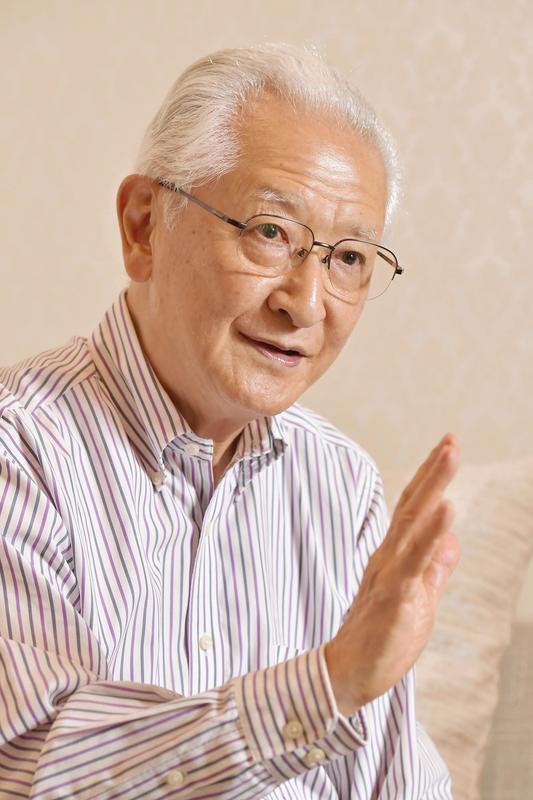
Beethoven's Symphony No. 9 "Choral" resonates throughout the country again this month. Of all the "Ninth" concerts, the ones on Dec. 28 and 29 at Tokyo's Suntory Hall by the Tokyo Symphony Orchestra (TSO) will elicit special feelings because it will be the last time the annual concerts will be conducted by Kazuyoshi Akiyama.
The orchestra's year-end concert, which features the symphony and two movements from Vivaldi's "Four Seasons," started in 1976. Akiyama, the orchestra's conductor laureate, has conducted the performances for 40 years, every year since 1978.
"In older days, there were really so many Ninth Symphony concerts at year-end," Akiyama said. "I myself conducted not only the TSO but also the Osaka Philharmonic Orchestra [performing the symphony]. One year I did the symphony more than 20 times, starting from November. It was a time when you could earn extra money by playing the Ninth Symphony."
Even having conducted the work so many times, he never tires of it.
"It's such an epic work that there are so many ways to approach it. It's like Mt. Fuji having more than one trail. There's the Yoshida trail, the Subashiri trail, the Fujinomiya trail, and so on. They all lead to one goal, but there are various ways to play it," Akiyama said.
The TSO readily responds to the changes signaled by his baton, from the tempo and dynamics to phrasing.
"That's because we've been doing this for 40 years," he said.
The composer himself took many hard years to write the work that almost sums up his career. Beethoven left sketches at various stages of composition.
"In the beginning, this symphony was like, 'What's up with this? What's it all about?' He rewrote it many times over, and it became a most accomplished opus.
"There's not a single dud in all the Beethoven symphonies, from No. 1 to No. 9. They are stacked on top of each other as if they represent the history of Beethoven's composition methods," Akiyama said.
Therefore, whenever he conducts the Ninth Symphony, he does so after revisiting symphonies Nos. 1 to 8 in order.
"People say to me, 'You bother to do all that?' but I want to stick to this way," Akiyama said.
On graduating from Toho Gakuen College Music Department in 1963, Akiyama became the TSO's resident conductor.
However, the orchestra lost a sponsor and went bankrupt the following year. He scrambled with orchestra members to raise funds so that they would be able to continue the orchestra independently.
"We gave concerts almost every day to raise as much money as we could," the conductor said.
Akiyama served as the TSO's music director and resident conductor from 1968 to 2004.
The orchestra went on many tours with him. Orchestra members and Akiyama took night trains to the Tohoku region because there was no Shinkansen bullet train service in the region yet. They slept on newspapers spread on the floor of packed train cars, with many sharing the same rooms when they stayed at ryokan inns.
"After a concert, I would purchase a large bottle of sake. It was a nice experience," he recalled.
Now that Akiyama has conducted many orchestras, he thinks the TSO has maintained a consistent spirit from long before.
"Even when the orchestra was not very good, the members did their best in the way they could. They never tried to play cool. They wanted to become an orchestra that is loved by the audience as a result, and they've kept on having this spirit," he said.
Next year he will literally pass the baton for the Ninth Symphony to Jonathan Nott, the orchestra's current music director. Akiyama's relationship with the TSO will not end there, though.
"I'd like to conduct contemporary music and works that I don't [yet] know. I want to take good care of classical pieces, too. I hope the audience will like it when I pare down exaggerated expressions and use a contemporary playing style," he said.
Read more from The Japan News at https://japannews.yomiuri.co.jp/