Some analysts of Donald Trump’s status as the early front-runner in the contest for the Republican presidential nomination have attributed his success to his televisual history: a dozen seasons as a reality TV host, it’s argued, have bestowed the twin advantages of instant recognition and ease in the televised debates that form the earliest hustings. Although an apprentice in high-level politics, The Apprentice has made him a veteran of media tricks.
And while it can be counter-argued that the billionaire’s main trump-card might be a general electoral trend towards unlikely outsiders – Alex Tsipiras in Greece, Jeremy Corbyn in the UK – Trump’s run raises the question of whether, in an era when electoral politics increasingly plays out on a variety of shiny flat devices, screen fame might be a route to power.
In the 1960s, when Ronald Reagan became Governor of California and made his first bids for the presidency that he would eventually win, it was widely assumed that other movie stars would follow him to the White House: at various times, there has been speculation about Clint Eastwood, George Clooney and Ben Affleck. There was also frequent speculation about which other celebrity professions, apart from acting, might produce politicians. The space race seemed a reasonable bet but the Apollo moon-landers tended towards introspection or eccentricity and the furthest someone from the space race made it in a democratic race was Mercury astronaut John Glenn’s spell as a US senator.
Because US news anchors such as Walter Cronkite, Dan Rather and Tom Brokaw had the air of pseudo-presidents – strong-jawed types who looked the nation in the eye and spoke in gravelly tones – there also seemed a possible route from studio to Pennsylvania Avenue. Yet although these men at their peak were trusted to tell the truth in a way that few politicians have been, they earned 10 times or more than the president and were able to keep their jobs for decades rather than, if they were incredibly lucky, two four-year terms. Why give that up for a new career that might fail at once in the Iowa primaries?
Another drawback is that media types tend to have left a large video library and cuttings file of positions on controversial issues. This prevented the broadcaster Pat Buchanan from being more than a destabilising irritant to President George W Bush with his presidential bid in 1992, while former BBC2 Late Show presenter Michael Ignatieff has attributed his failure to become prime minister of Canada in 2011 partly to the fact that, while the high profile from his media career helped him to become leader of the opposition, he was hobbled in office by the risk of being tripped up by old clips and clippings.

But, while there are a number of reasons that Donald Trump shouldn’t – and probably won’t – become US president, he has proved usefully invulnerable to the usual problems of the TV star in politics. He is rich enough not to need his presenter’s income and currently doesn’t have the distraction of a screen career after NBC sacked him from The Apprentice and other projects for comments about Mexican migrants. As his political survival of that row showed, he also seems safe from embarrassment caused by past remarks, and his main role on The Apprentice was to be a pro-business blowhard, which may be what a section of the American electorate wants in Washington.
For UK viewers, the sight of Trump on the stump inevitably prompts idle nightmares of Lord Sugar, Donald’s UK substitute, as prime minister. Voters here, though, are protected from such a possibility by a combination of our parliamentary system and the strict political regulation of TV. If Sugar were eyeing No 10, he would first need to fight and win a parliamentary seat and then secure a party leadership. And, at the point of becoming a prospective parliamentary candidate, he would have to give up The Apprentice due to conflict-of-interest rules. Even when he took a role as a business adviser to Gordon Brown’s administration, one series of the UK version of The Apprentice was delayed by the BBC until after the general election.
Such sensitivities forced Sandi Toksvig to give up her BBC commitments after launching a pro-equality party, and the risk of ending up without a job in either broadcasting or politics may have deterred other would-be leaders from the media. In his newspaper columns, Jeremy Clarkson for a long time sounded like a Nigel Farage waiting to happen but, if he had started a party or stood for office, it would have ended his career on Top Gear as swiftly as punching a colleague over supper did.
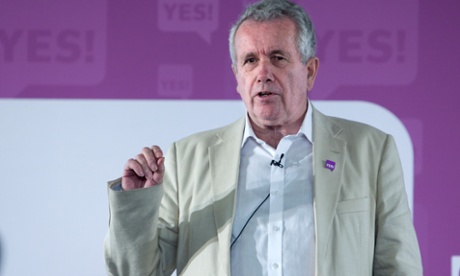
There may also be suspicion at Westminster of TV faces: Labour’s Ben Bradshaw (ex-Newsnight) and the Conservatives’ Esther McVey (ex-GMTV) have generally remained junior in cabinet reshuffles to contemporaries who were never on the telly. So former news reporter Martin Bell, who was content to serve as an independent one-man band as anti-corruption MP for Tatton, remains the biggest TV-to-MP transfer, with more glamorous traffic – Matthew Parris, Robert Kilroy-Silk – going in the other direction.
In a British republic, with a ceremonial president as head of state, Lord Sugar might well have fancied the job, as, probably, would Clarkson and Dame Esther Rantzen, while Mary Berry would also surely come under pressure to do a Trump. The Tories still appear to have ambitions to attract Jeremy Paxman as a parliamentary candidate but he might be discouraged by having, after a media life at the top, to start political life at the bottom.
Until then, the highest-achiever in Britain so far from TV is the former PR man for Carlton TV (one of the most notorious franchise-holders in the history of ITV), who is currently serving his second term in 10 Downing Street.