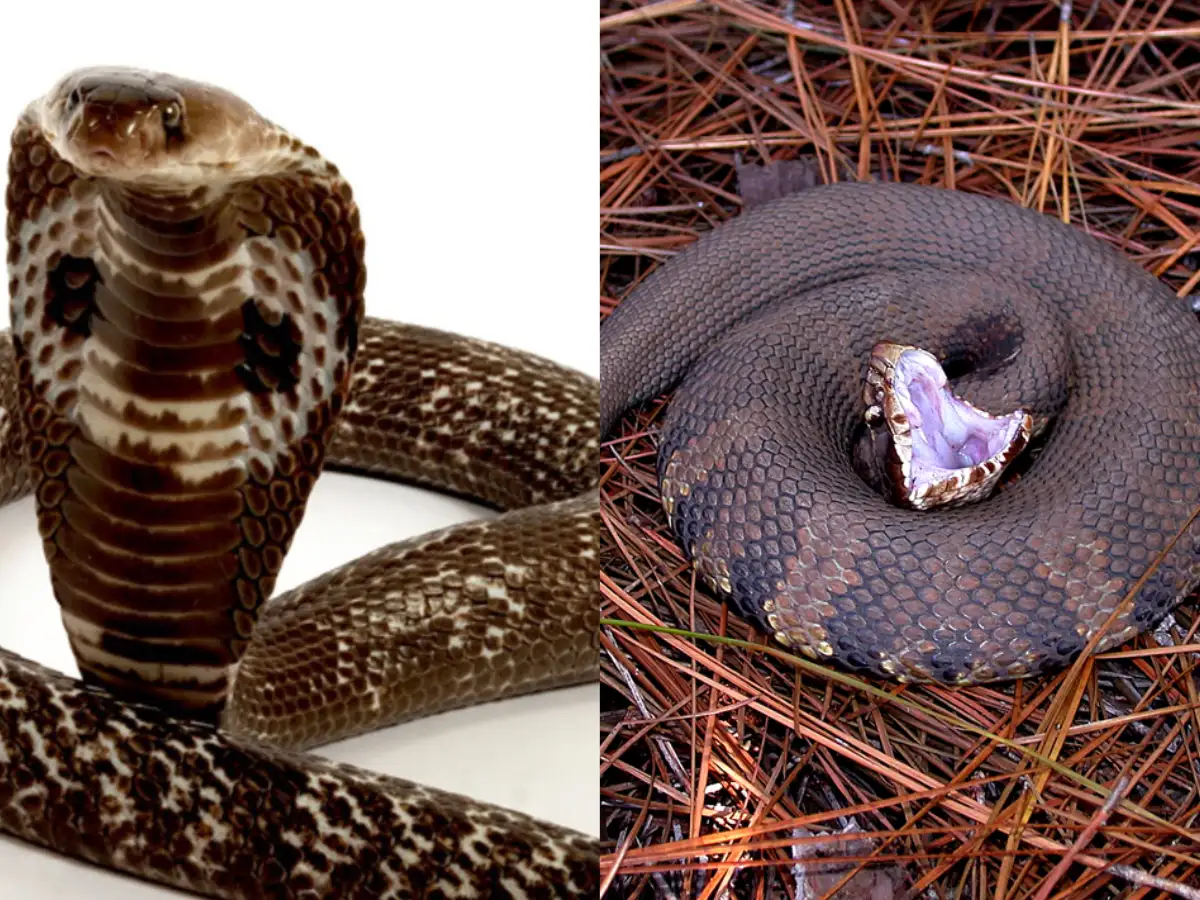
Cobras and cottonmouths may appear similar in many people's minds since both are venomous snakes that scare people; nevertheless, the comparison between these snakes would become far more complex when their venom biology and geographies are discussed. The first distinction to be made between these two is that cobras are elapids, and cottonmouths are pit vipers belonging to the genus Cottonmouth, which is significant because the two snakes affect different biological processes.
According to the toxicology literature indexed in PubMed, some cobra species produce neurotoxins and cytotoxins that can disrupt nervous system function and cause tissue damage at the site of a bite. The effect of cottonmouth venom is somewhat different. This is explained by the fact that cottonmouths are vipers whose venoms are characterized by hemotoxic and coagulopathic effects such as hemorrhage, swelling, and tissue destruction but not paralysis.
In particular, according to clinical literature indexed on PubMed Central, cottonmouths belong to pit-viper lineages with venom systems that impact blood clotting and vascular structure. The difference is essential since venom cannot be reduced to a "deadliness score”: different snake families developed their own biochemical techniques for capturing prey and protecting themselves.
Cobra venom and cottonmouth venom affect the body differently
One of the reasons why the cobra has a very bad reputation in terms of its medical effects is the potential for neurotoxicity, which may impair breathing and muscle functions. There have been documented cases in clinical case reports indexed in PubMed in which the cobra's venom causes paralysis in addition to local tissue damage and necrosis. The main danger lies in the possible involvement of the respiratory muscles, which would lead to respiratory failure. This makes the cobra's bite especially scary since the patient might develop serious problems even if there are no apparent issues with the bite site.