When Riot Games introduced the Fearless Draft system in 2025, it fundamentally changed how competitive League of Legends is played.
For years, Champion Select followed familiar patterns. Teams built stable priority picks, analysts relied on predictable tier lists, and best-of-five series often repeated similar compositions from game to game.
Fearless Draft dismantled that structure overnight. By preventing teams from picking the same champion more than once in a series, Riot turned drafting into a constantly evolving puzzle.
The result has been deeper champion pools, unexpected counter picks, and late-series drafts that look nothing like the opening game. But for coaches and analysts, the format forced an entirely new way of thinking about preparation and strategy.
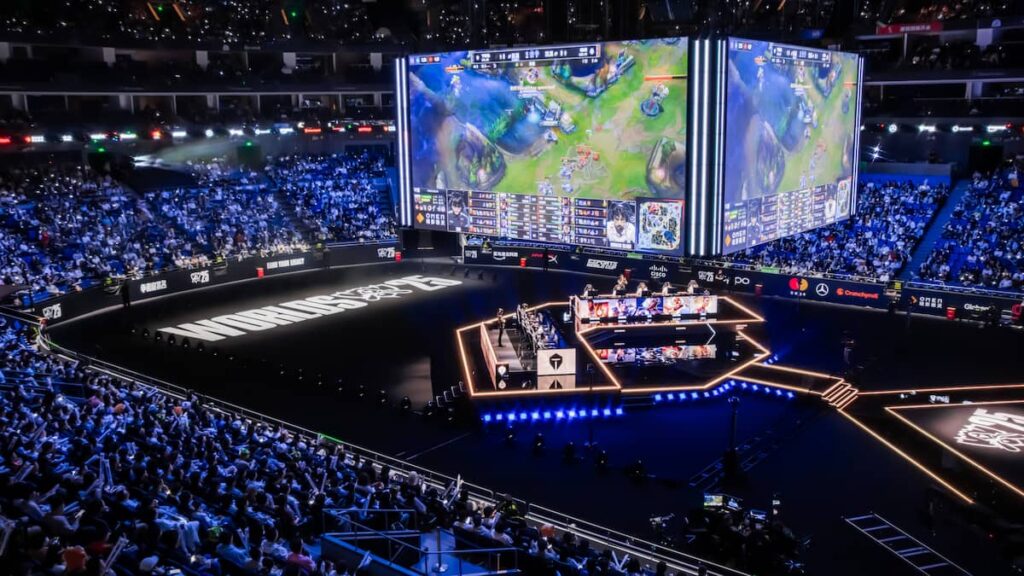
The impact of Fearless Draft on champion diversity was immediately visible on the international stage. According to RFT.GG, the MSI 2024 featured 87 unique champions picked or banned, while the MSI 2025 saw that number jump to 108. Champion dominance also dropped sharply. In MSI 2024, the most picked champion, K’Sante, appeared 49 times, while in MSI 2025, the most picked champion, Aurora, was selected only 16 times, reflecting how Fearless Draft spread picks across a much wider pool.
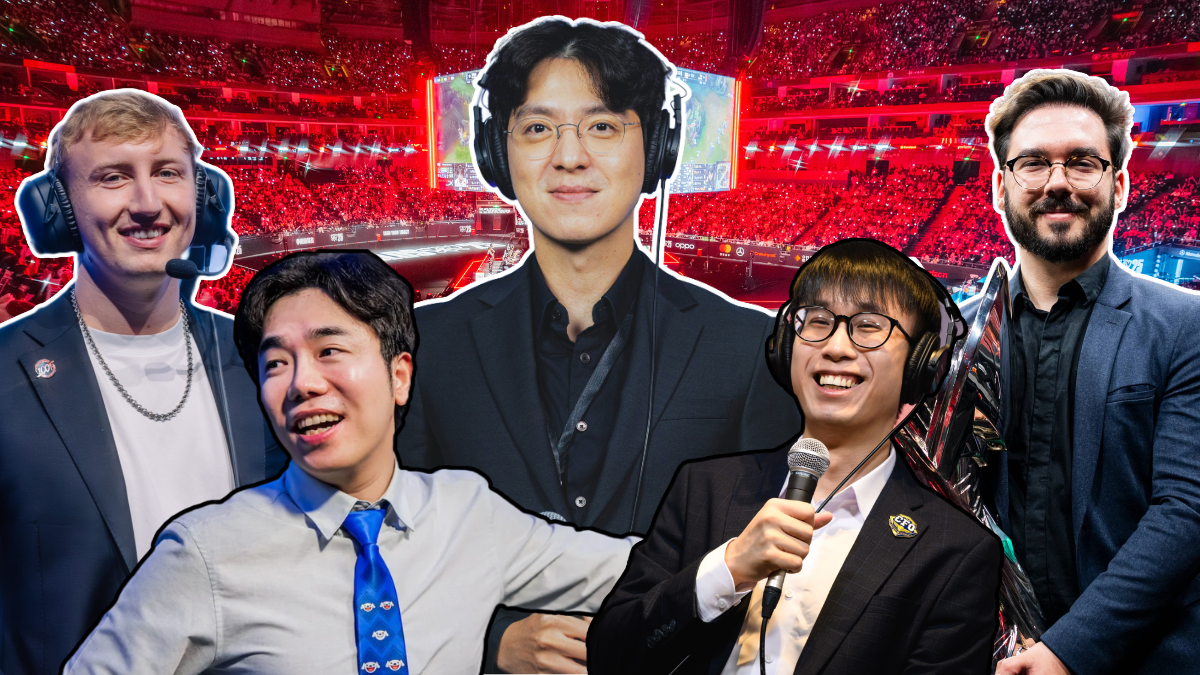
During World 2025, happening in China, Dot Esports spoke with coaches and analysts from five major regions, the LCK, LPL, LCP, LEC, and LCS, about how Fearless Draft changed their preparation, decision-making, and the strategic battle that unfolds before the game even begins.
Across those conversations, a clear pattern emerged. Fearless Draft has not just diversified champion pools; it has reshaped the entire strategic identity of the professional League.
kkOma of LCK: Improvisation becomes a core skill
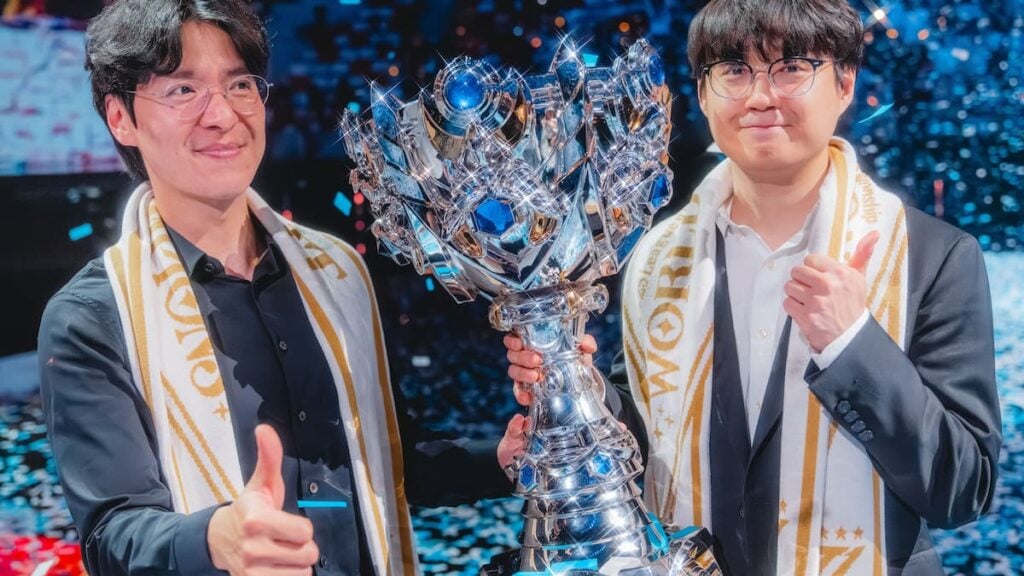
For Kim ‘kkOma’ Jeong-gyun, the legendary head coach of T1–who went on to win the tournament and achieve the rare three-peat in World Championships–Fearless Draft introduced something rarely seen in earlier eras of competitive League: constant improvisation.
Because champions disappear from the pool after each game, later stages of a series force teams to make rapid adjustments. “I feel like every team is on the same page because it applies to the whole scene,” kkOma said. “If you go into a best-of-five, you actually have to focus on making the right decision in that instant.”
Early games in a series often resemble the traditional meta teams that are used to preparing for. But as champions are removed, that stability disappears quickly.
“Usually, the first three games you might end up seeing something that you expect,” kkOma explained. “But from games four and five, whether it be macro or your picks, you always end up improvising. You always have to be prepared for all the variables that can be thrown at you.”
That unpredictability also changes how teams practice. “You end up getting a lot of practice against a lot of comps that you’ve never seen before,” he said.
Homme of LPL: Champion pool depth becomes a weapon
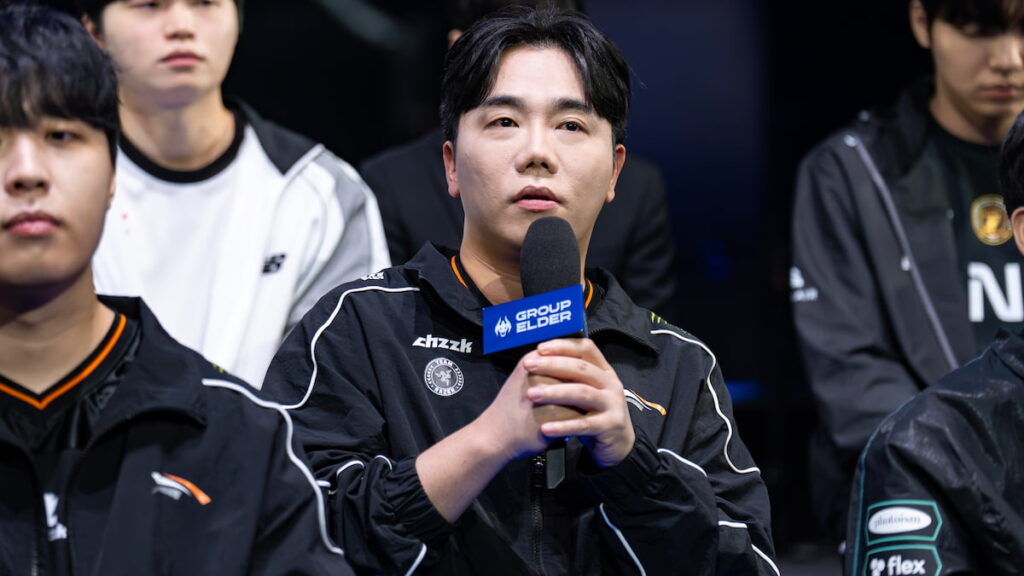
In China, the change has emphasized one of the region’s long-standing strengths, mechanical flexibility and deep champion pools. According to Yoon ‘Homme’ Sung-young, head coach of Top Esports, the format removed the ability for teams to repeatedly rely on the same dominant picks throughout a series.
“In the past, when the opponent wasn’t able to catch those high-tier picks, we could take those and abuse it more,” Homme said. “But you can’t do that anymore.” Instead, teams must be ready to move through their champion priorities as a series progresses, placing greater value on versatility across the roster.
“That’s why it gives even more advantage to teams with players who have more experience and have a deeper champion pool,” Homme said. “So I think that’s just something that LPL teams have been revolving around.”
While the preparation process itself has not drastically changed for China, the way coaches apply their tier lists during a series has evolved. “Since you can play the champion only once, you really just go down your tier list,” Homme explained. “You start from the top, and once that game is over, you go to the next one.”
Fearless Draft has also allowed certain champions to appear in competitive play even if they are not central to the overall meta. During Worlds, for example, LPL teams frequently turned to Qiyana. “Since Qiyana got buffed, she became a better and viable pick,” Homme said. “And because of Fearless Draft, it is viable enough to show up in at least one game.”
Homme is the coach of Hanwha Life Esports in LCK now.
Chawy of LCP: Early adaptation created a competitive edge
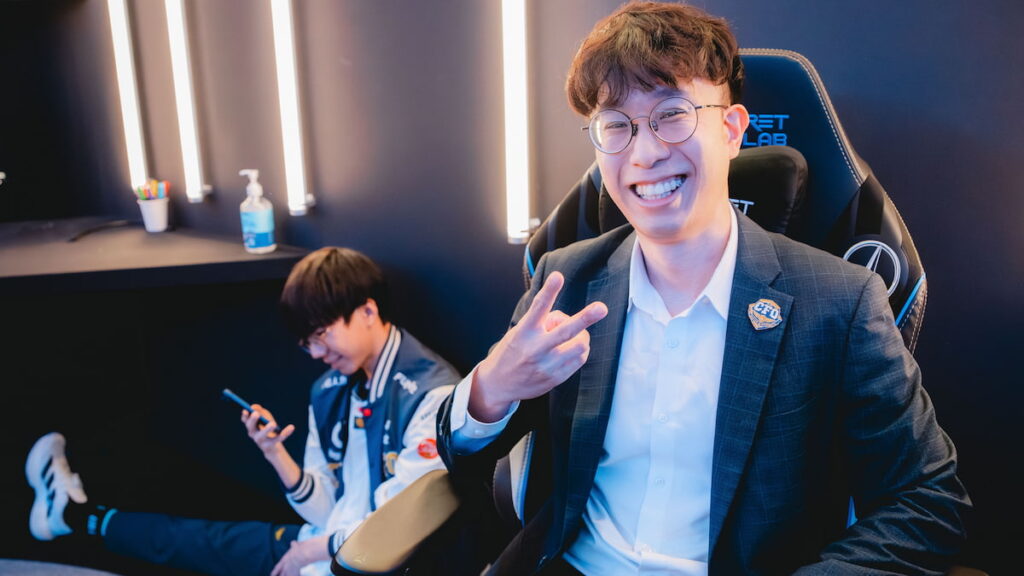
For emerging regions, adapting quickly to the Fearless Drafts created an opportunity to gain an advantage.
That was the case for Wong “Chawy” Xing Lei and his team at CTBC Flying Oyster, who surprised many observers by winning the inaugural LCP split and qualifying for international competition. “I think we adapted pretty fast,” Chawy said. “That’s why we managed to win the first season of LCP.”
“We started practicing much earlier and spent a lot of time figuring out Fearless Drafts and how we can get an edge.”
The team’s unusual roster construction also played a role. CFO runs a dual top lane system, rotating players depending on the opponent and draft situation. “We look at the opponent’s playstyle and the champion pool,” Chawy explained. “Then we decide which top laner is better to go against them.”
“The reason we succeeded this year was because we let our players play champions they’re really good at,” he said.
That approach paid off for the team, which pulled off multiple upsets against stronger opponents throughout the year, reshaping expectations for teams from the LCP. The team ultimately became the only squad to qualify for all three international events that season, a run that highlighted how quickly they adapted to the demands of Fearless Draft.
Rodrigo of LEC: Drafting evolves into a strategic mind game
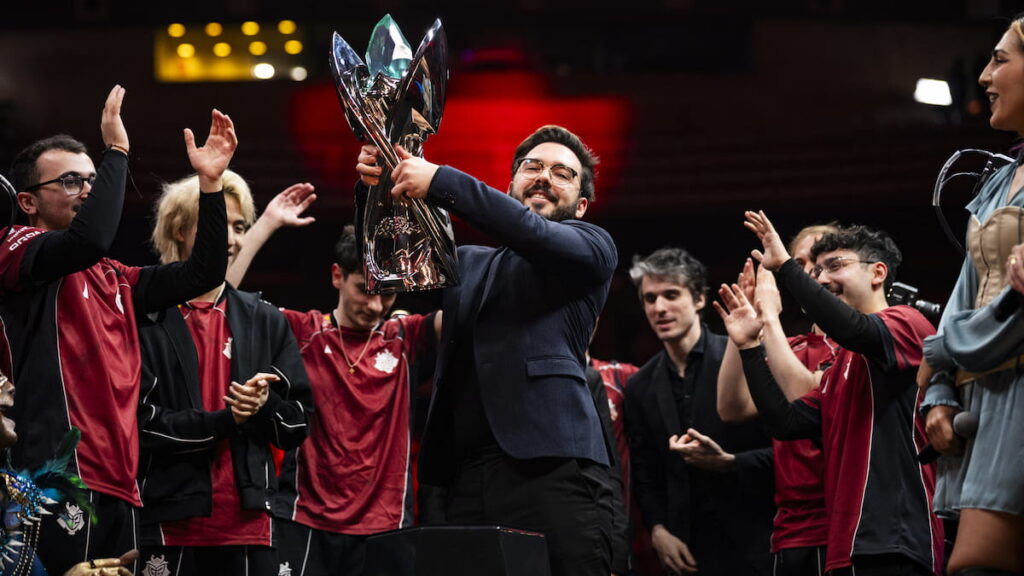
Few regions embrace creative drafting like Europe, and for Rodrigo Oliveira, analyst for G2 Esports, the introduction of the Fearless Draft rewarded that philosophy.
“I think we adapted quite quickly to Fearless Draft,” Rodrigo said. “We have internal systems and software designed specifically for this to help us as a team.”
But one of the biggest adjustments came in how teams prepare. Because champions cannot be reused in a series, scrim environments under Fearless Draft often produce scenarios that rarely occur on stage.
“Especially when you practice Fearless scrims, there are champions that you play in scrims that you actually never play on stage,” Rodrigo explained. “For example, if you go into a game five in scrims and play a certain comp, you might just never play it on stage because it’s such a rare case.”
“Game five with bans on top of it as well is very rare,” he said. “It actually happens quite often that the game five in scrims is very different from what actually happens on stage.”
Scrims themselves can also differ structurally from official matches, further complicating preparation. “Some teams actually don’t ban in scrims and just leave stuff open,” Rodrigo said. “So the whole dynamic is very different.”
Because of this, practice under Fearless Draft often becomes less about rehearsing exact compositions and more about understanding possible champion combinations and strategic responses. “The idea is looking at potential good combos, good answers, and making sure the whole strategy makes sense,” Rodrigo said.
Even then, many strategies tested in practice never appear in real matches.
“You end up playing a lot of stuff in practice that actually doesn’t end up being played on stage,” he said. “The first three games usually have some stability, but games four and five in scrims are a lot of picks that just never come to stage.”
The format also reshapes how analysts evaluate the game itself. Traditional statistics, particularly champion win rates, become much harder to interpret when every game exists in a completely different draft environment.
“It is quite hard to use statistics in Fearless Draft,” Rodrigo said. “Even if a champion has a good win rate, it doesn’t necessarily mean the champion is overperforming.” Instead, those numbers often reflect when a champion appears during a series rather than how strong it actually is.
“It might just mean it was picked in game three or four when the draft is already very different,” he explained. For analysts and coaches, that unpredictability has turned drafting into a constantly shifting puzzle, one where creativity and preparation matter as much as raw data.
Goldenglue of LCS: The growing influence of coaching strategy

For Greyson ‘Goldenglue’ Gilmer, head coach of 100 Thieves, the introduction of Fearless Draft has been one of the most positive changes the competitive League has seen in years.
“My overall thoughts are that this has been an extreme success,” Goldenglue said. “It’s better to watch, it’s more engaging as a coach, and there’s way more room for drafts.”
The system also expands the strategic influence of coaching staffs, giving them more opportunities to shape a series through preparation and adaptation. “I think it’s really increased the coach’s impact on the game,” he said.
One difference he noticed during international competition was how teams from Asia approached champion denial within the system. Instead of only drafting around their own compositions, they frequently used early picks to remove opponents’ strongest champions from the rest of the series.
One area where he felt the difference was most noticeable was how teams used early picks to limit an opponent’s options later in the series. “I don’t feel like NA teams thought as much about blocking picks as the Asian teams do,” he explained. “If you see the Asian teams, a lot of times they’ll just high-prio the enemy’s best picks.”
While Goldenglue attempted to apply that approach himself, he felt the strategy was not as widely emphasized across North America. “I think I was trying to do that,” he said, “but I just felt like that was not prioritized as much from the North American teams.”
“I actually think the funny thing that’s most challenging about Fearless is the way it affects practice,” Goldenglue said. “I have to be a lot more focused in practice pretty much, because you’re kind of getting Fearless Draft practice every day if you’re taking it seriously.”
“I almost needed to make a draft plan for every game,” he said. Despite the additional workload, Goldenglue believes the format works well overall and should remain largely unchanged, with only a minor tweak to the pacing between games.
Goldenglue is the coach of Sentinels now in LCS.
A drafting revolution
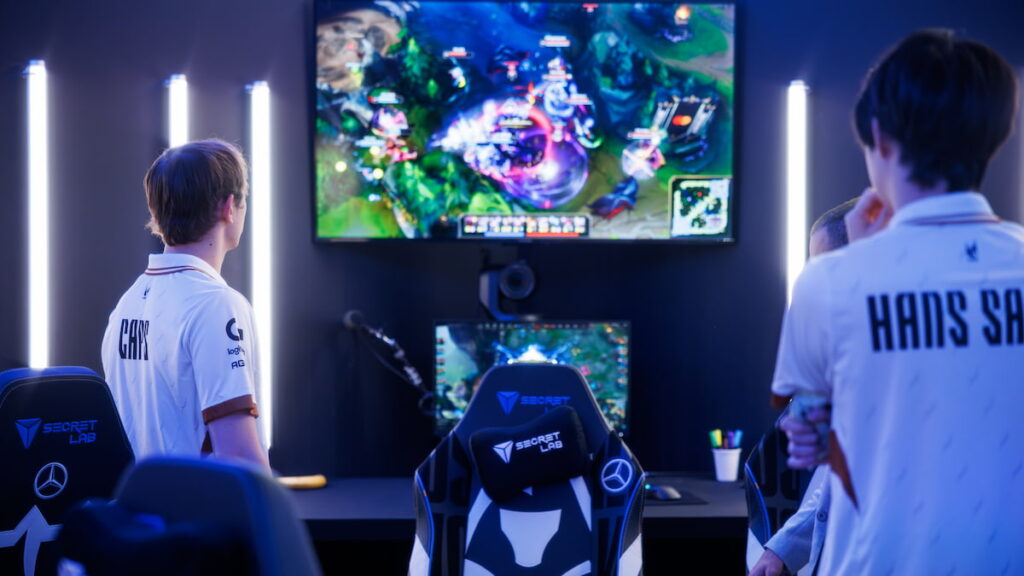
Across the five regions, coaches described different adjustments. Korea emphasized improvisation, China highlighted champion pool depth, Europe leaned into creativity, APAC gained an edge through early experimentation, and North America continues refining its strategic approach.
Despite their different approaches, coaches across every region agreed on one thing: Fearless Draft has permanently changed competitive League of Legends.
By forcing teams to adapt continuously throughout a series, the system rewards preparation, creativity, and versatility across an entire roster. It also transforms champion select from a brief pregame phase into one of the most strategically rich parts of professional play. For fans watching a best-of-five, the impact is clear. No two games in a series look the same anymore.