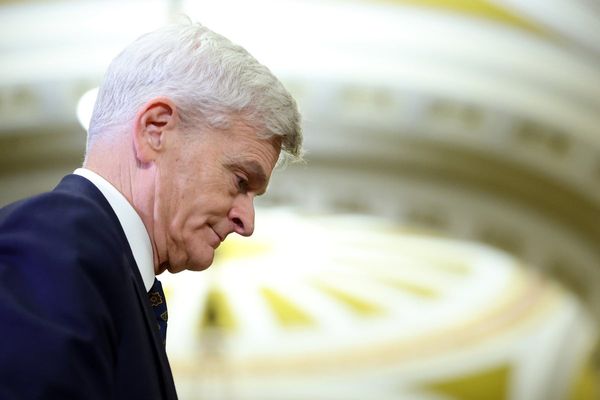
From the moment Clive Davis was appointed general manager of Columbia Records Group in 1965, the Brooklyn-born music executive was rarely far from the very pinnacle of the music industry. Over the course of his remarkable six-decade career, he helped launch stars as era-defining and diverse as Whitney Houston, Bruce Springsteen and Santana. His Grammy parties were so legendary they sometimes overshadowed the awards show itself. No less an authority than Aretha Franklin called Davis, who has died at the age of 94, “the greatest record man of all time.”
But Davis did not in initially seek out a career in music. Born on April 4, 1932, he grew up as the son of an electrician in New York City. “The emphasis in Jewish families that did not have any money was that you've got to be a lawyer, or you’ve got to be a doctor,” Davis reflected in the 2017 documentary Clive Davis: The Soundtrack of Our Lives. “I was going to be a lawyer, with no clue what being a lawyer meant.”
In 1955, Davis was hired by the law firm of Rosenman, Colin, Kaye, Petschek, and Freund, who counted CBS among their clients. He was subsequently taken on as a general counsel by CBS subsidiary Columbia Records, and was appointed to a management role while still in his early 30s. A couple of years later, in 1967, he had a life-changing experience at the Monterey Pop Festival that introduced him to the burgeoning psychedelic music scene.
Davis recalled in his 2013 memoir that he was not a hippy himself, attending the festival in “a V neck tennis sweater in the traditional white, maroon and black, over white pants,” but that he was blown away by artists such as Big Brother and the Holding Company and their singer, Janis Joplin. He immediately signed the group, but said he turned down her other advances. He wrote in his book that the band’s manager told him: “She thinks it only fitting and proper that she ball you to cement the deal,” but that he declined the offer “as politely as I could.”
After Joplin, Davis went on to sign a string of other artists that would go on to huge success, including Bruce Springsteen, Billy Joel and Santana. He had a keen ear for a hit, and pushed the acts he signed to deliver them. After hearing the first version of Springsteen’s 1973 debut album Greetings From Asbury Park, N.J., Davis asked the songwriter to go back and write a couple more singles. Springsteen reflected later: “I went to the beach and wrote ‘Blinded by the Light’ and ‘Spirit in the Night’. That was a good call. They ended up being two of my favorite songs on the record.”
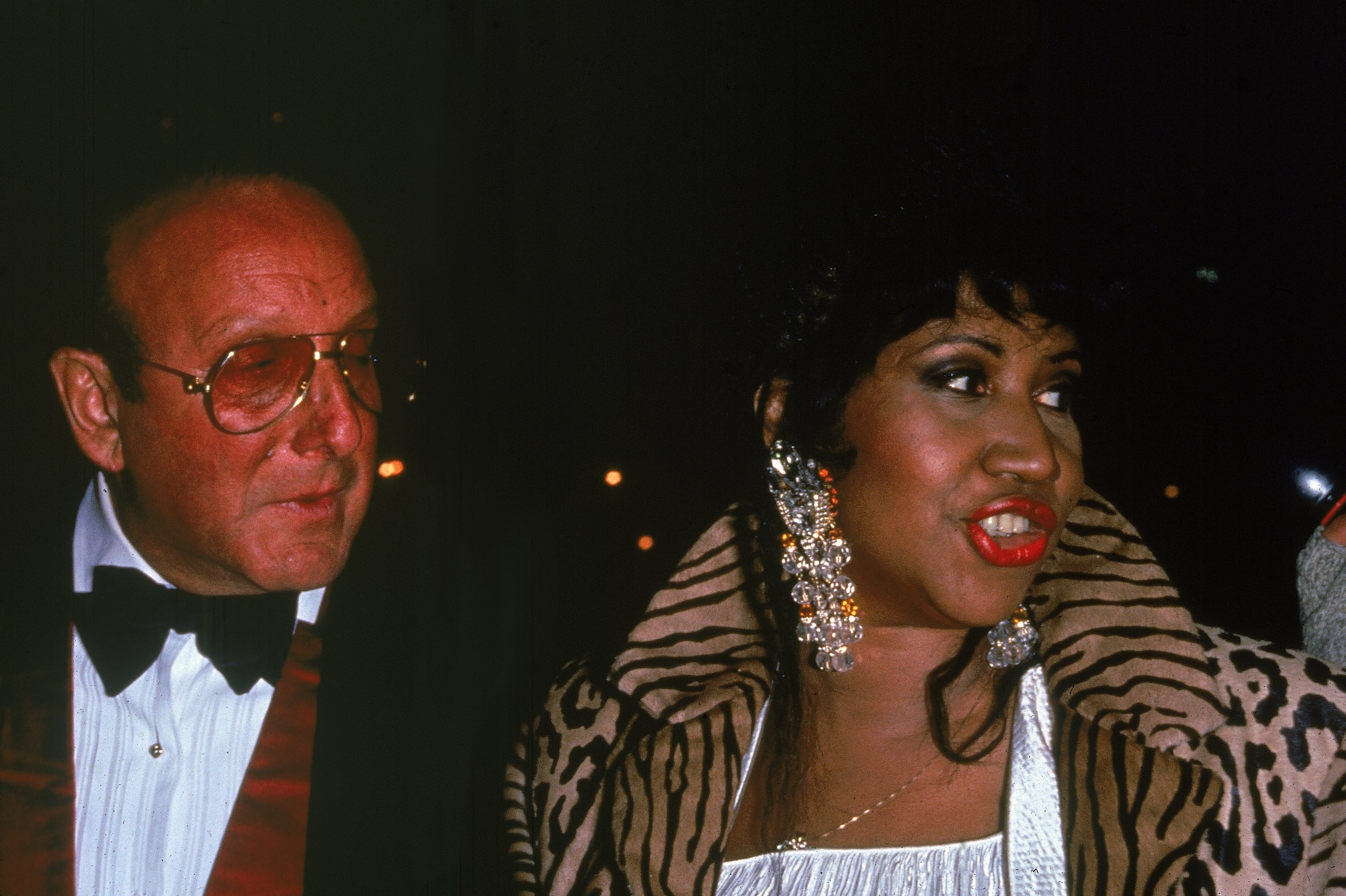
Davis was fired from his post as president of the CBS Records Group in 1973, although he always denied the accusation that he used company funds to bankroll personal expenses including his son’s bar mitzvah. He subsequently founded his own label, Arista Records, where he signed a diverse roster including Barry Manilow, Aretha Franklin, Patti Smith and Westlife. In 1983, he signed 19-year-old Whitney Houston, who went on to become one of the biggest-selling singers in history.
In his memoir, Davis recalled the level of attention he’d paid to Houston’s burgeoning career, including in a lengthy letter that included “constructive suggestions” such as: “It’s certainly OK to improvise at the end of the song and to extend it and give it a soulful feeling but it can't go on and on just aimlessly... it looks like you don't know how to end the song.”
Houston’s death, in 2012 at the age of 48, came as a shock to Davis just as it did the rest of the world. He later recalled her telling him days before her death that she had “beaten” her drug addiction. She died just hours before she was due to perform at one of Davis’s famous pre-Grammy parties, the annual events that cemented his reputation as one of the music industry’s most influential figures. He considered them a central part of his legacy. “It is one of my proudest achievements that it continues to this day,” he wrote in his memoir. “The party is still going strong – more exclusive, more unique, and more festive than ever.”
In a working life as sprawling as the one Davis enjoyed, it is perhaps inevitable he could not entirely avoid controversy. In 1990, after Milli Vanilli were stripped of their Grammy after it emerged the group had lip-synced to songs performed by uncredited session singers, Davis categorically denied any knowledge or involvement in the deception. He never commented publicly on the dramatic fall from grace of his former protégé, Sean “Diddy” Combs, who Davis once gave $15 million to help fund Bad Boy Records.
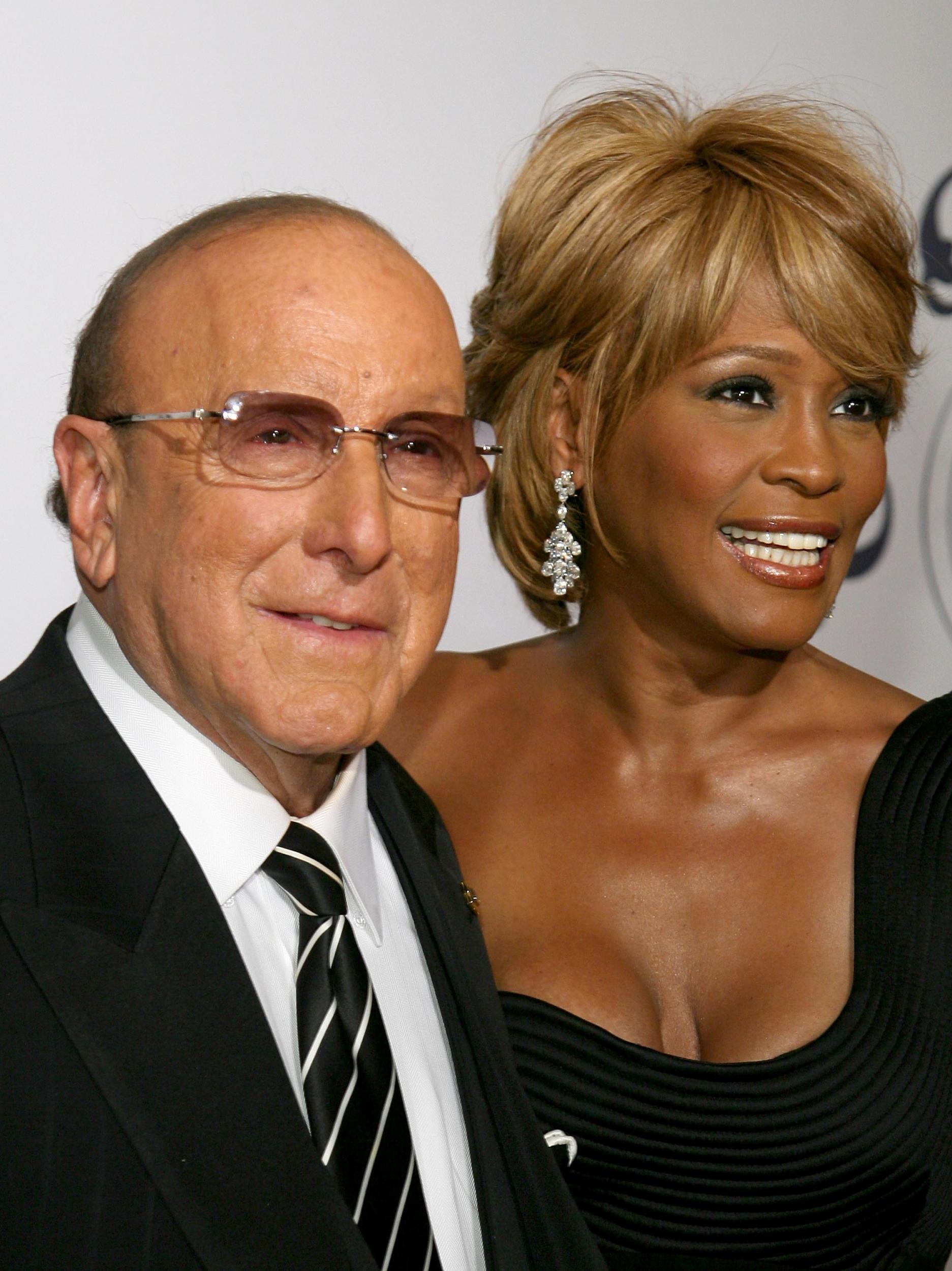
When Davis’s autobiography was published, much of the coverage centered on his decision to come out as bisexual. “The adage that you're either gay or straight or you're lying, well, that's not true.” he wrote. “Bisexuality does exist.” He was married twice, to Helen Cohen from in 1956 to 1965, and to Janet Adelberg, from 1965 to 1985. He is survived by his four children: Fred, Lauren, Mitchell and Doug.
He will be remembered by an industry that revered him to the point that he was referenced in songs on several occasions. In Aerosmith’s 1979 song “No Surprize”, frontman Steven Tyler sings: “Old Clive Davis said he’s surely gonna make us a star, I’m gonna make you a star, just the way you are.” While performing live, the Grateful Dead’s Bob Weir would sometimes change the lyrics of “Jack Straw” from “We used to play for silver, now we play for life,” to: “We used to play for acid, now we play for Clive.”
All of that contributed to Davis’s sizeable self-image. There was a running music industry gag that he had such a big ego he thought CDs were named after him. In truth, he helped sell so many they may as well have been. In 2008, Springsteen’s manager Jon Landau told Rolling Stone he didn’t believe a career like Davis’s would ever be replicated. “He was a label head in the 1960s. He was on top then, and now, 40 years later, is still on top — that’s remarkable,” pointed out Landau. “I do not think you’ll see that happen again.”