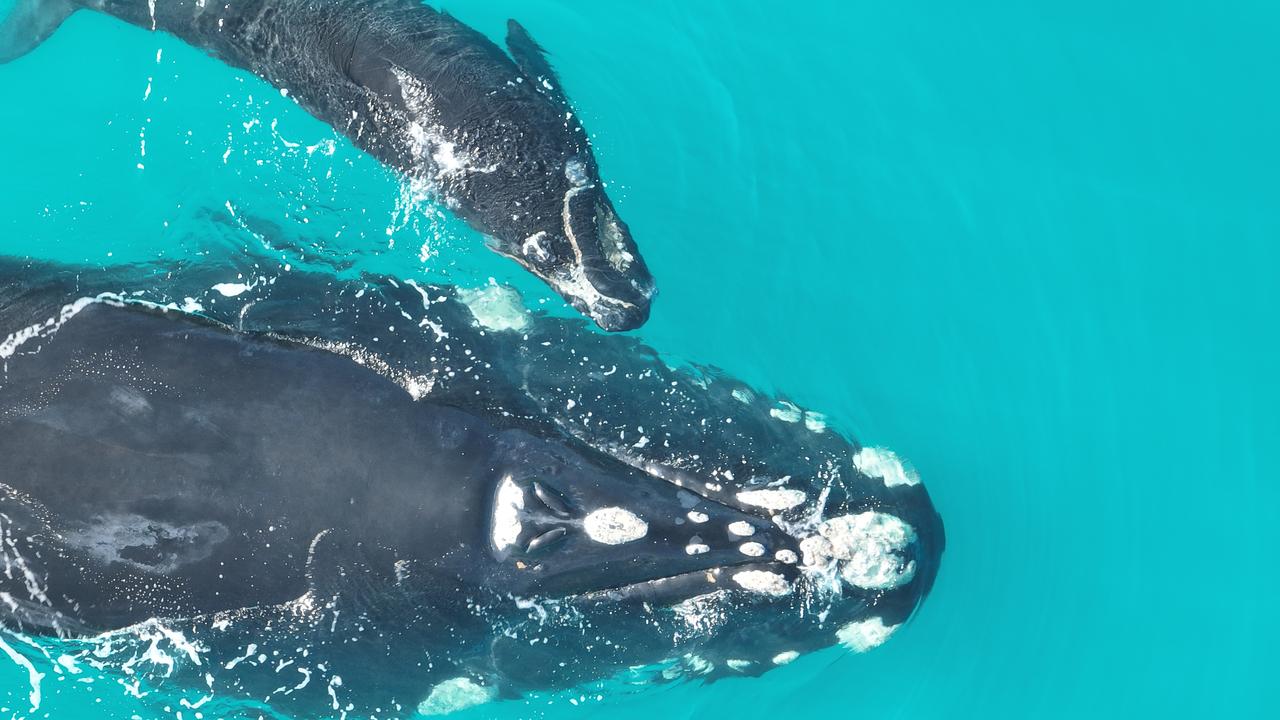
The southern right whale has long been heralded as a conservation success story.
The species bounced back from the brink of extinction after being relentlessly hunted by commercial whalers during the 19th and 20th centuries, with the global population slowly recovering from as few as 300 to as many as 15,000 today.
But researchers are now finding evidence of slowing population growth.
A study led by Flinders University and Curtin University has detected a significant decline in reproductive success over the past decade for the whales that calve off the South Australian coast at the Head of the Great Australian Bight.
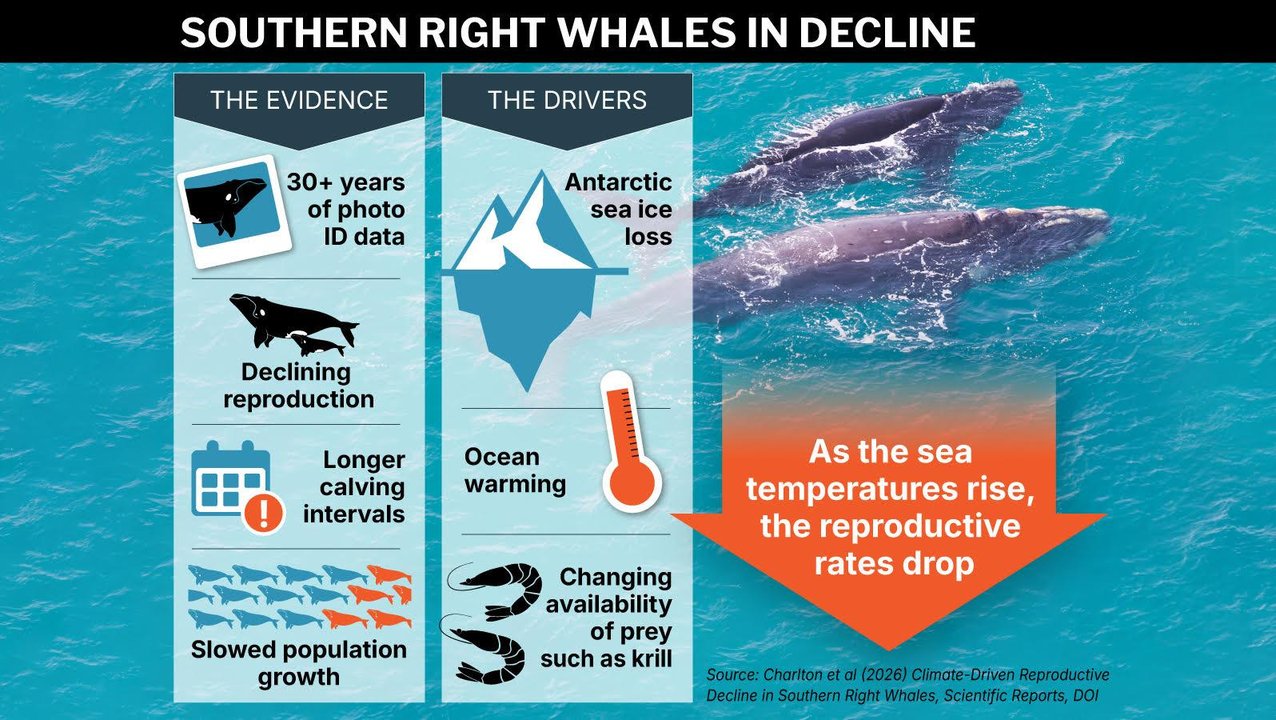
Based on 30 years of monitoring the threatened marine mammals as they return to breed, whales have been discovered taking longer breaks between births, explained lead author of the study, academic and Current Environmental director Claire Charlton.
"If they're calving every four years instead of every three, this can have, over time, a significant effect on their population," she told AAP.
Like similar studies of South American and South African populations, climate change-fuelled shrinking sea ice coverage, marine heatwaves, changing ocean conditions and declining prey stocks have been found to coincide with less frequent births for Australia's whales.
Dr Charlton said the latest study, funded by the Minderoo Foundation, plugged a gap in the research and confirmed whales that frequent Australian waters were following similar patterns to animals that breed off Argentina and Africa.
"Which means it is really a species-wide southern hemisphere effect that's happening."
Southern right whales are a migratory species that move from southern ocean foraging grounds to the same coastal breeding grounds between May and October each year.
During feeding months, the baleen whales predominantly prey on krill, a tiny crustacean that relies on Antarctic sea ice for survival and reproduction.
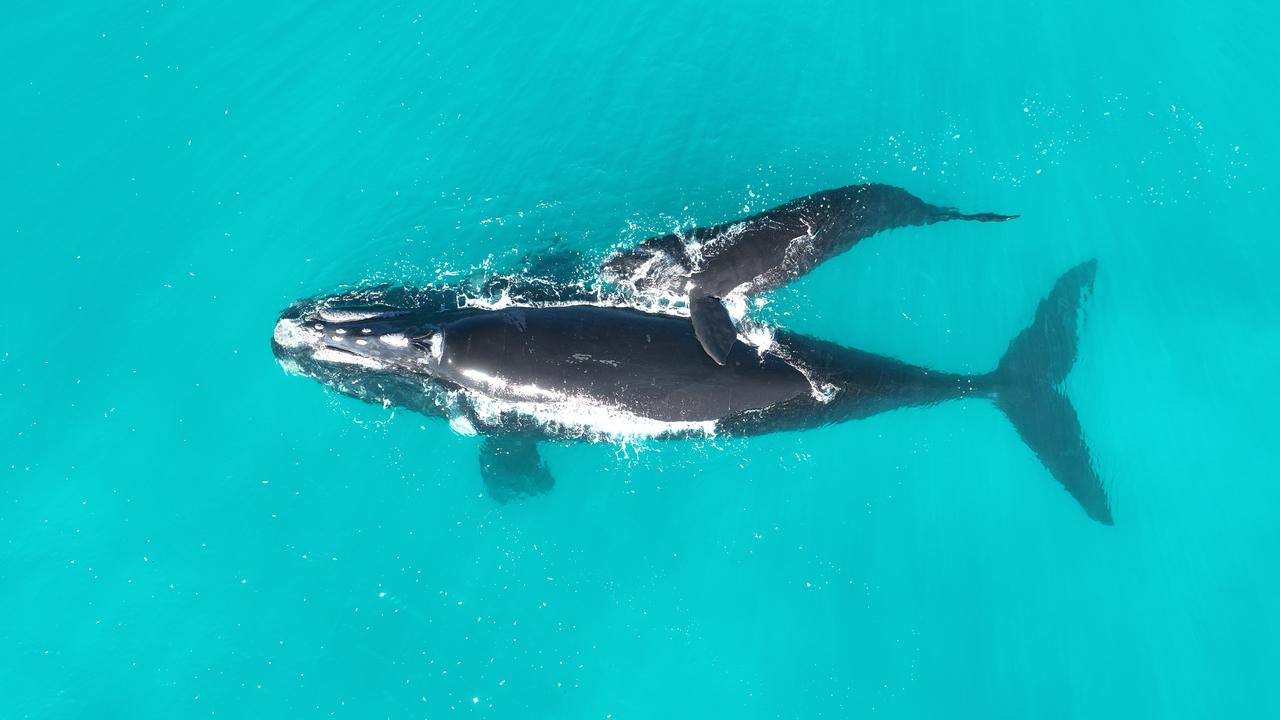
More greenhouse gases in the atmosphere from burning fossil fuels is warming the ocean, causing ice around Antarctica to melt, with sea ice coverage consistently below average since 2015.
"If there's less ice, there's less krill being produced," Dr Charlton said.
"So there's less food for the whales, and if they have less food, then they're likely to be less fat and healthy.
"And then this can affect their body condition and their ability to reproduce."
Other research has shown the species is increasingly feeding at mid-latitude waters, suggesting they might be eating less krill and more copepods.
This prey source is also thought to be under threat from climate change-linked marine heatwaves.
Vessel strikes, noisy underwater environments, entanglements in fishing equipment, and coastal development are also thought to be putting pressure on the marine mammals.
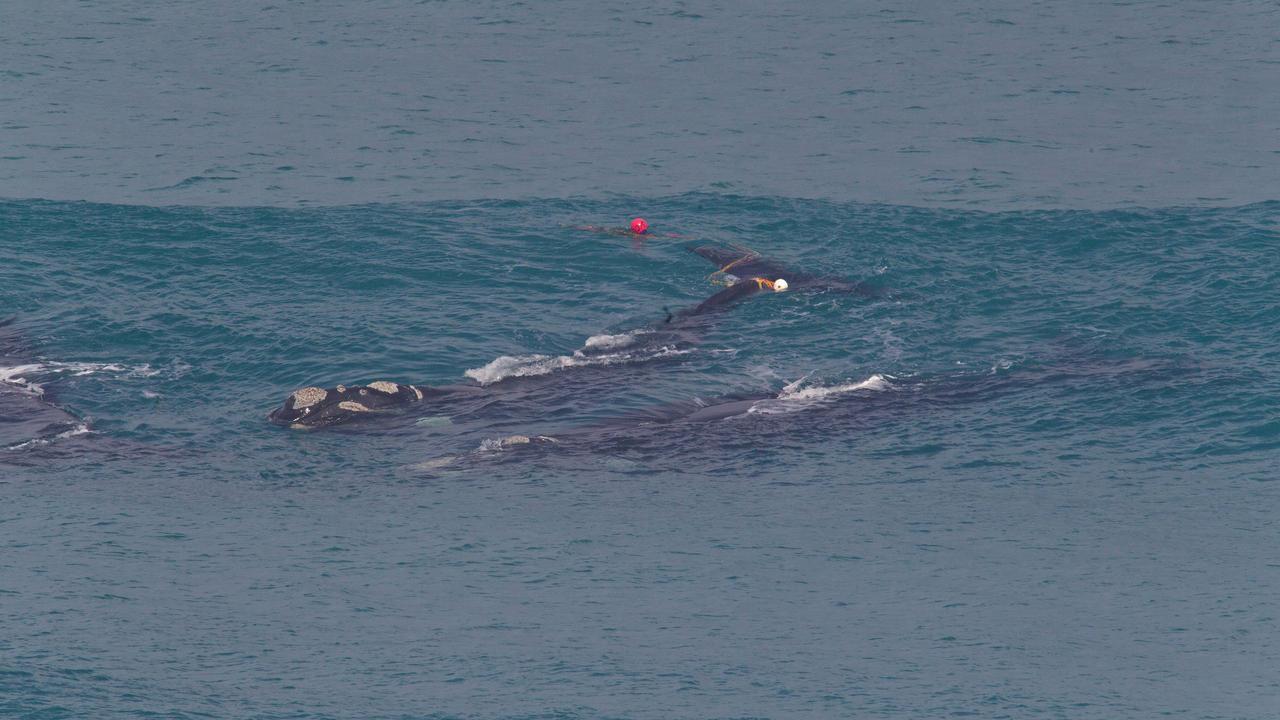
Dr Charlton said southern right whales were easily studied and served as a window into the health of the southern ocean.
The animals come close to shore, and have unique fingerprint-like patterns on their heads that make them readily identifiable.
"They are a direct link between what's happening in Antarctica and what we can see in our own backyards," Dr Charlton said.
Studying the whales may inform how other species reliant on krill and Antarctic sea ice are faring.