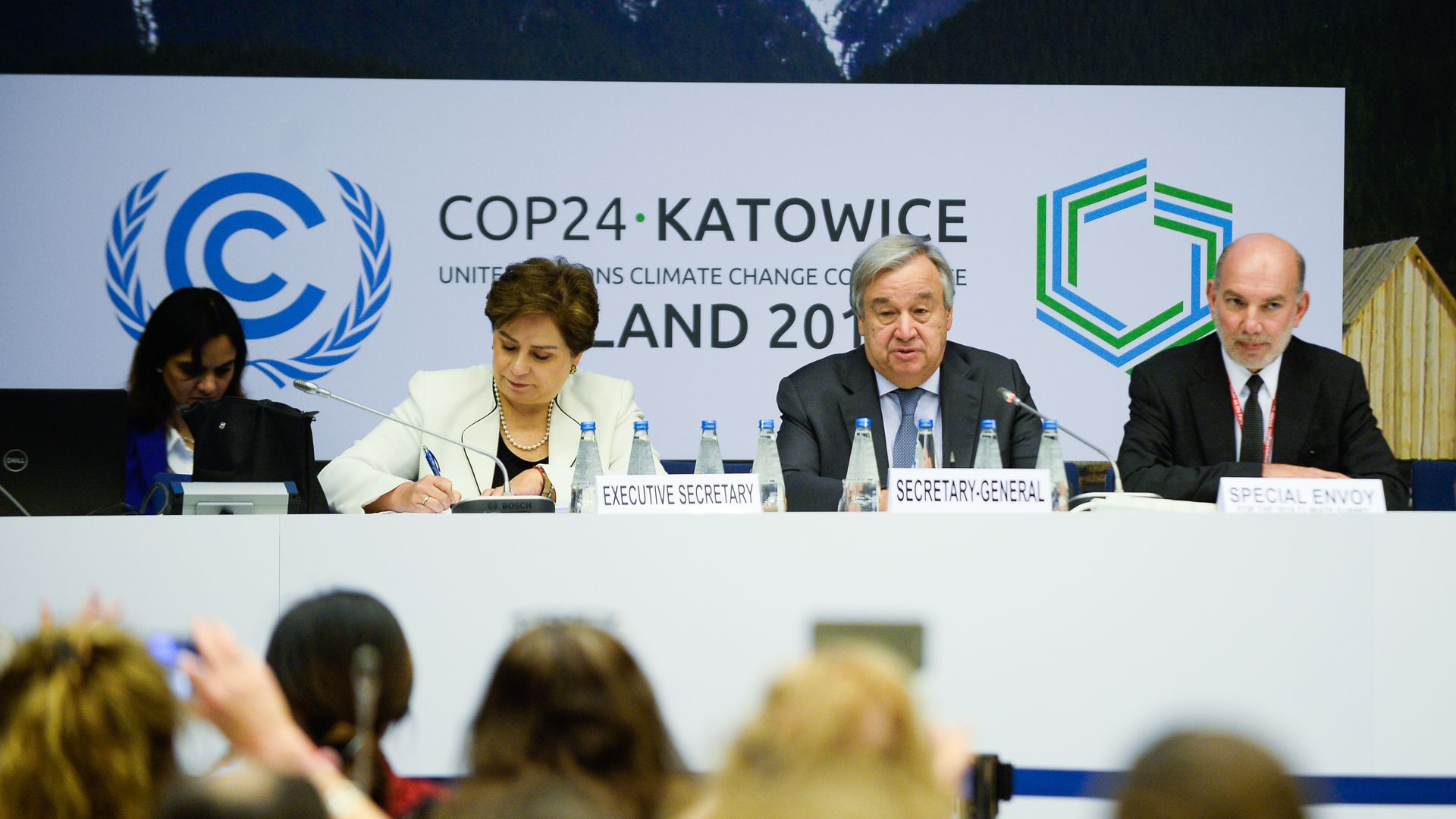
KATOWICE, Poland — World leaders wrapped up negotiations in this old coal-mining city late Saturday of the 2015 Paris Climate Agreement.
The big picture: Multiple reports about the dire projected impacts of climate change shaped this conference’s narrative over the past two weeks, which the United Nations hosts in different cities each year. But these particular negotiations were always about working out wonky details of the 2015 deal. Countries largely accomplished this, without big interference by the Trump administration or other nations resistant to aggressive action cutting greenhouse gas emissions.
Flashback: In the biggest snafu of the negotiations, the U.S. joined Russia, Saudi Arabia and Kuwait last weekend in refusing to "welcome" a recent landmark UN report on climate change, prompting outrage among other nations.
- The final text of the negotiations "welcomes" the completion of the report, but not the report itself, per Climate Home News. It's a subtle distinction that matters a lot in diplomacy like this.
What’s next: The next big political moment will be in September, when the U.N. holds a summit in New York where nations will be expected to say what they have done or plan to do to ramp up their commitments to the 2015 deal, according to Alden Myer, an expert on these issues with the nonprofit Union of Concerned Scientists.
- Chile will host the next U.N. conference like this around this same time next year.
Go deeper, highlights from the our coverage:
- The climate battle: fuels versus emissions
- Al Gore: Tech capturing CO2 emissions "nonsense"
- Dearth of U.S. leadership at climate conference
- White House: U.S. not alone touting fossil fuels
- Trump's missed opportunity with coal and climate change
Go deeper, with other news coverage: Washington Post and Climate Home News.