An alleged "Agong system" or "Agong regime" within the Bangkok Metropolitan Administration (BMA) has recently emerged as a major political controversy ahead of Bangkok's next gubernatorial election.
The allegations, raised primarily by figures from the Economic Party, centre on claims of a hidden network of influence operating behind the scenes at City Hall during the administration of former Bangkok governor Chadchart Sittipunt.
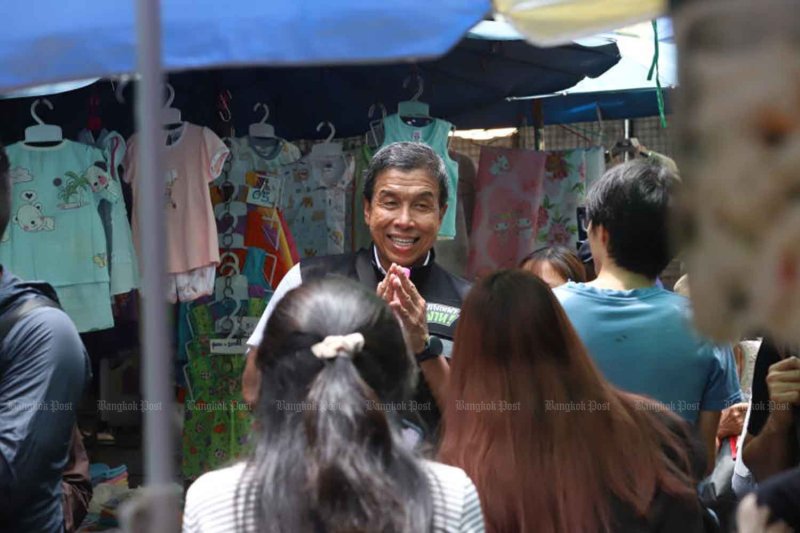
Mr Chadchart and officials linked to his administration have strongly denied the accusations, challenged critics to produce evidence while defending the transparency of BMA procedures.
Origin of the term "Agong"
"Agong" (pronounced ah-kong) is a Chinese word meaning "grandfather" and is commonly used in Thai-Chinese families to refer to an elderly male relative.
In the current political context, critics have used the term metaphorically to describe what they allege is a network centred around an influential older male figure operating behind BMA structures.
From rumour to allegation
The phrase first gained public attention on June 2 when Pol Lt Gen Chanthep Sesavej, the Economic Party's Bangkok gubernatorial candidate, discussed the alleged "Agong system" in media interviews.
Pol Lt Gen Chanthep described it as a lack of transparency within the BMA, alleging links to procurement, the management of Chatuchak Market, and the appointment and transfer of civil servants.
He said the term had circulated informally for years, but few people had spoken publicly about it.
According to his account, stories suggested that many matters within the BMA required approval through intermediaries before decisions could proceed.
When asked whether multiple people were involved, Pol Lt Gen Chanthep said he had heard reports of two individuals, though he refused to confirm their identities.
Economic Party lays out case
The issue gained broader public attention on June 6, when Economic Party leader and party-list MP Chris Potranandana expanded on the allegations during a press conference.
The party also released promotional material and organised media events aimed at exposing what it described as a network of interests operating within City Hall.
Mr Chris alleged that a "shadow administration" -- which he referred to as the "Agong system" -- existed during Mr Chadchart's tenure, with connections enabling influence over city operations beyond formal BMA oversight.
He claimed the network involved political appointees selected by the governor and an individual allegedly linked to a wider Chulalongkorn University alumni network associated with Mr Chadchart.
Allegations of position trading
According to Mr Chris, newly appointed district directors were allegedly invited to meet an alleged ringleader at a residence, where they were offered gifts or incentives in exchange for positions.
He said some sources alleged payments of up to 4 million baht were requested for district director appointments.
The party also claimed it posses- sed evidence relating to the transfer of 16 district directors and one inspector position.
He alleged that some district directors later recouped costs through revenue-generating activities linked to departments, including city law enforcement, sanitation, environment and public works.
Mr Chris argued that even if Mr Chadchart projected an image of integrity, wrongdoing by subordinates could not be ignored if an alleged shadow network had operated within the administration.
Chadchart demands proof
Mr Chadchart swiftly rejected the allegations following Mr Chris's press conference, saying his administration adhered to ethical principles and remained open to public scrutiny.
A central element of his response has been a call for the Economic Party to submit any evidence to the relevant authorities.
He specifically challenged critics to provide proof supporting allegations that district director positions were being bought and sold for 4 million baht, arguing that if evidence exists, formal legal investigations should follow.
Mr Chadchart said appointments and transfers of civil servants during his administration followed established procedures and denied the existence of any "shadow governor" or hidden network influencing personnel decisions.
He also rejected claims of a ticket-based system controlling appointments within City Hall.
Allies weigh legal action
Torsak Chotimongkol, former chairman of the Bangkok governor's advisory team, on Saturday denied involvement in any alleged buying of positions.
He said he initially did not intend to respond because Mr Chris had not explicitly named him, adding: "The truth is the truth and the public should make its own judgement."
Mr Torsak said his legal team was considering possible legal action and argued that election campaigning should remain constructive regardless of the situation.
He also denied the existence of any patronage system within the BMA and said his legal team was prepared to file defamation lawsuits against those involved in Mr Chris's press conference if the situation came to that.
Mr Chadchart said he had expressed support for Mr Torsak during the controversy and that they would continue moving forward together.