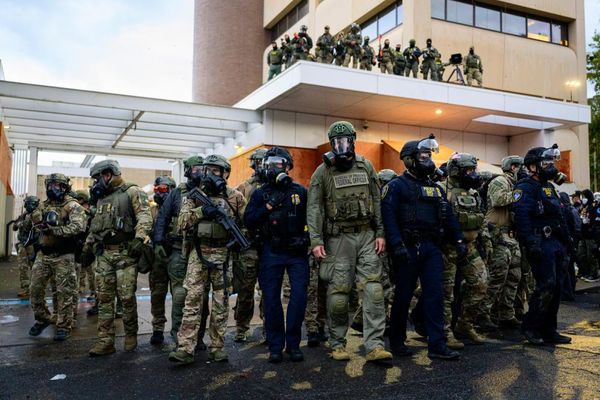
RALEIGH, N.C. _ The State Board of Elections has told local elections officials not to have uniformed police or sheriff's deputies at polling places when voting starts this week in North Carolina.
The board says some voters would be intimidated by the sight of a law enforcement officer in uniform outside a polling place. A memo state board Executive Director Karen Brinson Bell sent to county boards Friday says it is not "appropriate or permissible for law enforcement to be stationed at a voting place."
"In the event a county board must utilize law enforcement for parking and traffic issues at a voting site, officers must be in plain clothes," the memo says. "Law enforcement may periodically drive by a voting site in the event heightened security is needed."
The directive drew scorn from Republicans, who called it dangerous and illegal. The three Republicans who head the state Senate Elections Committee issued a joint statement condemning the policy from the elections board, which is controlled by Democrats.
"We know a thing or two about election law," Sens. Ralph Hise, Warren Daniel and Paul Newton wrote. "Gov. Cooper's Board of Elections is not a law enforcement agency and has no authority to direct police action. The Board must rescind yet another lawless memorandum that undermines election security."
Tim Wigginton, a spokesman for the state Republican Party, called the directive "simply an impractical, dangerous attempt to appease the radical left," and said it should be reversed.
The ban on stationing law enforcement at the polls was included in a nine-page memo on how to ensure voters "enjoy a safe environment that is free from intimidation." It includes guidelines for protecting a 50-foot buffer zone around polling places and ensuring voters have free access to the polls.
The board doesn't seek to ban law enforcement from polling places altogether. The memo instructs those in charge of the polling place to contact the "county board of elections and/or law enforcement" if for some reason they can't maintain unobstructed access.
"Contact local law enforcement as soon as a situation begins to escalate beyond the ability of election officials to respond and control the situation," the memo says. "It is appropriate to contact law enforcement any time there is a reasonable concern for individuals' safety or election officials believe the situation may be likely to get out of control."
The North Carolina Association of Chiefs of Police advised its members over the weekend that if they're called to a polling place they should follow their own policies, since the board of elections "can not dictate police protocol."
"On-duty uniformed officers responding to calls for service or requests to direct traffic at or near a polling site should follow departmental policies," Roxboro Police Chief David Hess, the association's president, said in a memo. "Chiefs may consider working with local elections boards to clarify departmental policies to help maintain voting site safety and security."
The three Senate elections committee members say the state board may have authority over what goes on within 50 feet of the polls but say it has no power to control what happens outside that buffer.
But the elections board disagrees. It says while local boards must be mindful of First Amendment rights to free speech, state and federal laws forbid "interference with the right of a voter to participate in an election," whether inside or outside the buffer zone.
"Interference can take many forms," the board writes in its memo.
The board's memo includes some guidance for counties that use a private security agency at the polls. It says the security guards should be unarmed and not be stationed inside the polling place. But, the memo says, they can wear uniforms.
Early voting begins Thursday and runs through Oct. 31. Election Day is Nov. 3.