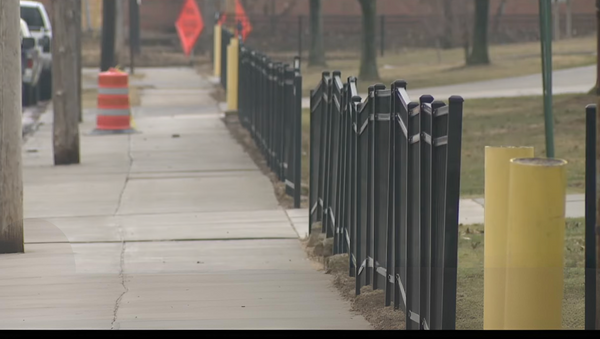
(Bloomberg Businessweek) -- As seats of state power go, Taiwan’s Legislative Yuan is jarringly humble. The parliament building, erected a century ago as an all-girls high school, occupies a rectangle of low-rise buildings in the center of Taipei, set back from the street behind a low fence. It was renovated only lightly for its current use: Aides work in what were once classrooms, and the former principal’s office now belongs to the parliamentary speaker. There are far too few offices for all 113 members, so many work out of even more utilitarian buildings nearby.
Taiwan is hardly a modest polity. Its population of approximately 23 million is roughly equal to Australia’s, and, with almost $600 billion in gross domestic product, its economy is comparable to Argentina’s. Neither of those countries, though, had a foundational figure quite like Chiang Kai-shek, who reigned as a virtual dictator from 1949 until his death in 1975. The Generalissimo, as he was often called, arrived on the island once known as Formosa under duress, thrust from China after Communist armies led by Mao Zedong defeated the forces of Chiang’s Nationalist Party, or Kuomintang. The civil war never officially ended, and for the rest of his life Chiang considered the Taiwanese state—which is still officially known as the Republic of China—to be a government in exile, waiting for the inevitable day it would reconquer the mainland. There was no point in building anything grand for Taiwan’s legislators: That could wait for Chiang’s triumphant return to Nanjing, the Nationalist capital.
Much has changed in Taiwan since Chiang’s day, but this liminal quality has never really gone away. By almost any functional standard, it’s a sovereign country, with a president, a military, a central bank, passports, and all the other trappings of a state. But almost nobody who matters in international politics officially recognizes it as one. Taiwan isn’t a member of the United Nations, the International Monetary Fund, or the World Bank. Its formal diplomatic relations are mostly limited to a smattering of microstates in the Pacific and the Caribbean. Even the U.S., its primary ally, has no embassy in Taipei, instead funding an arm’s-length American Institute that happens to issue visas and employ Marines.
While this arrangement is undoubtedly awkward, it’s served Taiwan well. By treading carefully on the subject of formal independence, the island has been able to develop deep economic ties with the mainland—which officially considers it a rogue territory—and turn China into by far its largest trading partner. At the same time, Taiwan has maintained close business, political, and military relations with the U.S., which serves as the ultimate, if only semiformal, guarantor of its autonomy. With one foot in each of the world’s biggest economies, local companies such as Hon Hai Precision Industry Co., the manufacturer better known as Foxconn, essentially built the modern technology supply chain, setting up the factory networks in China that made devices like the iPhone possible. Along the way, these companies helped Taiwan become one of Asia’s most sophisticated societies: high-tech, prosperous, and, since Chiang’s Kuomintang (KMT) relinquished its monopoly on power in the 1990s, raucously democratic.
Yet as Taiwan prepares for elections on Jan. 11 that will pit the pro-independence incumbent, Tsai Ing-wen of the Democratic Progressive Party (DPP), against Han Kuo-yu, a China-friendly populist representing the KMT (which, improbably, has aligned itself with China in recent years), this model is under unprecedented strain. In Beijing, President Xi Jinping has signaled impatience with Taiwan’s unwillingness to accept Chinese rule, stepping up efforts to isolate the island from international institutions and suggesting it could be forcibly integrated. In Washington, meanwhile, the Trump administration has been working to sever China’s technology industry from the rest of the world, with a set of policies that represents an enormous challenge to Taiwan and could upend the business model that underpins its economy.
“The situation has changed. … Taiwan has to choose a side”
The campaign was unusually bitter even before the violence surrounding pro-democracy protests in Hong Kong escalated in the fall, riveting many Taiwanese and becoming a central election issue. The Chinese government openly reviles Tsai, who’s been targeted by online trolling and disinformation campaigns her government blames largely on Beijing. Her supporters accuse Han of harboring dangerous sympathies for China and being willing to sacrifice Taiwan’s de facto independence in exchange for economic gains. In November, Han’s campaign had to deny allegations, made by a Chinese defector to Australia who claims to be a former spy, that Han had received millions of dollars from the Communist government for a previous political campaign.
Voters now have an unusually stark choice to make—one reflecting the broader national dilemma as Chinese pressure intensifies. “I think many people in Taiwan realize the situation has changed,” says Jou Yi-cheng, a Taipei businessman and founder of a pro-independence political party. Eventually, he says, “Taiwan has to choose a side.”
Taiwan has been politically severed from the mainland for all but a few years since 1895, when the Qing dynasty, weakened by war and internal decay, was forced to cede it to Japan, which ruled it as a colony until the Second World War ended. Attitudes toward China remain the fundamental political cleavage. The DPP, which traces its roots to 1970s protests that opened the first cracks in one-party rule, is explicitly pro-independence and implicitly pro-Western; many of its senior officials were educated overseas and advocate closer ties to the U.S. and its allies.
Tsai was raised in Taipei by parents who ran an auto repair shop, attended law school at Cornell, and earned a doctorate at the London School of Economics. She worked as a trade negotiator for KMT governments early in her career, then joined the DPP in 2004 and was elected to parliament during the administration of Chen Shui-bian, the first DPP president of Taiwan. She first ran for the top job in 2012, losing narrowly to the KMT incumbent, Ma Ying-jeou. (Tsai declined to be interviewed for this story.)
The DPP gained new energy over the next several years, in particular from the Sunflower Movement, a student-led 2014 campaign to halt a proposed trade pact with China. Tsai won the presidential election two years later in a landslide, thanks in large part to support from young voters, who polls indicate are much more likely to identify as Taiwanese than Chinese. She also delivered the DPP’s first-ever majority in the parallel parliamentary election, and the party used its control of domestic lawmaking to implement a series of progressive policies—passing legislation, for instance, that made Taiwan the first place in Asia to legalize same-sex marriage.
Even the most passionate DPP leaders act cautiously in their dealings with China, however, and Tsai has sought to avoid outright confrontation. Beijing has nonetheless refused official communications with her government and condemned her policies, which also include diversifying Taiwan’s economic relationships and building up its military. Last January, Xi took the podium at the Great Hall of the People, in Beijing, to signal a hard line on Taiwan, declaring that “China must and will be united” and that the task “cannot be passed from generation to generation.” As to how this might occur, he said that while “Chinese will not fight Chinese,” the government would “make no promise to abandon the use of force” to stop what it deems separatism. A few months later, People’s Liberation Army fighter jets crossed the midpoint of the Taiwan Strait for the first time in years, an especially provocative move in a series of military maneuvers there. Next, China placed restrictions on tourism from the mainland, drastically curtailing an important flow of visitors.
Tsai refused to change course, writing in Foreign Policy that “the people of Taiwan have not given in to the fearmongering of authoritarian regimes and never will.” She soon made a high-profile trip to the U.S.—technically a long layover on the way to see formal allies in the Caribbean, since Washington tightly restricts official visits by Taiwanese leaders. Not long after, the Trump administration signed off on one of her main defense initiatives, an $8 billion deal for advanced F-16 jets, over furious Chinese objections.
The KMT’s relationship with China is more complex. At the core of its philosophy is an informal compromise with Beijing that it calls the 1992 Consensus, which, unhelpfully, is neither from 1992—the name first came into use much later—nor really a consensus. It stipulates that Taiwan is part of China but doesn’t specify what “China” means, allowing each side to retain its own definition. This ambiguity is critical to the internal semiotics of the KMT, which has never renounced its claim to being the legitimate government of China even as its prospects of assuming power have grown remote, to say the least.
In practice, the party long ago made peace with its erstwhile Communist enemies. Its hostility to China’s rulers began to ease in the 1980s, and its leaders now espouse a policy of nonconfrontation, prioritizing cross-strait economic exchanges over political issues and laying the groundwork, however gradually, for unification. The strategy has yielded important results. Ma, who led Taiwan from 2008 to 2016, finalized a landmark deal to allow regular commercial flights to the mainland for the first time since the 1940s and also reached a broad economic agreement with Beijing. Not surprisingly, the KMT enjoys the support of many powerful businesspeople, whose investments in Guangdong, Fujian, and other regions depend on a reasonably stable relationship.
One of the most prominent advocates of this business-driven attitude is Terry Gou, the founder of Foxconn and Taiwan’s second-richest man. A longtime KMT backer with strong networks in the U.S. and China, Gou announced in April that he would seek the party’s presidential nomination, citing as his priorities “peace, stability, economy, and future”—a list critics were quick to note omitted democracy or human rights.
It turned out, however, that KMT’s voters weren’t looking for factory-friendly pragmatism. Han defeated Gou easily in the primary, presenting his presidential run as Taiwan’s last chance to avoid a calamitous rupture in relations with Beijing. “The election is a choice between a peaceful Taiwan Strait or a Taiwan Strait filled with crisis,” he said in accepting the nomination. At stake was nothing less than “the life or death of the Republic of China.”
A few years ago, Han, a former member of parliament from a military family, was running an obscure government agency, the Taipei Agricultural Products Marketing Corp., which acts as a wholesaler for farmers. In 2017 the KMT approached him to see if he’d be willing to run for mayor in Kaohsiung, Taiwan’s third-largest city. A number of more plausible candidates had passed on the chance: Kaohsiung is the DPP’s heartland, and the campaign looked doomed.
But to the astonishment of almost everyone, Han won, leveraging a knack for baby-kissing retail politics and resentment over a local economic slump. The political elite in Taipei still had trouble taking him seriously. At one point, Tsai’s spokesman referred to Han as a tubaozi—a slur for a country yokel that translates literally as “dirt meat bun.” Han responded by holding a competition to find Kaohsiung’s best meat buns. He officially entered the presidential race in June, after a long period of informal campaigning that included a Taipei rally attended by tens of thousands. (He remains mayor of Kaohsiung.)
Han has an angular jaw, a thickly muscled neck, and a bald bullet of a head. He’s more polished than he once was—as a young lawmaker engaged in one of the Taiwanese parliament’s notoriously rowdy debates, he punched the DPP’s Chen so hard that the future president had to be hospitalized—but he retains a rumpled air. For an interview in November, he wore a mismatched blue blazer and ill-fitting black trousers over leather shoes that resembled slippers. A baseball fan, he opened with a joke about the Taiwanese team, which was vying to finish a tournament ahead of South Korea—Han-kuo in Mandarin. “I’m Han Kuo-yu,” he said, punning on his full name. “I hope Korea loses.”
He turned quickly to more serious matters. One of Han’s core beliefs is that Taiwan is an inextricable part of Chinese civilization, and he argues that it forgets this historical relationship at great peril to its economy and security. “There has been a calculated decrease in the connection our young people feel toward Chinese culture,” he complained, partly blaming textbook changes that emphasize the island’s distinct history. “Cutting off these connections to China does a great deal of damage.” In an odd extended metaphor, he likened Taiwan’s neighbor to the genie in the story of Aladdin, powerful and capable of delivering great riches. Compared with “the big genie,” he said, Taiwan “is very weak.”
Han was even more deferential to China before he became a presidential candidate, making comments suggesting, among other things, that independence was a prospect “scarier than syphilis.” In March he met with the head of the Liaison Office, which represents the Chinese central government in Hong Kong, as well as the director of the Taiwan Affairs Office, the mainland body responsible for encouraging unification. It’s almost unheard of for a sitting Taiwanese politician to hold discussions with the Liaison Office, in particular, and some observers interpreted Han’s moves as a signal of openness to adopting Hong Kong’s “one country, two systems” model, which permits limited autonomy under an umbrella of Beijing control. Such an outcome would please Xi, who in his January 2019 speech endorsed exactly that approach for Taiwan.
Events since have forced Han to explicitly reject the possibility. The Hong Kong protests, which began last spring in response to a bill before the territory’s legislature that would have allowed extradition to China proper, are one of the biggest topics in the Taiwanese campaign. During the interview, Han tried to straddle the debate, expressing concern about the potential loss of “economic power” in Hong Kong while urging Beijing to respect citizens’ desire for more say in their own affairs. “Many Hong Kong problems will be solved as long as true universal suffrage is implemented,” he said, referring to protesters’ demands to open up the city’s elections, which are held under a complex system dominated by government-friendly business lobbies. Free votes, he suggested, “will calm down Hong Kong people.”
The protests are clearly a more comfortable issue for Tsai, who presents them as evidence that Taiwan’s democratic values could never survive closer integration with China. They’re a big part of why most analysts view her as the clear front-runner, despite a slow start to her campaign. Such assessments don’t tell the whole story, however. A senior adviser to Tsai, who asked not to be identified discussing internal deliberations, expressed concern about turnout, predicting that Han’s enthusiastic supporters will make it to the polls in large numbers. There’s also the matter of the legislative contest, in which the KMT stands a decent chance of regaining parliamentary power.
Han’s campaign has been fairly light on policy specifics. His economic proposals center on boosting Taiwan’s exports to China, along with establishing free-trade zones and creating a sovereign wealth fund. But he wants voters to be clear on one point: “Independence is the red line,” he said. “If the 23 million people of Taiwan came to a consensus and voted for independence in a referendum, they would have to deal with the military and political consequences.” In such a situation, “we don’t have any resources. We have nothing. All we have is talented people and a diligent fighting spirit.”
Rather, Han argued, Taiwan should seek to prolong the status quo for as long as possible. “I support the 1992 Consensus,” he said. “If you don’t agree with me, then don’t vote for me.”
For now, Tsai’s argument that Taiwan can thrive while distancing itself from China is being borne out. During a recent visit to Taoyuan, a city that’s home to many electronics manufacturers, a pair of bright-yellow excavators chipped away at an asphalt parking lot while workers directed a cement truck between stacks of foundation piles. They were building something Taoyuan hasn’t seen many of in the past few decades: a new factory, to be operated by Quanta Computer Inc., a Taiwanese company that makes hardware for Apple Inc. and others. After decades of rapid expansion in China, Quanta is reshoring production of some servers, pricey laptops, and additional premium products.
Although Tsai has sought to develop tourism, green energy, and other less established industries, the heart of her economic strategy is persuading Taiwanese tech companies to bring back production, especially of complex items for which China’s cost advantage is less of a factor. Her administration is helping manufacturers find space and providing cheap financing for advanced production facilities, promising, for example, to cover bank fees on more than $22 billion in loans. So far the effort seems to be paying off. The government says companies with overseas operations have promised almost $24 billion in domestic investment; in one recent example, Innolux Corp., a Foxconn affiliate, announced a $2.3 billion expansion of its Taiwanese production.
Some manufacturers haven’t needed much convincing, and not just because goods made in Taiwan aren’t subject to Trump administration tariffs targeting China. On Nov. 26 the U.S. Department of Commerce unveiled proposed rules that would allow it to block the import of any technology it deems a security risk, one of several measures designed to shrink China’s role in the technology supply chain. Although the agency said it planned to evaluate products on a case-by-case basis, it’s a safe bet that goods produced on the mainland will be subject to intense scrutiny. Nor have many Taiwanese companies’ experiences in China been unequivocally positive, particularly when it comes to protecting intellectual property. At home, says Taoyuan Mayor Cheng Wen-tsan, “they don’t have to worry that their technology will be stolen or pirated.” Other reasons for China’s declining appeal are more conventional. Rising wages and real estate prices have made it a much more expensive place to operate than in the past, and foreign producers now compete for workers with a large number of innovative local companies.
“The situation has changed. … Taiwan has to choose a side”
Tsai’s government holds that Taiwan’s manufacturing expertise could let it become the hub of a restructured global technology industry, keeping advanced electronics flowing to the U.S. and Europe without much, if any, input from the traditional workshop to the world. “Before the trade war, the world had a centralized supply chain based in China,” says Kung Ming-hsin, a government minister responsible for future economic strategy. “But now it’s breaking up.” Taiwan, he argues, “can absorb these resources” if it moves fast. “We will only have three to four years to reshape our industries, and the outcome will decide our future for the next decade or two.”
It’s not clear, however, that this new strategic geography will be as kind to Taiwan’s economy as the old one. Taiwanese businesspeople were uniquely positioned to benefit from China’s economic opening, thanks to a common language, cultural similarities, and sometimes family ties—advantages they don’t enjoy in Vietnam or Cambodia, which are increasingly the destinations of choice for lower-end manufacturing.
There’s also the matter of Taiwan’s growing political isolation. In September the minuscule number of governments that recognize its sovereignty dropped to just 15, thanks to decisions by two Pacific island states, the Solomon Islands and Kiribati, to switch their relations to Beijing. Taiwan has trade deals with fewer than a dozen countries, the bulk of them tiny economies in Central America. (Singapore and New Zealand are also on the list.) Tsai has sought to take Taiwan into the Comprehensive and Progressive Agreement for Trans-Pacific Partnership, the recent trade pact that includes Australia, Canada, Japan, and Mexico, but a successful campaign of Chinese pressure on any of its 11 signatories would make that impossible.
Taiwan does, however, still have its economic deal with the mainland, which many in the KMT would be delighted to expand. Doubling down on the cross-strait relationship and becoming a key player on the Chinese side of what could become a global economic cold war would in some ways be the path of least resistance, albeit one that could jeopardize relations with the U.S. It would also leave Taiwan exposed, even more than it already is, to a government in Beijing that will never accept a level of independence many Taiwanese view as fundamental.
In 2018 reports appeared in the island’s press about shipments destined for Chinese consumers being rejected by customs inspectors or pulled from shelves. The issue wasn’t that they were illegal or unsafe. Rather, the products were deemed unacceptable because their labels described them as “Made in Taiwan,” rather than the Communist Party’s preferred nomenclature: “Made in Taiwan, China.”
On a late-autumn afternoon in Kaoshiung, thousands of Tsai supporters streamed into an open field for a DPP rally. The party seemed intent on making a statement on Han’s home turf, busing in activists from other cities and bringing Tsai, Premier Su Tseng-chang, and a host of other notables onstage. Campaign staffers passed out little green flags with Tsai’s oddly prosaic campaign slogan, “Let’s Win,” written in English, while a rap crew warmed up the crowd and vendors dished out oyster omelets, pork dumplings, and huge skewers of deep-fried squid.
No one would accuse Tsai of possessing excessive charisma. She’s unassuming to a degree that can seem startling in a high-level politician, with a neat bob, ovoid glasses, and a strict uniform of black or gray blazers over light blouses. She delivers speeches in a near-monotone, as though delivering a trade-law lecture. But she sparks surprising ardor in her fans, some of whom mobbed her in search of selfies as she made the rounds of the food stalls. The reaction to her address, which began shortly after darkness fell, was similarly rapturous.
“Faced with pressure, our economy has to be strong, people have to feel confident in their ability to maintain their livelihoods, and our defense and diplomatic relations have to be maintained,” she said from the podium, waving her right hand up and down for emphasis. “We don’t aim to conquer the universe. Taiwanese people just want to use their own power to protect sovereignty and safeguard democracy.” The danger to both, she argued, is evident in Hong Kong. “China is promoting a Taiwan version of the ‘one country, two systems’ policy. But now in Hong Kong, universities have become battlefields, some people have suddenly gone missing, some people have died.” She continued: “That’s ‘one country, two systems’ for you. Can you accept that? Can you accept that? We will state very clearly: We will never, ever accept that.”
Even if Tsai wins a second term, there’s little chance she’ll end Taiwan’s 70-year political limbo. But for many of her supporters, especially the young, the argument over the island’s identity is already settled. That was the case for Sunny Lin, a 26-year-old auto parts worker who drove an hour to the rally. “It will take time to reach formal status, but we need to at least try,” she said, standing on the edge of the crowd. “We will never belong to China. For me, Taiwan has been a country for a long time.” —With Samson Ellis and Adela Lin
To contact the authors of this story: Matthew Campbell in Singapore at mcampbell39@bloomberg.netDebby Wu in Taipei at dwu278@bloomberg.net
To contact the editor responsible for this story: Bret Begun at bbegun@bloomberg.net, Jeremy Keehn
©2020 Bloomberg L.P.