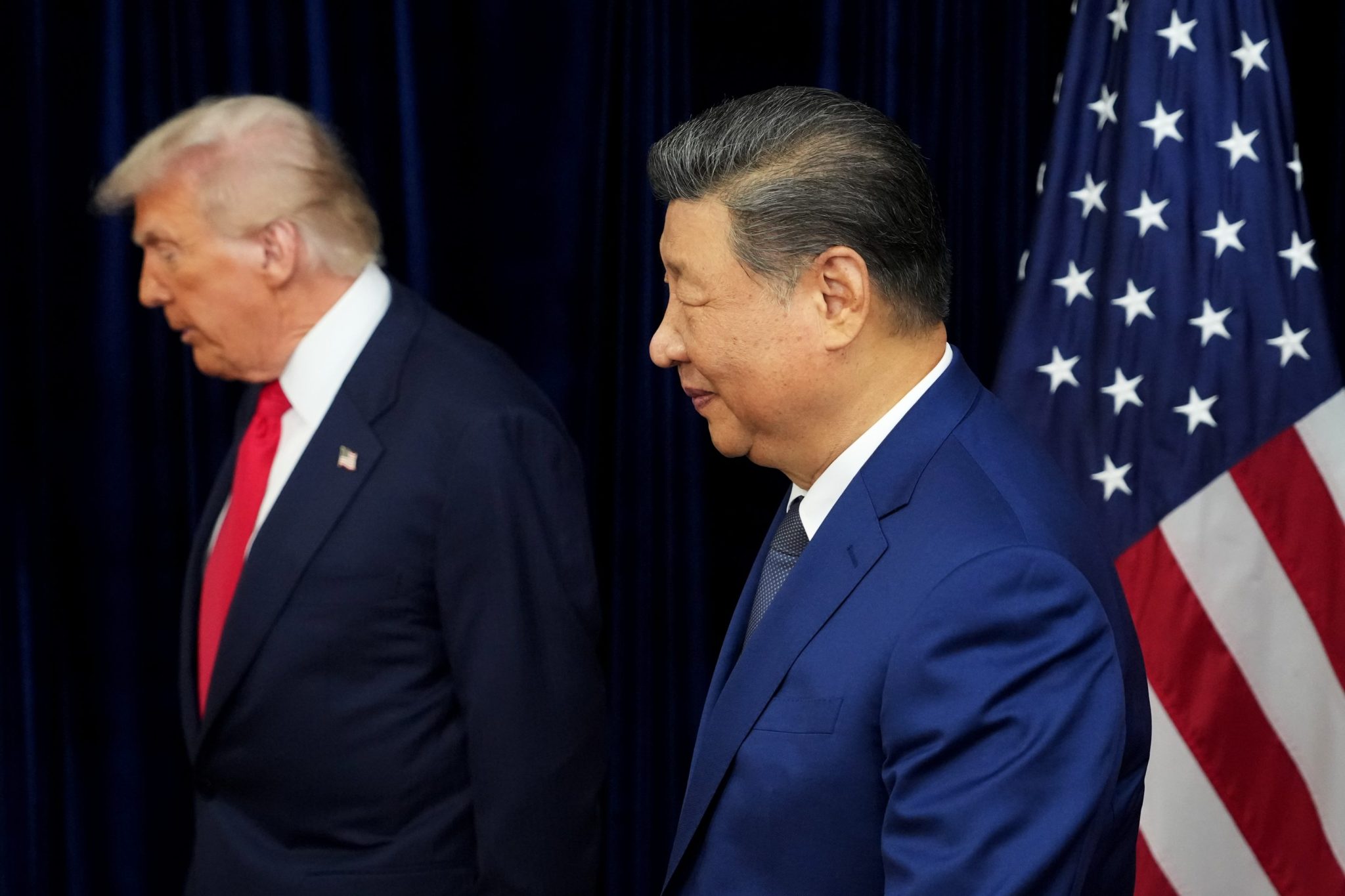
The wrong question about the Paris trade talks isn’t whether they succeeded. It’s why anyone expected them to. China’s negotiating position was set long before anyone sat down at OECD headquarters — and it does not depend on what happens in any meeting room.
After 60 years advising CEOs and boards across the United States, Europe, and Asia — including decades working with Chinese companies and serving on Chinese boards — what came out of Paris only confirmed what I have told business leaders for months: China is not negotiating from uncertainty. It is negotiating from structural advantage.
Both sides called the talks “constructive.” Both described the atmosphere as “remarkably stable.” Both agreed to continue consultations. That is diplomatic language for something more fundamental: no resolution is possible because each side wants what the other cannot give.
China’s position does not depend on what happens in any meeting room. Its exports are still expected to grow 10% to 15% in 2026. Across most industrial categories, there is still no alternative supply chain that can match China on both quality and price. Business leaders I speak with daily are increasing imports from China—not because they want to, but because they have no viable substitute.
That reality is the foundation of Xi Jinping’s confidence. China ran a $1.2 trillion trade surplus in 2025 and is on track to generate at least $1.25 trillion in export earnings this year. No negotiation will quickly change that. Xi is not bargaining from weakness; he is bargaining from a position built over three decades.
That is why the concessions China offered in Paris were predictable. Increased openness to U.S. agricultural imports. A reaffirmation of soybean purchases. Limited discussions around energy and critical minerals. These are real concessions, but they are tactical. They create the appearance of reciprocity while preserving what matters most.
What China ultimately wants is not agricultural trade. It is technology—first semiconductors, then, over time, aerospace.
In recent conversations with senior executives at one of the world’s major aircraft engine manufacturers, a consistent assessment emerged: Chinese firms may already have many of the necessary jet engine designs. The constraint is not design. It is industrialization. Turning those designs into engines that can be produced reliably at scale remains a capability concentrated in the United States, the United Kingdom, and France. As one executive put it to me, “They may have the drawings, but they cannot yet build them at scale.”
This is the gap Beijing is quietly probing in every round of negotiations. It rarely makes headlines, but it is central to China’s long-term strategy.
Much attention is likely to focus on potential reductions in Chinese subsidies. These will be framed as significant concessions. But they are unlikely to change pricing dynamics in any meaningful way. China’s industries operate with massive excess capacity. When survival depends on volume, companies price aggressively with or without government support. The system is already self-sustaining.
This is why tariffs have limited effect. Tariffs operate on margins. China’s advantage is structural: scale, infrastructure, workforce capability, and coordinated state support built over decades. Those advantages cannot be offset in a few years through tariff policy.
Against this backdrop, the delay of the Beijing summit should not be misunderstood. It is not a cost to Xi. It is a benefit.
China has built substantial energy insulation, including large crude stockpiles and a decade-long investment in solar, batteries, and electric vehicles. As global energy markets tighten, China is better positioned than most major economies. At the same time, prolonged geopolitical tension—whether in the Middle East or elsewhere—diverts U.S. focus and increases strategic complexity for Washington.
Time favors the more patient player. And China has made patience a core element of its strategy.
Any eventual agreements will also be reversible. Both sides will retain the ability to pause commitments. Xi is not giving away structural advantages permanently. He never does.
For CEOs, the implications are immediate. The Paris talks did not change the trajectory, and the Beijing summit is unlikely to do so no matter when it happens.
The question is no longer what governments will decide. It is what business leaders will do.
Companies need a clear, unvarnished view of their dependencies: which inputs are irreplaceable, where alternative sourcing is possible, and how operations would respond to disruptions in rare earths, semiconductors, or key industrial components. The most critical risk is not gradual change but sudden interruption—the possibility that China could restrict supply of essential inputs with little warning.
Some CEOs have already mapped these scenarios and built contingency plans. Others are still waiting for policy clarity that may never come.
The reality is this: The United States is buying time to rebuild. China is using time to consolidate. Neither side is stepping back.
The leaders who recognize that dynamic—and act on it now—will shape the next decade. Those waiting for a breakthrough from a summit will find that, quietly, their options have narrowed.
The wake-up call has already sounded. The only question is who is ready to respond.