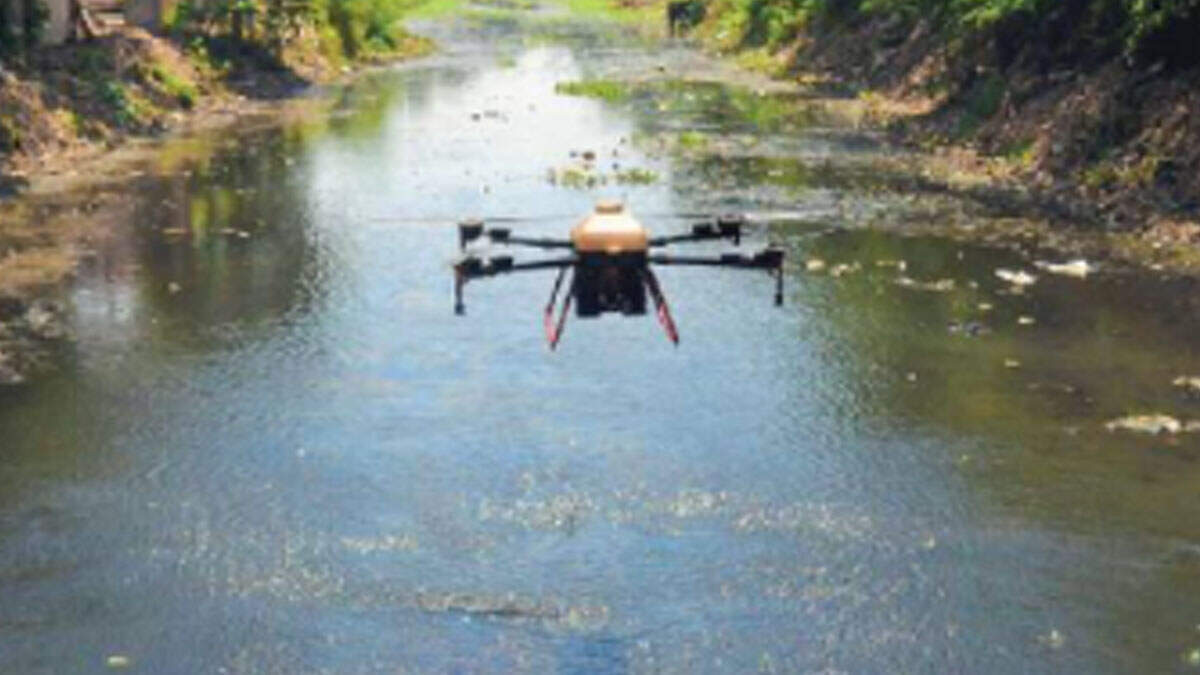
CHENNAI: Spraying larvicides on water-bodies using drones has the potential to reduce mosquito count by 90% and would also be cost effective, a preliminary study done by Greater Chennai Corporation has shown.
Starting July 1, GCC conducted four trials of spraying larvicides on water bodies in the city using Anna University’s drones. Three drones sprayed mosquito larvicidal oil (MLO) in as many city zones everyday and the density of the mosquito larvae at the site before and 24 hours after the job was studied for a fortnight.
Official data shows that the larval density, which is an estimation of the number of mosquitoes in an area and hence the magnitude of menace, decreased by 81% to 96% during the trials. This has been documented by an inhouse report, a copy of which is with TOI.
Data shows that the larval density was maximum in zones such as Teynampet and Valasaravakkam before the exercise and showed a significant decrease after it.
The report cites thorough coverage of breeding spots by drones as the reason for the results. “Drones are found to access places to spray MLO which were hitherto unreachable for manual spraying,” the report said. Drones can also spray over an entire surface of a water body which is not possible by the conventional manual spray, the study said.
The consumption of MLO was also found to be 6% less, the report said.
Based on the findings, the report suggests that the frequency of fogging can be reduced if drones are put to use. This would in turn reduce expenses including labour cost and would help divert the resources to other areas.
GCC has estimated that spraying MLO through drones would cost Rs 22 lakh a month, which could be reduced by negotiations. “Reduction in mosquito menace means people will save money that is spent on mosquito coils, liquefiers and spray cans,” the study said.
GCC commissioner Gagandeep Singh Bedi said they have also pressed 68 vehicles and 3,400 malaria workers into service for vector control work.