The month of May was a curious time at Derby County’s Moor Farm training complex. As it was at various clubs in the Championship. The regular season had ended on 2 May but for the British and Irish internationals it was far from over. A quirk of the calendar has been the scheduling of Euro 2016 qualifying ties for the second weekend of June – and they are no run-of-the mill fixtures.
Wales’s home game against Belgium on Friday night is the nation’s biggest since the Euro 2004 play-off defeat by Russia in November 2003; the Republic of Ireland’s meeting with Scotland in Dublin on Saturday is crucial to the hopes of both while that evening, Northern Ireland host Romania in a collision of second versus first in qualifying Group F.
The squads have drawn on plenty of players from the Championship, and from Leagues One and Two, meaning that they will enter potentially defining matches with personnel – some of them key – who have not featured in competitive action for six weeks or more.
It is a headache for the respective managers, to put it mildly, and the issue of fitness levels has shaped the buildup to the ties and led to some unusual arrangements, not least the behind-closed-doors warm-up between the Republic and Northern Ireland on the afternoon of 4 June at an empty Aviva Stadium, which finished 0-0. In Cardiff, the Wales manager, Chris Coleman, arranged a full-scale 11-a-side practice match a day later, with the teams made up from within his squad.
The period since the end of the long Championship season has represented a test of the players’ professionalism – and they have responded. At Derby, after a short break, the internationals returned to the training ground to follow programmes that were devised by the club’s fitness coach and sports science staff before they joined up with their national squads last week.
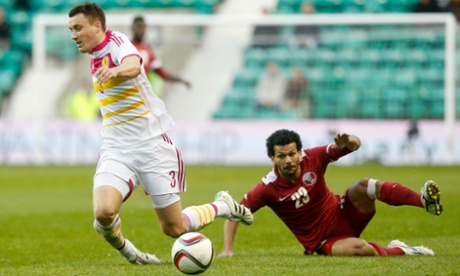
Derby’s Republic players, Richard Keogh, Jeff Hendrick and Cyrus Christie, worked alongside their Scottish counterparts, Craig Forsyth and Johnny Russell. Another Scotland international, Chris Martin, was a part of the group, although he has not been called up because he is recovering from an injury. The club friendships will be placed on hold for 90 minutes on Saturday.
“I was in and out of the training ground quite regularly and there were quite a few of us in the same position, which helped,” Keogh says. “We were able to motivate each other and make sure that we were in good shape when we met up. It does feel a little bit strange to be playing such an important qualifier on 13 June because the season usually ends in May time. It’s something a bit different but us players have known about it for a long time.”
Coleman thought about whether to arrange a friendly for Wales before the game against Belgium but in the end he decided against it, preferring to enjoy a focused 12-day training camp. Wales turned down the chance to play Northern Ireland, leaving the latter free to face the Republic in what was a surreal spectacle.
Martin O’Neill, the Republic manager, who captained Northern Ireland at the 1982 World Cup, admitted that he would have found a real game against the country of his birth “really strange”. As it was, the private warm-up was competitive, without crossing any lines, and there was the strange sensation of the players’ shouts echoing around the deserted 51,700-capacity ground.
“Reserve games in stadiums can be a bit like that,” Keogh says. “But it was good; a clever fixture for everyone to have, just to get back into the rhythm of playing games again. The tempo was very good. It was competitive, for sure. We approached it as we would any international game, as one that we wanted to win.”
The Republic stepped up their preparations with Sunday’s 0-0 draw against England in Dublin and Qatar’s national team have also been a part of the story. An experimental Northern Ireland side drew 1-1 with them at Crewe Alexandra’s Gresty Road on 31 May before Scotland beat them 1-0 at Easter Road in Edinburgh last Friday. Gordon Strachan, the Scotland manager, described the game as “an extension of the training because some of the guys have been off for weeks”.
The big issue is whether the training and the friendlies can properly prepare the Championship players who finished more than a month ago for matches of the competitive intensity that they face. O’Neill commented after a particularly gruelling session, last week that “the Championship players were blowing a bit”.
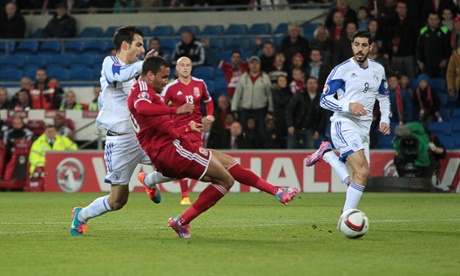
What is clear is that many of them have given themselves the best possible chance. Hal Robson-Kanu, the Reading forward who is expected to start for Wales against Belgium, is a prime example, having followed a programme set by his personal performance coach, Drewe Broughton. James McClean, the Wigan Athletic and Republic winger, is another. He, like Robson-Kanu, finished the domestic season on 2 May and he has worked with a personal trainer in addition to following the advice of his club and country.
“I was suspended for the last game of the season so I had a week off then, so that was more than enough,” McClean says. “I trained with my old club, Derry City, for the football side and I also worked with my personal trainer. I’ve wanted to keep myself going for Ireland. I will enjoy a break afterwards.”
Broughton specialises in biomechanics and he works one to one with a clutch of professional footballers and golfers. He describes Robson-Kanu, who is a long-standing client, as an “incredible athlete”, one that he would put “toe-to-toe with any player in the world in terms of fitness”.
He told Robson-Kanu to take two weeks of “active recovery” at the end of Reading’s season – essentially, a break – before following a series of sessions on his own. Broughton then met him for four tough workouts. “In the first of our sessions, Hal reacted,” he says. “He had muscle soreness … within two days, the hamstrings were cramping up and everything was tight – and that’s just after two weeks out. He was panicking and saying: ‘Am I unfit?’ But it’s just that his levels are so high that if you have more than seven, eight days of rest, you start losing condition.
“And this is with Hal. If he reacts that quickly, you think about the guys that are half the condition of him. I think two weeks of rest is the most that a footballer can have.”
Broughton, however, accepts that there is no substitute for competitive action. “You can’t replicate, scientifically, what is called unconscious movement – ie reacting to an external stimulus: the ball,” he says. “As soon as the ball comes into the equation and people start screaming at you, and turning your head left and right, and reacting, you put your body through all of its stuff.
“What concerns me the most is the work done in the period since 2 May. You’ve got to get the guys as close to performance as you can. It’s imperative what they’ve done; absolutely imperative. Not only to protect themselves against breaking down but in maximising their performance.”