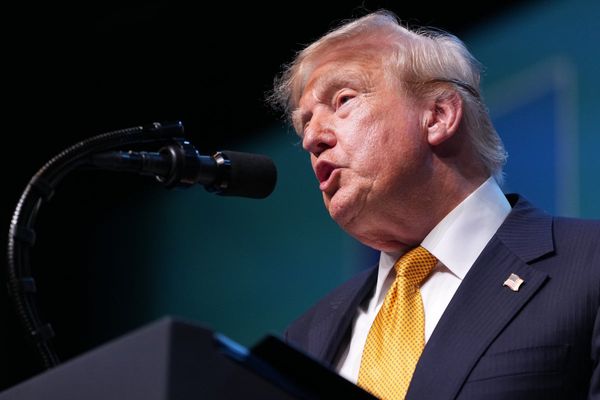
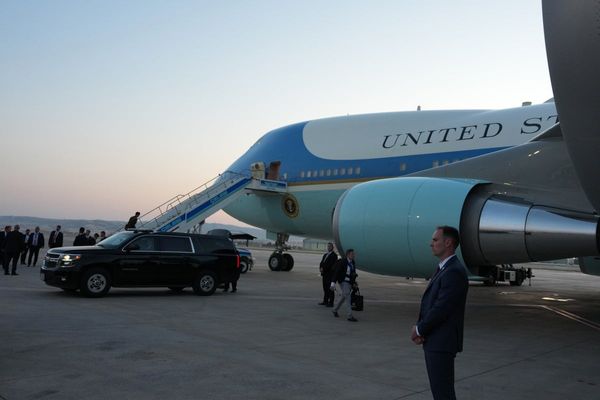
Donald Trump's glitzy New Year's Eve celebration at his Mar-a-Lago resort in Palm Beach, Florida, has become a flashpoint in national debate after a station offering luxury caviar contrasts sharply with the real hardship facing millions of Americans as food assistance programmes falter and food banks strain under unprecedented demand.
The annual Mar-a-Lago party, a hallmark of Trump's holiday season gatherings, included not only traditional black-tie dining and high-end catering but also an ice sculpture and caviar booth that were widely shared on social media.
That particular imagery quickly drew rebukes, becoming a symbol of inequality at a moment when federal food support systems are under severe pressure.
Mar-a-Lago's Lavish Night In Sharp Contrast With Food Aid Strains
Hundreds of guests, including top political allies, billionaire donors, and global figures, gathered late on 31 December 2025 in ornate surroundings to celebrate the arrival of 2026.
Attendees were treated to formal service, entertainment including performances from 1990s artists, live auctions, and social media posts captured festivities centred around opulence.
Video clips from the party circulated online showing a dedicated caviar station complete with chilled serving displays and a sculpted ice backdrop. The images proved controversial, with many Americans juxtaposing them against footage of food bank queues and warnings of rising hunger across the country.
Caviar station and ice sculpture at Trump’s Mar-a-Lago party as food banks continue to be stretched thin pic.twitter.com/OXIcYaY7Z8
— PatriotTakes 🇺🇸 (@patriottakes) January 1, 2026
Governor Gavin Newsom of California responded directly to the clips with a post on X (formerly Twitter), criticising the timing of such extravagance. 'Don't worry, 17 million Americans are going to get kicked off their health care this year,' he wrote sarcastically, referencing the looming loss of federal health coverage and broader social services amid budget impasses.
Don’t worry, 17 million Americans begin to get kicked off their health care this year 🥳 https://t.co/QrCntyQWDB
— Governor Newsom Press Office (@GovPressOffice) January 1, 2026
Food Banks Strain Under Shutdown And SNAP Lapse
At the heart of critics' concerns is the ongoing United States federal government shutdown that entered its second-longest stretch in history during late 2025. The lapse in appropriations halted payments from the Supplemental Nutrition Assistance Program (SNAP), the principal federal food aid programme, meaning that millions of low-income households risked missing vital benefits.
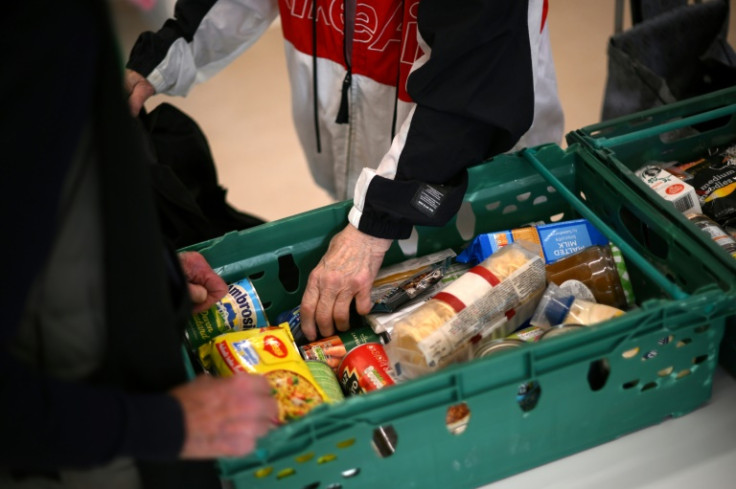
USDA guidance posted to state agencies confirmed that, absent congressional action, no SNAP benefits would be issued on 1 November 2025, directly affecting roughly 42 million Americans who rely on the programme to purchase food. Without this safety net, food banks report unprecedented demand, forcing many to stretch limited supplies and extend hours to accommodate growing lines.
Food bank employee: I can't remember a time when our shelves have been so empty. Over the last nine months, we've been seeing prices rise pretty high. Families are already struggling. So when you take that additional money away, food is going to become scarce. pic.twitter.com/6u6Lqjxu8W
— FactPost (@factpostnews) October 24, 2025
Non-profit food banks and pantries nationwide said demand reached record levels, with online locators for assistance seeing a six-fold increase in traffic as families sought emergency support. 'The lines are getting longer, and the food is running out early,' a food bank executive told Fortune, describing the strain on resources and volunteers.
In states such as Pennsylvania, officials eventually resumed partial benefits once federal funding resumed after legal and political pressure, but the disruption had already left many pantries depleted and volunteers overwhelmed. DHS Secretary Val Arkoosh urged continued community support to stabilise food bank inventories.
Political Tensions Over Budget Priorities
The clash over funding priorities has become a fiercely partisan issue. Advocates for continued federal food aid argue that SNAP is not merely a subsidy but a lifeline that prevents hunger for families, children, the elderly, and veterans alike. Data shows food banks alone cannot match the scale of SNAP benefits, which represent a direct purchasing mechanism spanning tens of millions of recipients each month.
Trump literally fought a U.S. district Judge to have SNAP benefits for 40M AMERICANS. To NOT be released for the month of thanksgiving.
— Liberal Lisa in Oklahoma (@lisa_liberal) January 1, 2026
Legal battles also unfolded, with several states filing lawsuits to compel the USDA to distribute contingency funds to cover SNAP payouts during the shutdown. In Massachusetts, a federal court debated whether emergency reserves should be tapped to ensure partial benefit issuance, stressing the legal ambiguity of USDA's shutdown protocols.
Meanwhile, political leaders have framed the debate differently. Supporters of the administration's fiscal stance argue that Congress must resolve broader budget disputes before reauthorising spending. Opponents counter that withholding essential programmes like SNAP and healthcare subsidies hits the most vulnerable hardest.
The lavish caviar station at Mar-a-Lago, emblematic of luxury, has come to symbolise a deeper national fault line between elite celebration and everyday struggle in a moment of acute food insecurity and policy paralysis.