Cathay Pacific Airways has confirmed that the tail of a passenger aircraft struck the runway at Hong Kong airport last week, prompting the city's aviation regulator to order the airline to submit a report.
In reply to South China Morning Post queries on Thursday, the airline confirmed that the tail of an Airbus A330-300 operating flight CX509 from Tokyo's Narita airport made contact with the runway while performing a "go-around" manoeuvre at Hong Kong International Airport last Friday.
"The aircraft subsequently landed safely at Hong Kong International Airport and was taxied to a parking bay where our passengers disembarked normally," a Cathay spokesman said.
"There were no reports of injury among the operating crew or passengers on board."
He added: "Our engineering team is performing a thorough inspection and will carry out the required maintenance before returning the aircraft to service."
In aviation, a "go-around" is a standard procedure in which a pilot aborts a landing approach and climbs back up to make another attempt.
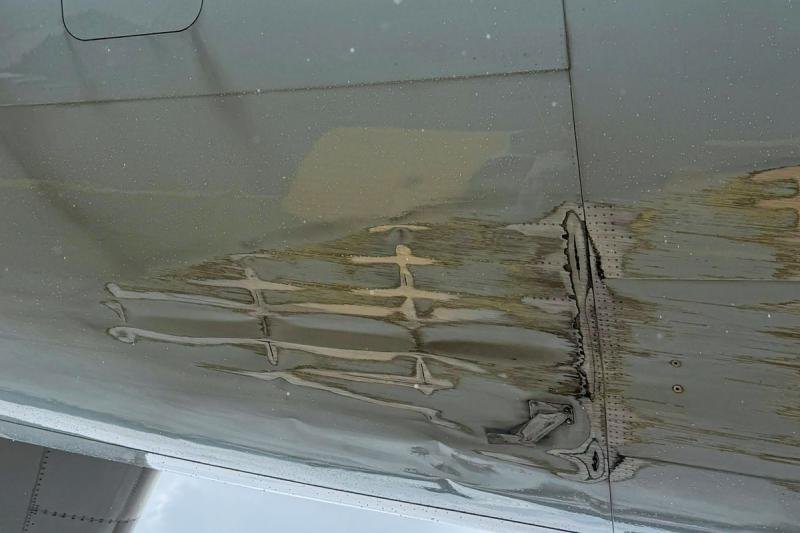
Photographs obtained by the SCMP show extensive scraping along the underside of the aircraft's rear fuselage.
The aircraft, bearing the registration code B-HLQ, is a nearly 25-year-old Airbus A330-300 delivered to Hong Kong's flag carrier in 2001, according to global aircraft tracking website Planespotters.net.
The Civil Aviation Department (CAD) said Cathay had reported the incident. The department in turn reported it to the Air Accident Investigation Authority (AAIA), following the established mechanism.
"CAD has requested the airline to submit a report and will cooperate with the AAIA to follow up on the incident," a department spokeswoman said.
Warren Chim Wing-nin, deputy chairman of the Hong Kong Institution of Engineers' aircraft division, said the visible damage appeared significant, but the full extent could only be determined after engineers inspected the aircraft's internal structure.
"From the outside, it looks quite serious, but you still have to assess the internal aircraft structure before determining how severe the damage really is," he said.
Chim said investigators were likely to examine data from the aircraft's flight data recorder and cockpit voice recorder, including its speed, descent rate, glide path, g-forces, any bounced landing and communications between the pilots and air traffic controllers, alongside weather records at the airport.
"The flight data recorder can reconstruct the timeline and what happened," he said.
Chim added that investigators were likely to also review aviation weather information, including terminal aerodrome forecasts and routine meteorological reports, which pilots relied on when deciding whether conditions were suitable for landing.
Hong Kong experienced unsettled weather that day.
According to the Hong Kong Observatory, the No. 1 typhoon signal remained in force throughout July 3 because of a nearby tropical depression, while an amber rainstorm warning and three separate thunderstorm warnings were also issued.
"[But] aircraft pilots do not decide whether to land based on whether there's a No. 1 typhoon signal or an amber rainstorm warning," Chim said.
"Pilots look at aviation weather information such as visibility, wind direction, crosswinds, and wind shear."
He noted that wind shear and a sudden deterioration in visibility caused by heavy rain could develop rapidly during an approach, while pilots could also choose to perform a go-around if an aircraft bounced during landing.
Cathay did not disclose what caused the tail strike beyond citing "poor weather" while the aircraft was performing the go-around.
Chim said it was too early to estimate how long the aircraft would remain out of service, as engineers first needed to determine whether the damage had affected internal structural components such as frames and stringers before devising a repair scheme.