BARCELONA/MADRID (Reuters) - Catalan secessionists were working on Friday towards a unilateral declaration of independence from Spain that could be adopted next week in defiance of a court order and increased economic pressure from Madrid.
After Spain's Constitutional Court suspended a session of the Catalan regional parliament set for Monday, which had been expected to endorse an independence declaration, the parliament said the region's pro-independence leader Carles Puigdemont would address the assembly at 6 p.m. (1600 GMT) on Tuesday.
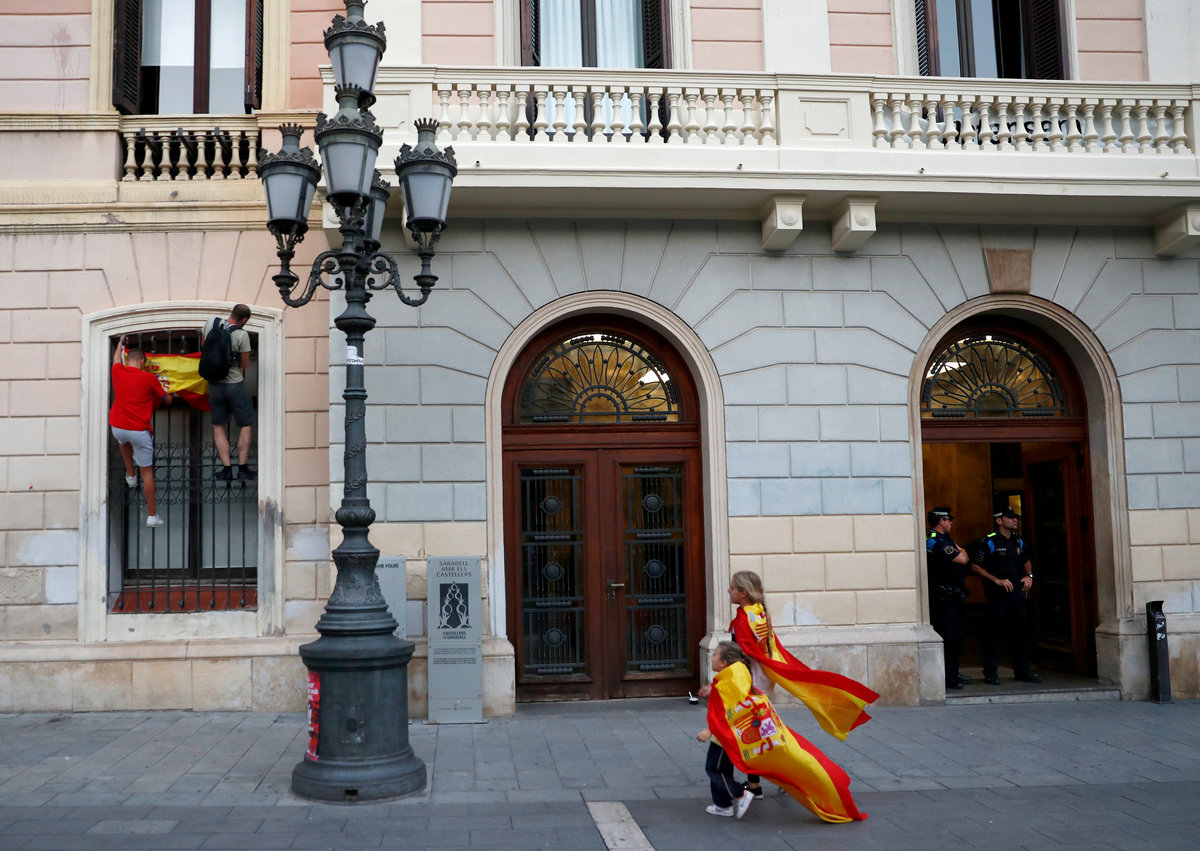
Madrid apologised for the first time on Friday for police use of violence in trying to hinder a weekend referendum it had declared illegal. That crackdown raised the temperature of a confrontation that has grown into the worst political crisis for decades in Spain.
A Catalan legislator was quoted by El Mundo newspaper as saying secessionist parties in the Catalan parliament were discussing an independence declaration to be submitted to the assembly next Tuesday.
"We are in talks about a text, with paper and pencil, on the declaration that we want the regional parliament to accept on Tuesday," Carles Riera, a lawmaker from the pro-independence CUP (Popular Unity Candidacy), was quoted as saying.

"Nobody has put forward any scenario of delay, ambiguity or confusion. We are not working on that scenario," he said.
The stakes are high for the euro zone's fourth-largest economy. Catalonia is the source of a huge chunk of its tax revenue and hosts multinationals from carmaker Volkswagen to drugs firm AstraZeneca <AZN.L>.
The Catalan region's head of foreign affairs, Raul Romeva, told the BBC earlier that the Catalan parliament intended to make a decision on independence, without specifying when.
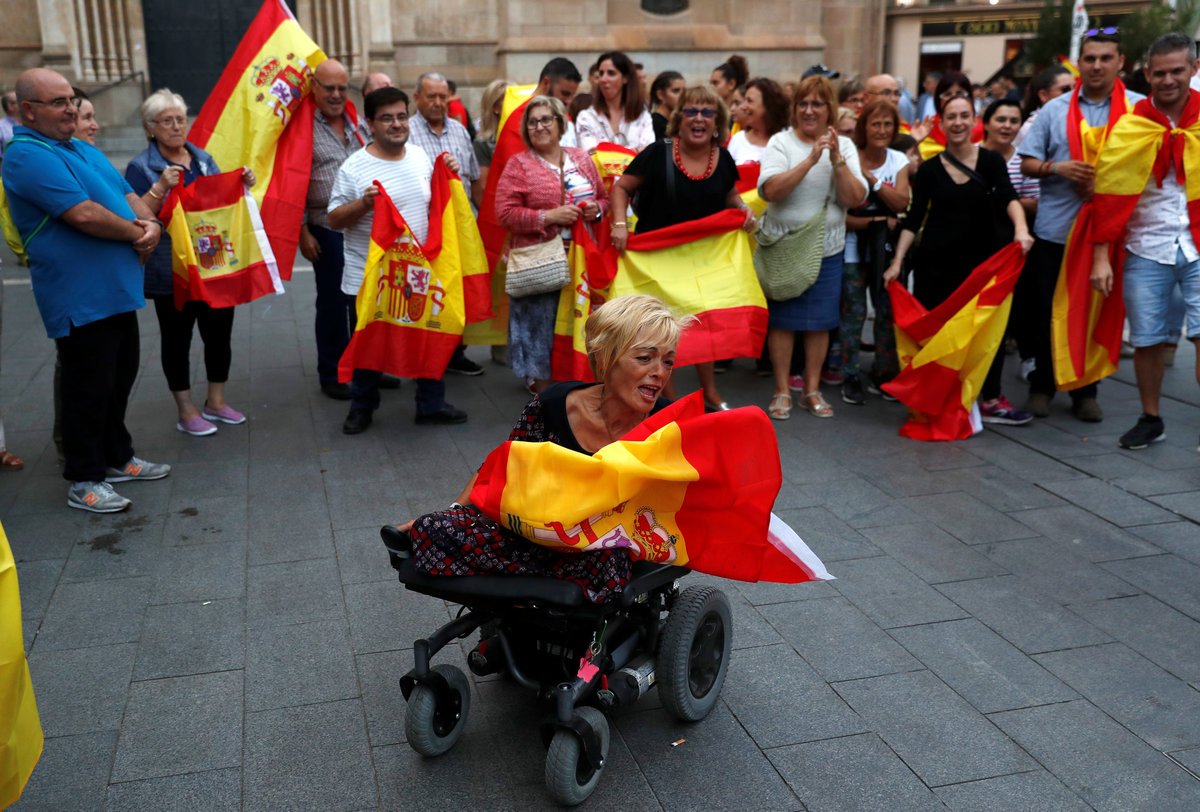
"Parliament will discuss, parliament will meet. It will be a debate and this is important," Romeva said.
The Spanish government stepped up economic pressure on the Catalan government on Friday by passing a law to make it easier for companies to move their operations around the country, potentially dealing a blow to the region's finances.
RELOCATIONS
Within hours of the government's move, CaixaBank <CABK.MC>, Spain's third biggest lender and Catalonia's biggest company, said its board had decided to move its registered office to Valencia "in light of the current political and social situation in Catalonia".
Catalonia-based utility Gas Natural <GAS.MC> said its board had decided to move its registered office to Madrid for as long as the legal uncertainty in Catalonia continued.
They joined a number of other Catalonia-based companies, including Sabadell <SABE.MC>, Spain's fifth-largest lender, that have already announced plans this week to move their registered offices elsewhere in Spain.
Spain made a conciliatory gesture in apologising for Sunday's referendum violence, where Spanish police used batons and rubber bullets to stop people voting. The scenes brought worldwide condemnation and fanned separatist feeling but failed to prevent what the Catalan government described as an overwhelming 'yes' vote.
"When I see these images, and more so when I know people have been hit, pushed and even one person who was hospitalised, I can't help but regret it and apologise on behalf of the officers that intervened," Enric Millo, the Spanish government's representative in Catalonia, said in a television interview.

The apology came after the Catalan newspaper La Vanguardia quoted sources in Puigdemont's party as saying a unilateral declaration of independence could be delayed if Madrid made a "gesture", such as withdrawing some Spanish police reinforcements from the region.
Artur Mas, a former head of the Catalan government who was barred from public office for two years in March for staging an informal independence referendum in 2014, told the Financial Times on Friday that the region had yet to lay the groundwork for "real independence".
He said there was a debate among Catalan leaders about whether now was the right time to unilaterally declare independence.
CALLS FOR MEDIATION
Amid calls from many groups, including Barcelona soccer club, for a mediated solution to the standoff, Swiss state broadcaster RTS said neutral Switzerland was ready to help forge dialogue between the Spanish government and Catalonia.

The foreign ministry said Switzerland was in touch with Spain and Catalonia but conditions for talks were not yet ripe.
Puigdemont has called for international mediation to find a way out of the impasse. Spanish Prime Minister Mariano Rajoy has offered all-party political talks to find a solution, opening the door to a deal giving Catalonia more autonomy, but only if the Catalan government gives up any independence ambitions.
"You can't hold talks if people are outside the law," Spanish government spokesman Inigo Mendez de Vigo told reporters after the weekly cabinet meeting.
Final referendum results released by the Catalan regional government on Friday showed 90.18 percent support for breaking away among the nearly 2.3 million people who voted. But turnout was only about 43 percent as Catalans who favour remaining part of Spain mainly boycotted the ballot.
Secession could fuel separatist-nationalist divisions across the rest of Spain, which only this year saw ETA guerrillas in the northern Basque region lay down their arms after a campaign lasting almost half a century.
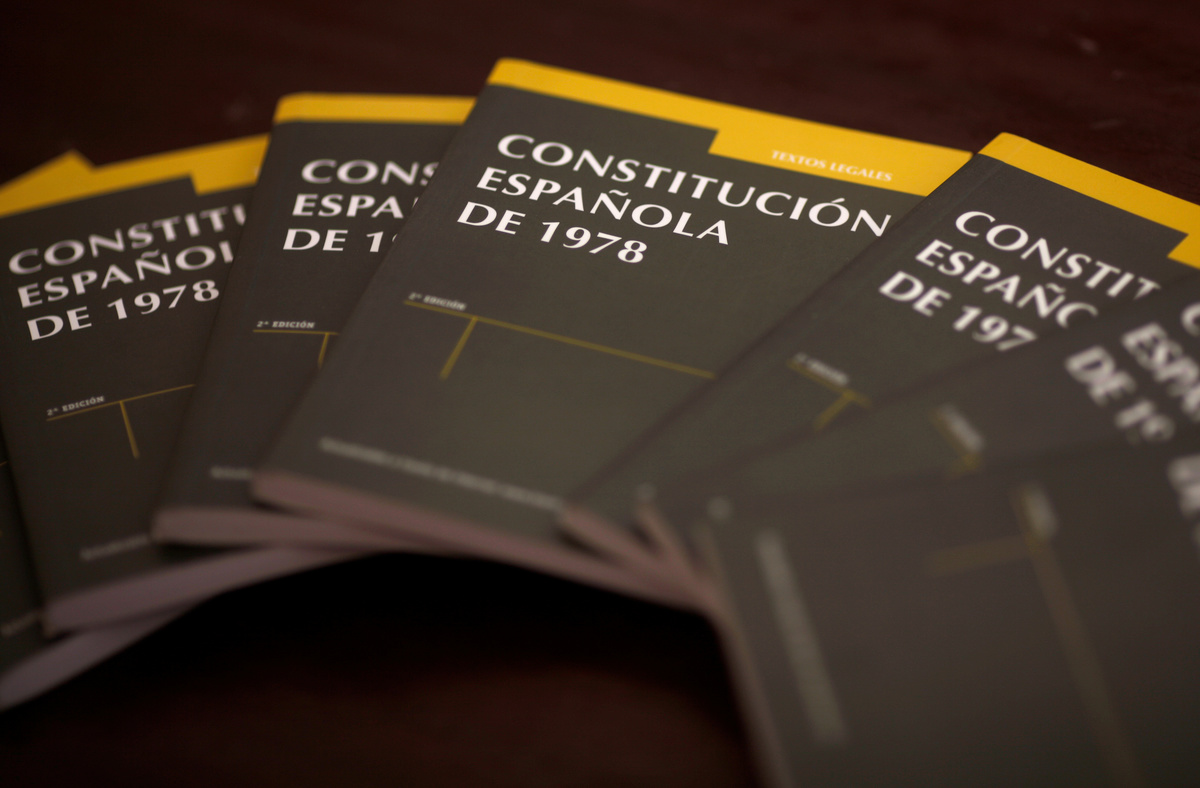
Spanish ruling-party lawmakers say Rajoy is considering invoking the constitution to dissolve the regional parliament and force fresh Catalan elections if the region's government goes ahead with an independence declaration.
Romeva's remarks about the Catalan parliament pressing ahead with an independence debate hit Spanish stocks and bonds, including shares in the region's two largest banks, Caixabank and Sabadell.
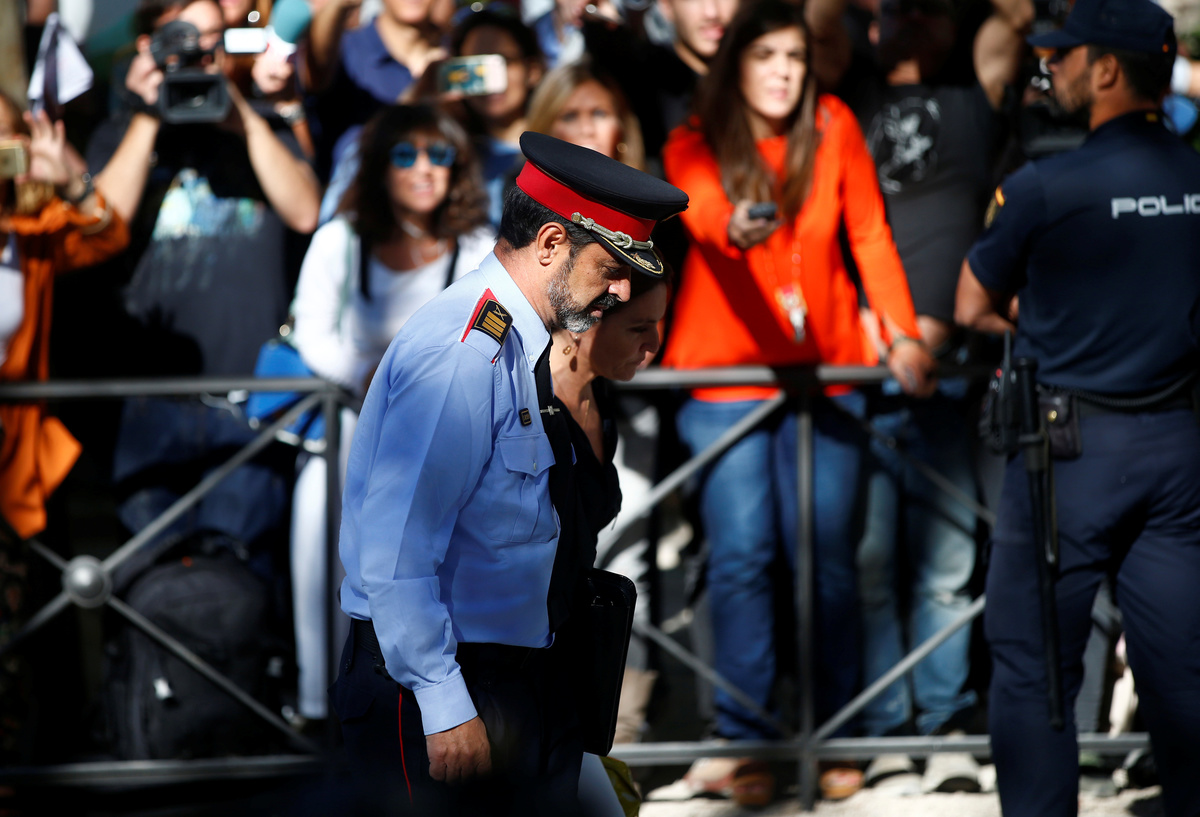
In a separate development that could raise tensions, Catalan police chief Josep Lluis Trapero appeared in Spain's High Court on Friday to answer accusations he committed sedition by failing to enforce a court ban on holding the referendum.
Opinion polls conducted before the vote suggest a minority of around 40 percent of residents in Catalonia back independence.
(Reporting by Elisabeth O'Leary, Paul Day, Andres Gonzalez and Rodrigo de Miguel; Writing by Mark Bendeich and Adrian Croft; Editing by Ralph Boulton)