Casualty will be 30 next year. How much longer the Saturday-night medical soap can soldier on must be a question asked regularly in top-level BBC pow-wows: so is its current yen for special, spoof and spin-off episodes a celebratory show of strength or a cry for help?
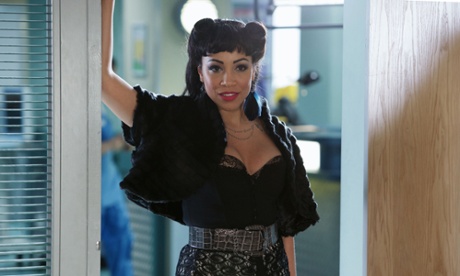
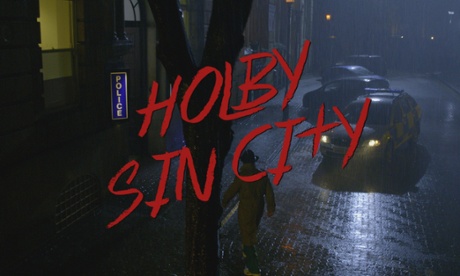
This week’s edition is entitled Holby Sin City – written in an opening caption using a crimson font mimicking the Sin City graphic novels and 2005 film. The episode is entirely taken up with fussy registrar Ethan (George Rainsford) and his interaction with long-term patient and femme fatale Bonnie (Renee Castle), a 1940s-style sex bomb who might have committed murder. Rain lashes the hitherto rarely glimpsed neon mean streets of downtown Holby. It’s what the show’s producers have dubbed “Casualty Noir”.
Casualty has always kept viewers on their toes with blasts of experimentation, for special occasions or character departures. A Comic Relief-themed episode in 2007 was written by Richard Curtis and starred Angus Deayton as himself, with a splinter in his finger. The 2011 death of ambulance technician Polly (Sophia Di Martino), stabbed by a crazed patient, played out in an unusually tense, real-time episode.
In recent months, archetypal Casualty stories have become even more rare. Gone are the days when a typical episode was called something like No Place Like Home or Three’s a Crowd or Thicker Than Water, and would open with a hypoglycemic pensioner climbing up a stepladder to fix some exposed wiring, followed by lots of scenes of nurses sighing vaguely and intransigent patients learning minor life lessons.
The current wave of innovation started in earnest in November, when former Hollyoaks dreamboat Gary Lucy appeared as a bare-chested, enigmatic rogue in another “Casualty Noir” episode set during a night shift. The hospital lights kept malfunctioning and a spooky murder mystery developed. Since then we have had consultant Zoe Hanna (Sunetra Sarker) reliving the same day over and over with different results, and an away-day special that sent Charlie (Derek Thompson) and Connie (Amanda Mealing) to Bucharest for an all-action battle with Romanian gangsters.
Now it’s time for the Sin City pastiche. Regular viewers who haven’t read or seen the Frank Miller originals – that’s most of Casualty’s core audience, surely – needn’t be concerned. It’s not in high-contrast monochrome and doesn’t feature any decapitations, electrocutions or cannibalised prostitutes. It’s just noir rather than neo-noir, more Bogart than Bruce Willis.
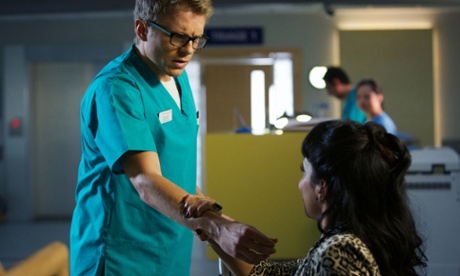
It’s also done on a doggedly small scale, provoking the same strained, I-see-what-you-tried-to-do-there smiles as a school play. All the right motifs are present – silhouettes, thoughts in voiceover, clacking stilettos, cruel relationships, thunderstorms, revolvers – but instead of them lifting Casualty up, they are dialled down to its normal, muted level. Add a confusing story that commits several major crimes against flashbacks and you’ve got something terminally underwhelming, although the clipped noir idiom does mask what might otherwise simply look like wooden acting.
There’s still something a bit thrilling about a show that is willing to junk its normal template and try something completely different, and you would take Holby Sin City over another regular episode. Therein lies the problem, though: wanting to shake things up repeatedly could be a sign that the series itself is fading.