In bid to slow coronavirus, Canada shuts borders to foreign nationals
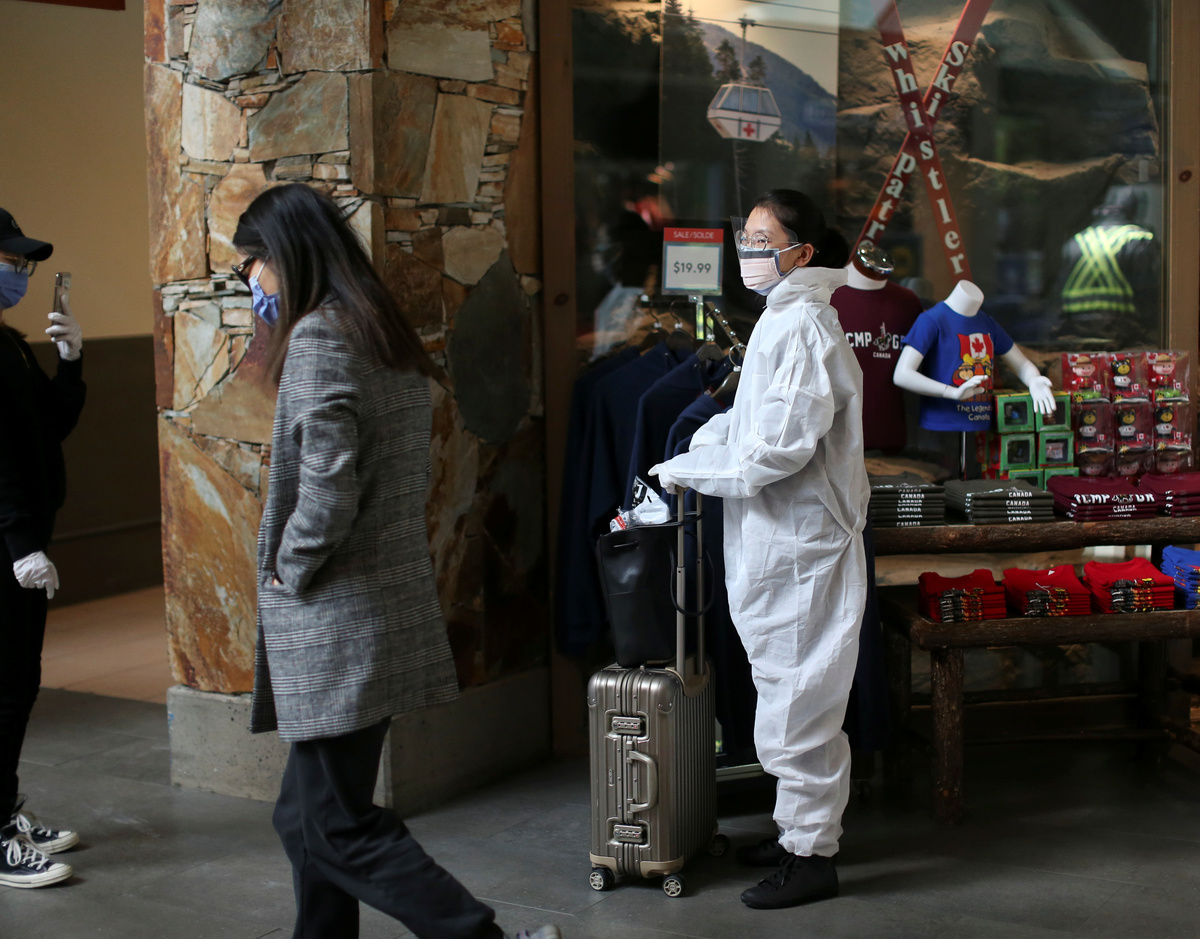
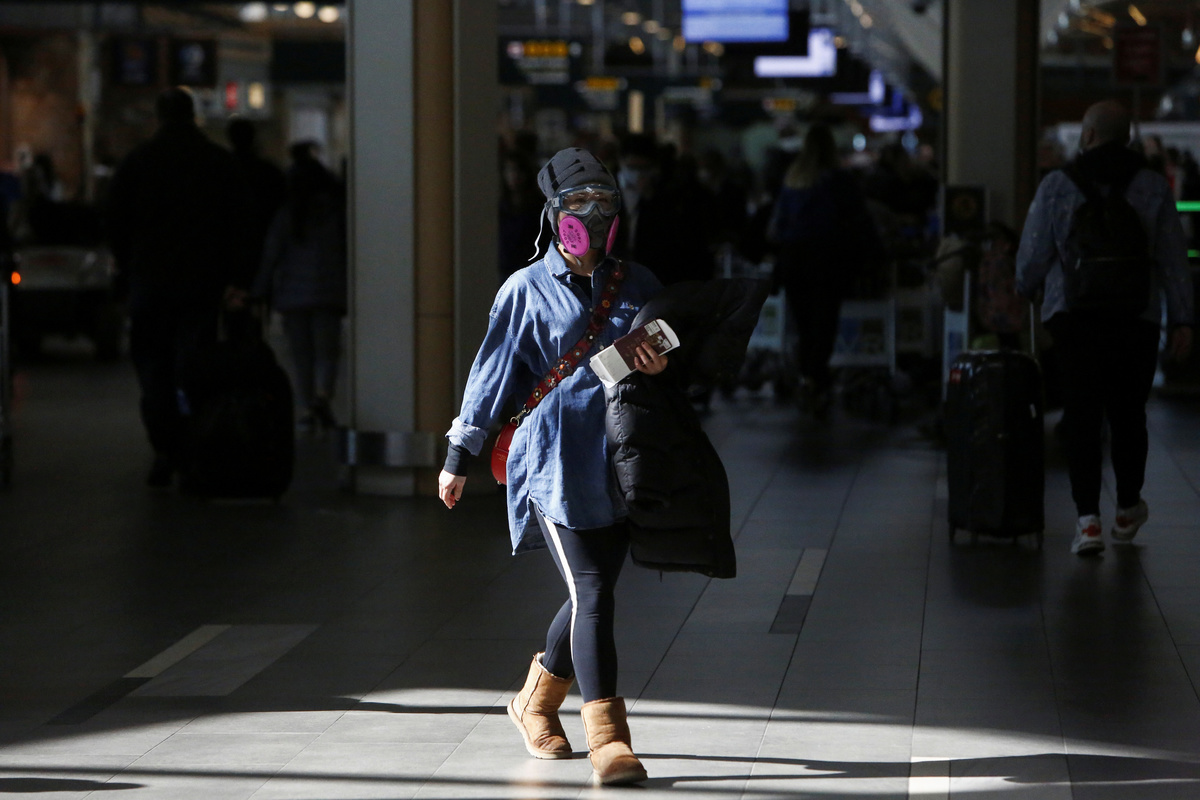
A woman wearing a face mask, plastic eye shield and disposable suit waits outside security after Canada's Prime Minister Justin Trudeau announced additional measures to combat the spread of the coronavirus disease (COVID-19), at Vancouver International Airport in Richmond, British Columbia, Canada March 16, 2020. REUTERS/Jesse Winter
Canada closed its borders to all foreign nationals except U.S. citizens and permanent residents on Monday, with Prime Minister Justin Trudeau urging people to limit social contact to stem the spread of the new coronavirus.
Several other countries have taken the same step. The 27-nation European Union proposed shutting its external borders for 30 days on Monday.
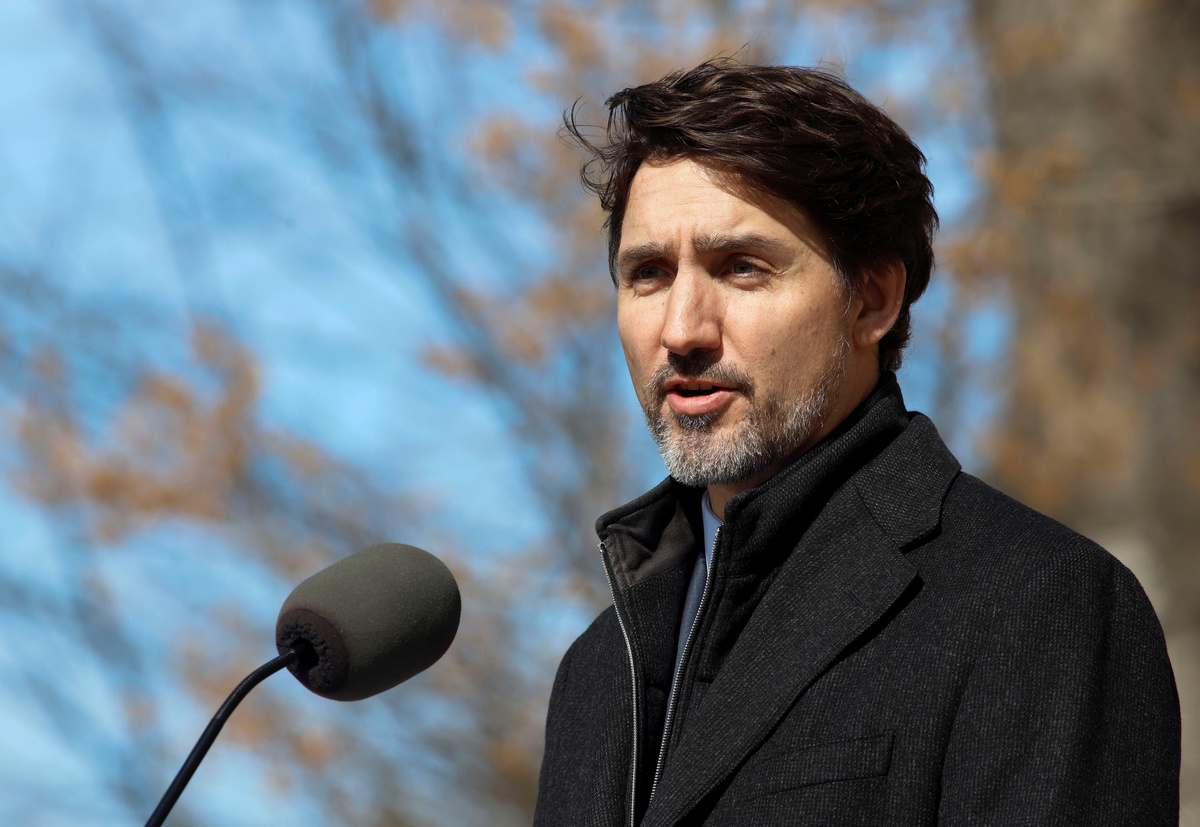
Canada's Prime Minister Justin Trudeau speaks to the media outside his home in Ottawa, Ontario, Canada March 16, 2020. REUTERS/Patrick Doyle
"We will be denying entry into Canada to people who are not Canadian citizens or permanent residents ... it is a significant step that we take in exceptional circumstances," Trudeau told reporters outside his home, where he is under quarantine after his wife, Sophie, tested positive for the respiratory virus.
As the virus' spread accelerates in Canada, Trudeau urged people to stay home and restrict contact with others.
"Staying home is an important step to protect the community and each other. We all have to do it," he said.
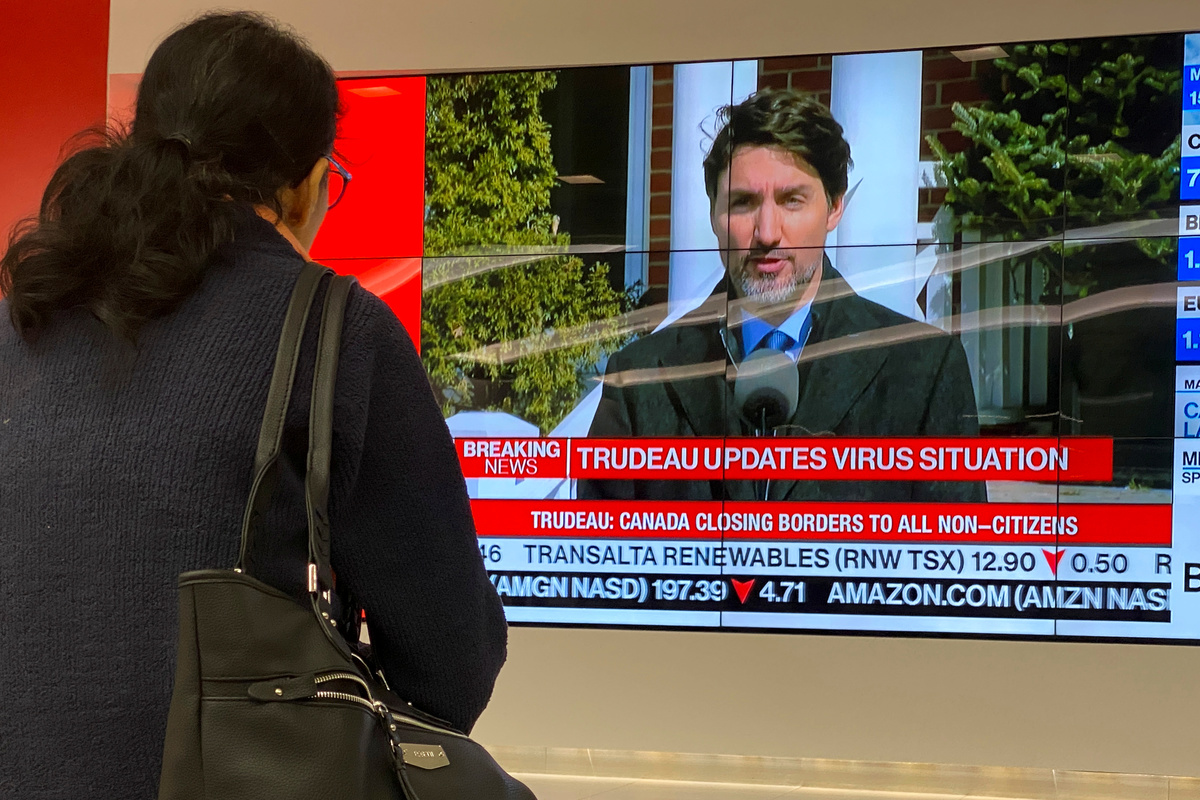
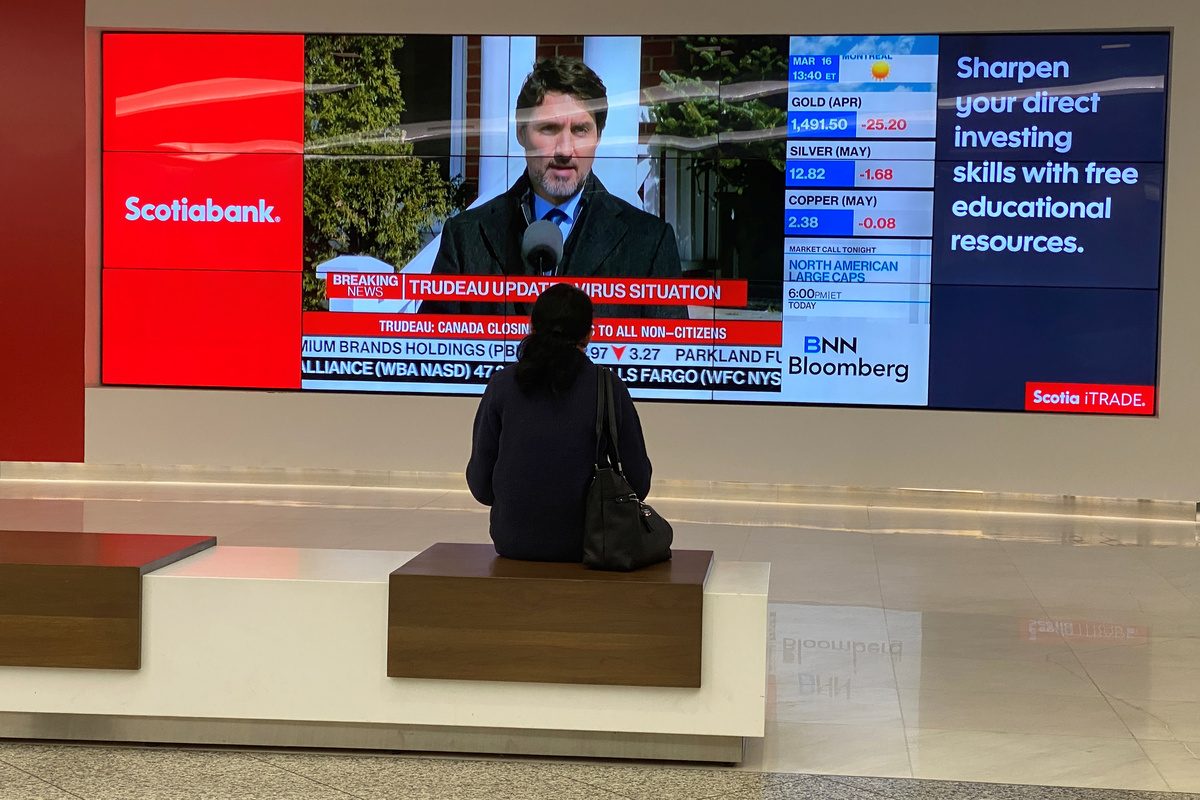
A woman watches Canadian Prime Minister Justin Trudeau announces measures to combat the spread of coronavirus disease (COVID-19) on the television screen of a bank in Toronto, Ontario, Canada March 16, 2020. REUTERS/Chris Helgren
Theresa Tam, Canada's chief public health officer, said that the next two weeks were crucial in trying to stem the outbreak.
The death toll in Canada rose to four on Monday from one on Sunday. The number of infected jumped to 407 from the 341 reported at 9 a.m. (1300 GMT) earlier in the day, medical officials said.
The new deaths occurred in the same nursing home in the Pacific province of British Columbia, which is directly north of Washington, one of the worst-hit U.S. states.
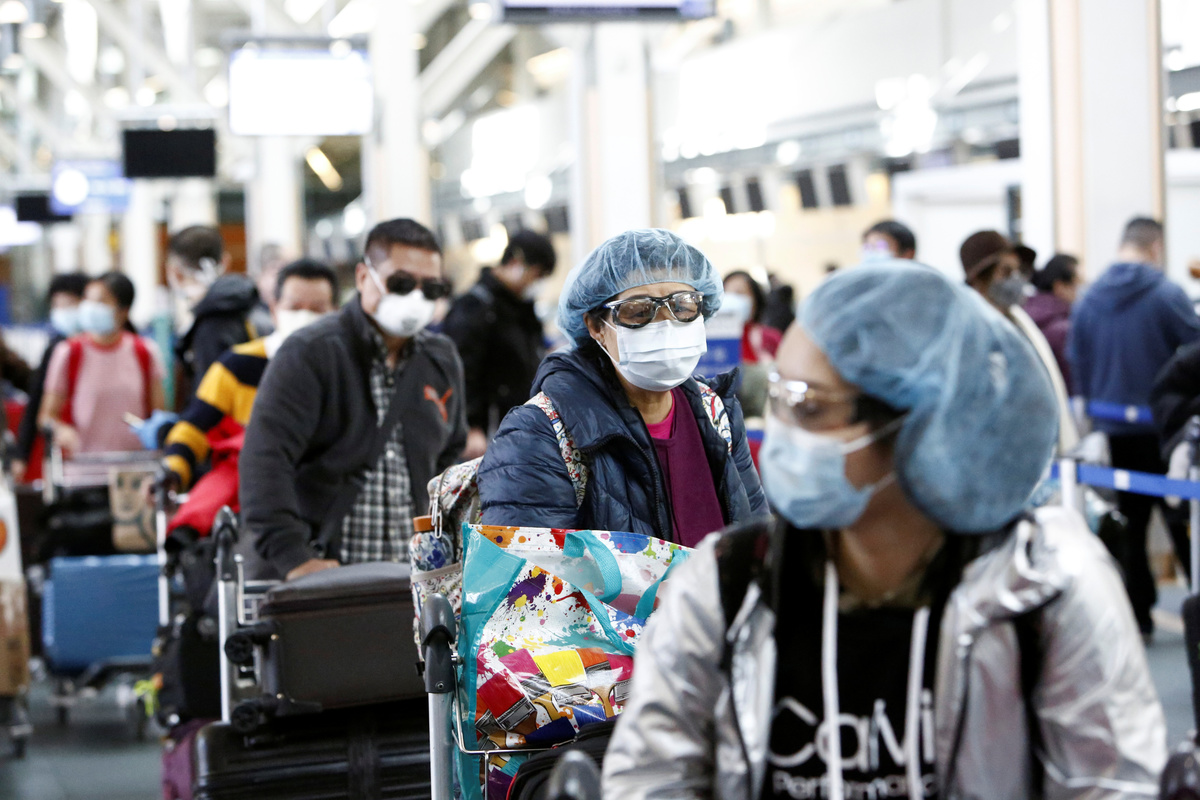
People wearing face masks and goggles wait to check in for an international flight at the Vancouver International Airport after Canada's Prime Minister Justin Trudeau announced additional measures to combat the spread of the coronavirus disease (COVID-19), in Richmond, British Columbia, Canada March 16, 2020. REUTERS/Jesse Winter
Trade will not be affected by the border closing. Canada shares a long unguarded frontier with the United States, which takes 75% of Canadian goods exports.
Asked why U.S. citizens were exempt, Trudeau said the close bilateral integration meant the United States was in a different category from other nations. But he added that more measures could be announced soon.
"Both countries rely on each other to provide essential goods ... so it's very important we do this with a degree of precision and in the spirit of a strong relationship," Health Minister Patty Hajdu later told reporters.
A woman wearing a protective face mask and goggles walks through Vancouver International Airport after Canada's Prime Minister Justin Trudeau announced additional measures to combat the spread of the coronavirus disease (COVID-19), in Richmond, British Columbia, Canada March 16, 2020. REUTERS/Jesse Winter
British Columbia said, however, it was concerned that U.S. citizens would be allowed in.
"Our strong message (is) that visitors from the United States not come to British Columbia," said provincial Health Minister Adrian Dix.
The border closure helped drive down Air Canada's stock by as much as 38%.
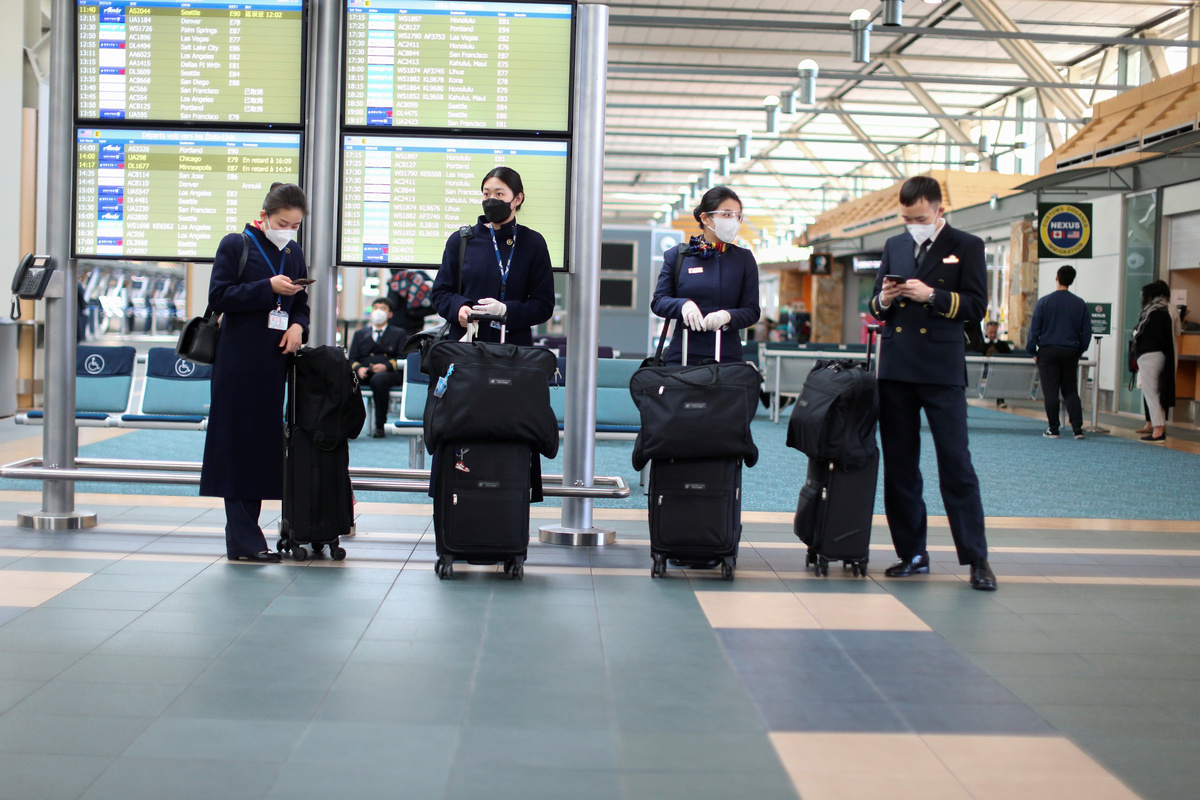
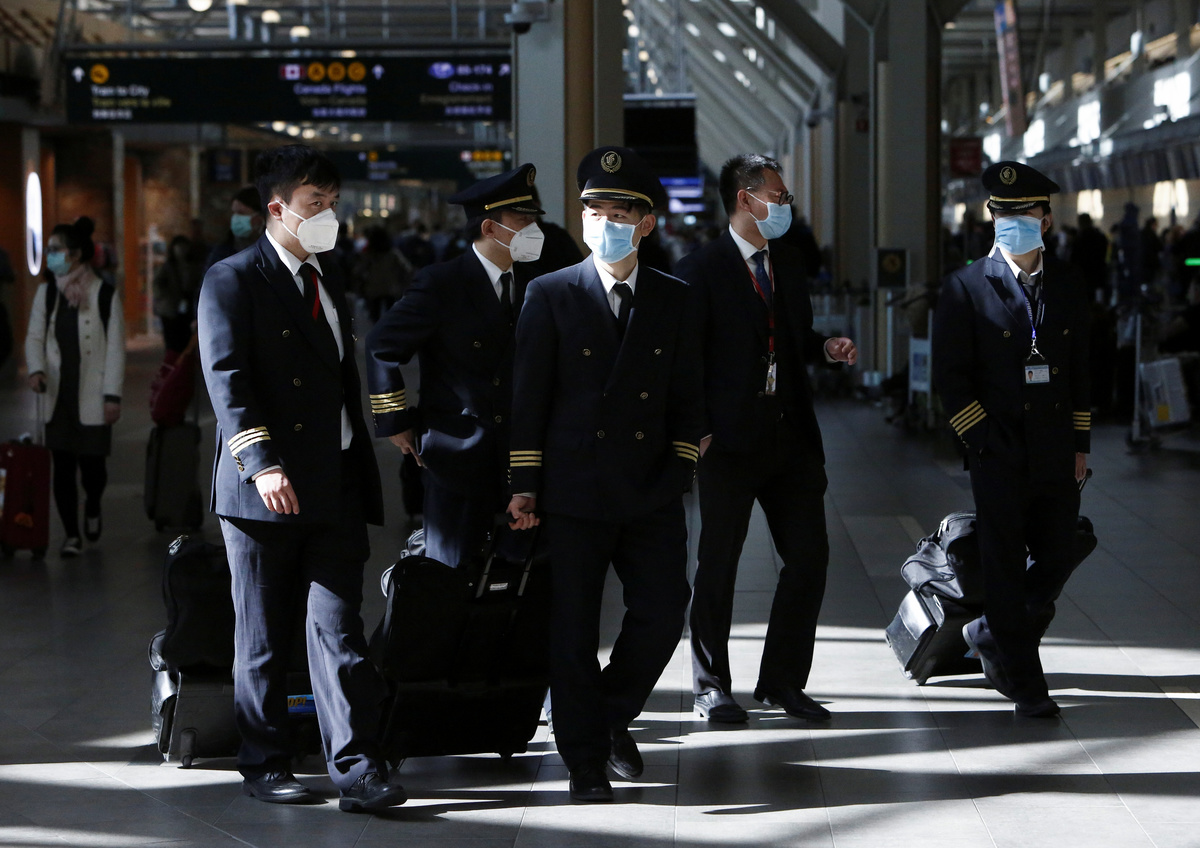
Airline crew members wearing face masks wait at the international departures area of the Vancouver International Airport after Canada's Prime Minister Justin Trudeau announced additional measures to combat the spread of the coronavirus disease (COVID-19), in Richmond, British Columbia, Canada March 16, 2020. REUTERS/Jesse Winter
Canada will reroute all international flight arrivals to four airports - Toronto, Calgary, Montreal and Vancouver - and has imposed tougher screening.
WEDDINGS, BAPTISMS ON HOLD?
The country's main stock market index tumbled nearly 10% and the Canadian dollar hit a four-year low.
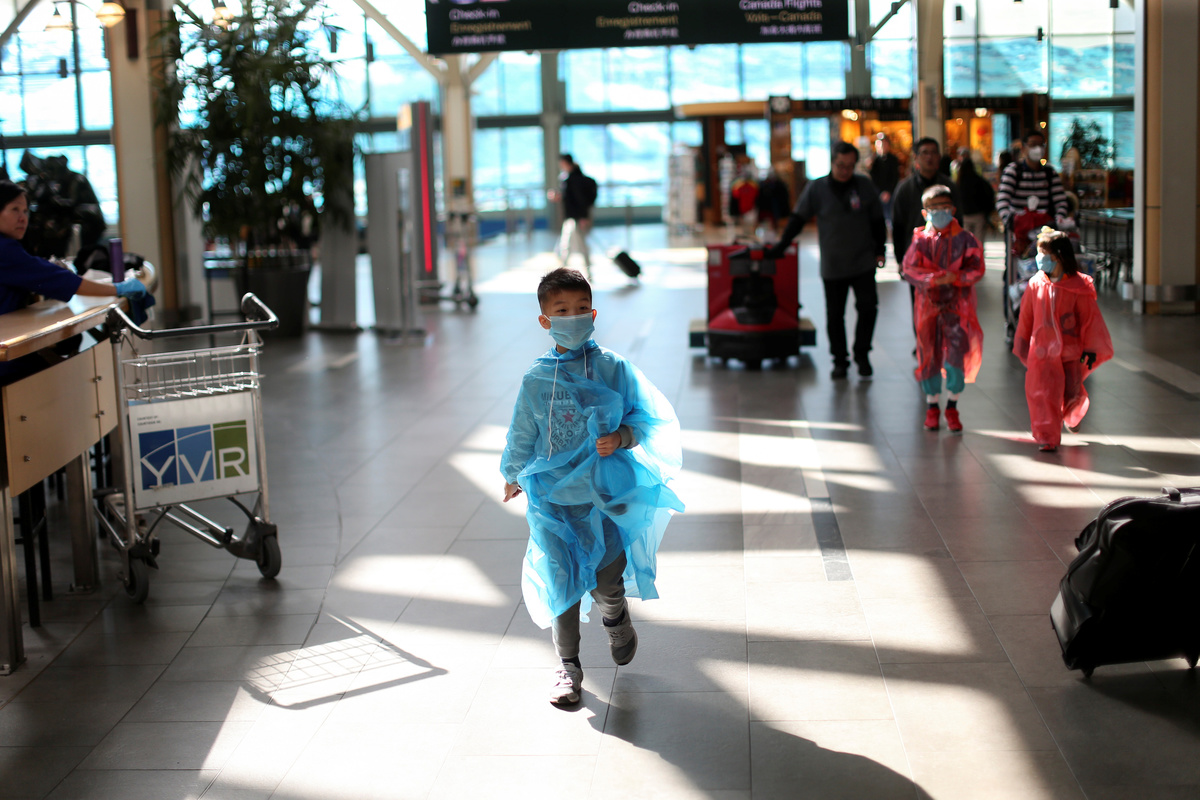
A child walks towards the international security screening point of the Vancouver International Airport after Canada's Prime Minister Justin Trudeau announced additional measures to combat the spread of the coronavirus disease (COVID-19), in Richmond, British Columbia, Canada March 16, 2020. REUTERS/Jesse Winter
Ontario, the most-populous province, and one that accounts for nearly half of confirmed cases, said it would delay a March 25 budget and instead deliver an economic and fiscal update.
Toronto, Canada's largest city, recommended that bars and restaurants stop in-person service and that theaters close.
Quebec on Monday recommended the suspension of all religious functions, including baptisms, weddings and funerals. For any funerals that proceed, the number of mourners should be reduced, the province said, without specifying how many.
A woman watches Canadian Prime Minister Justin Trudeau announces measures to combat the spread of coronavirus disease (COVID-19) on the television screen of a bank in Toronto, Ontario, Canada March 16, 2020. REUTERS/Chris Helgren
"If it’s possible for you to express your caring to the family, do it by internet, or by phone," Public Health Director Horatio Arruda said.
Trudeau, who has promised to unveil a major stimulus package soon, said that "in the medium term and then into the long term, we will need to invest significant amounts to restore people's confidence in the economy."
Airline crew members wearing face masks walk through Vancouver International Airport after Canada's Prime Minister Justin Trudeau announced additional measures to combat the spread of the coronavirus disease (COVID-19), in Richmond, British Columbia, Canada March 16, 2020. REUTERS/Jesse Winter
(Reporting by Kelsey Johnson and David Ljunggren; Additional reporting by Steve Scherer in Ottawa, Rod Nickel in Winnipeg, Allison Lambert in Montreal and Amran Abocar, Allison Martell and Moira Warburton in Toronto; Editing by Rosalba O'Brien and Peter Cooney)
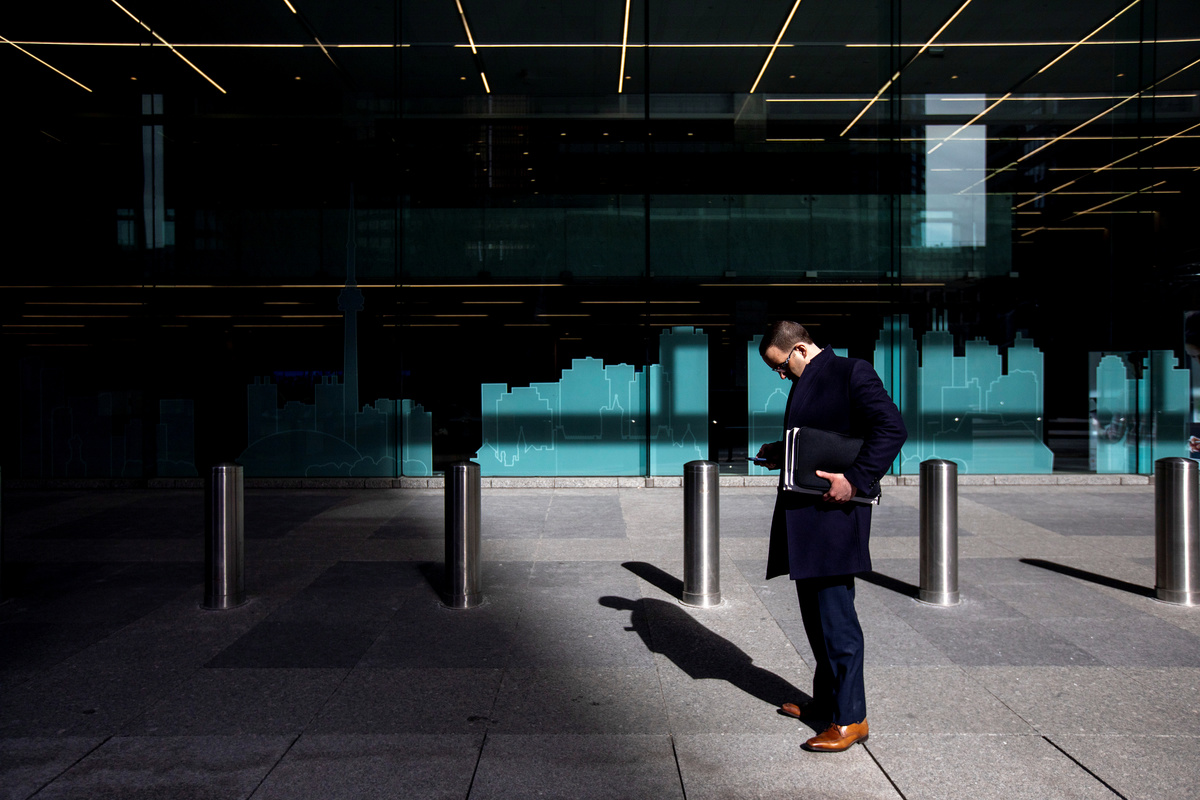
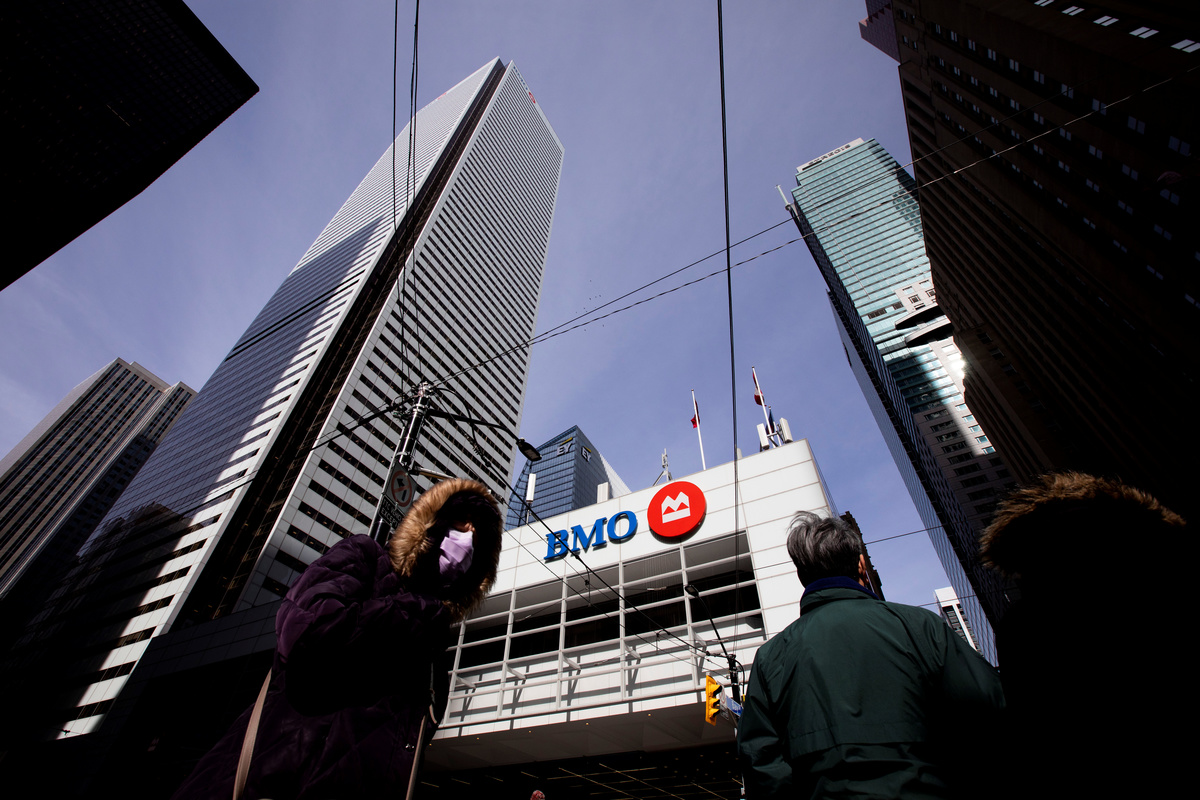
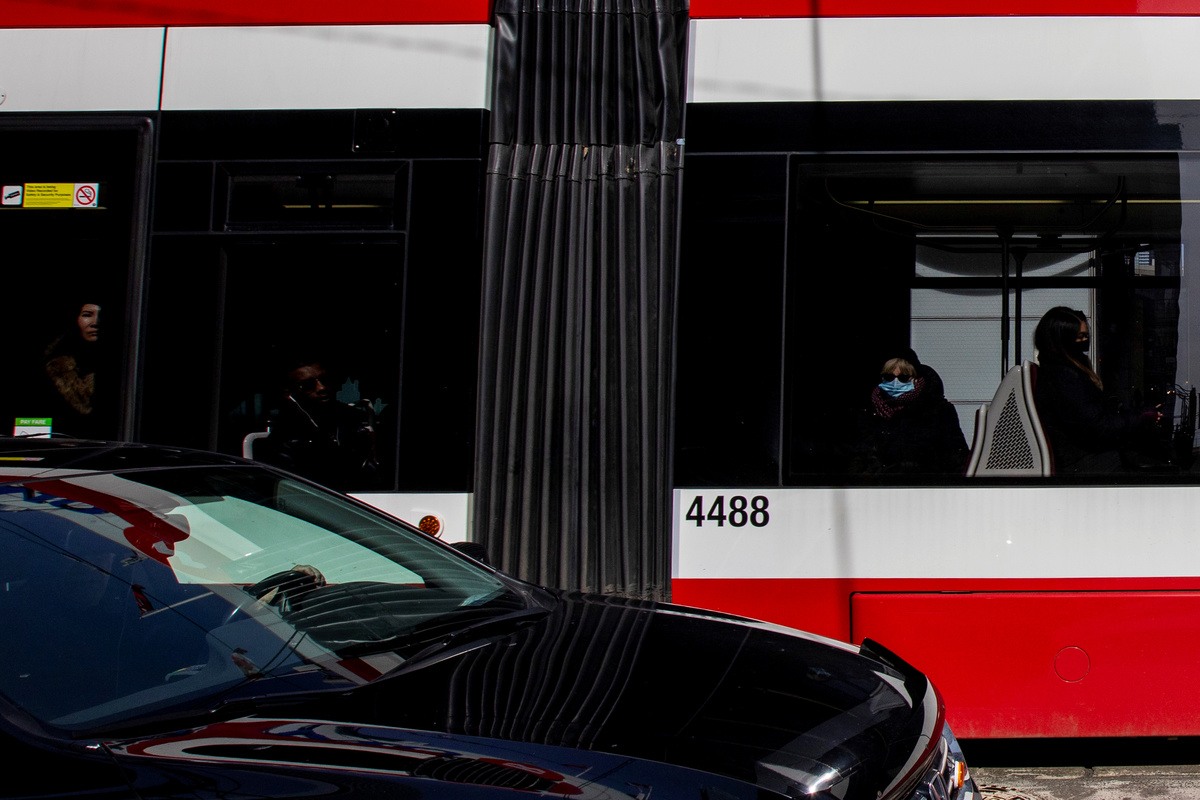
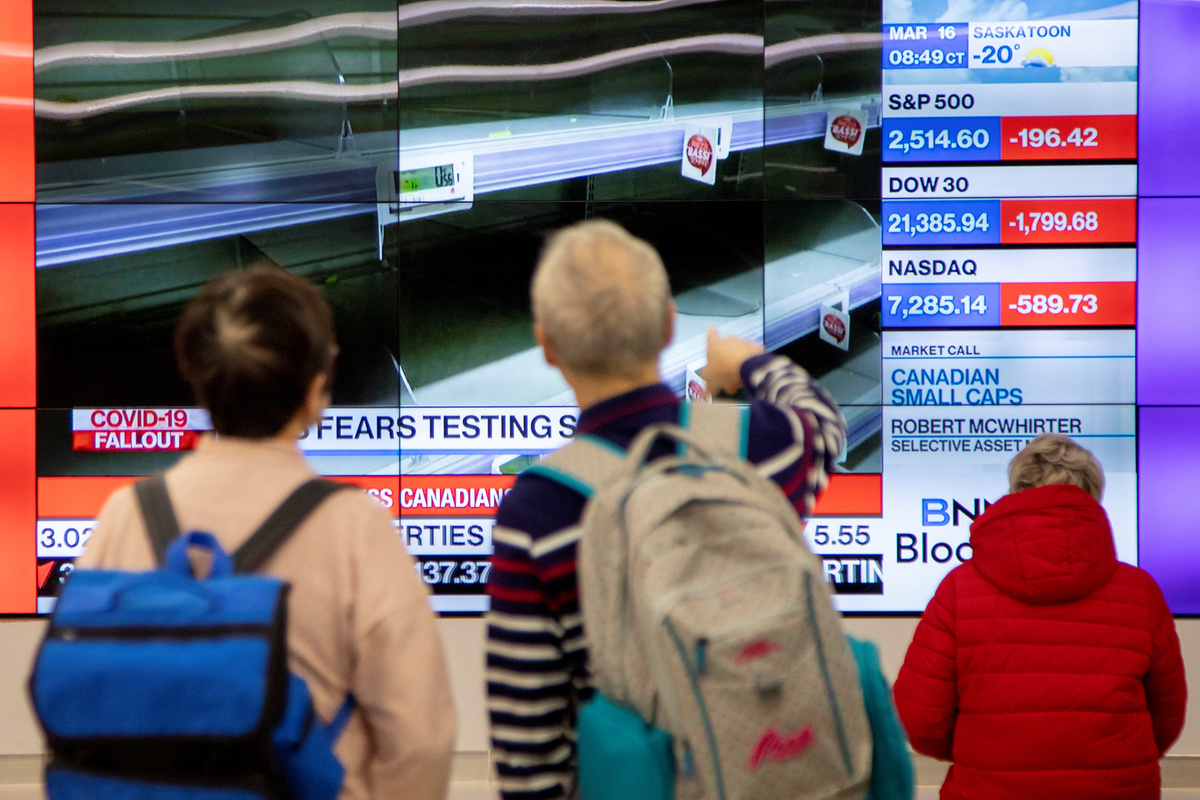
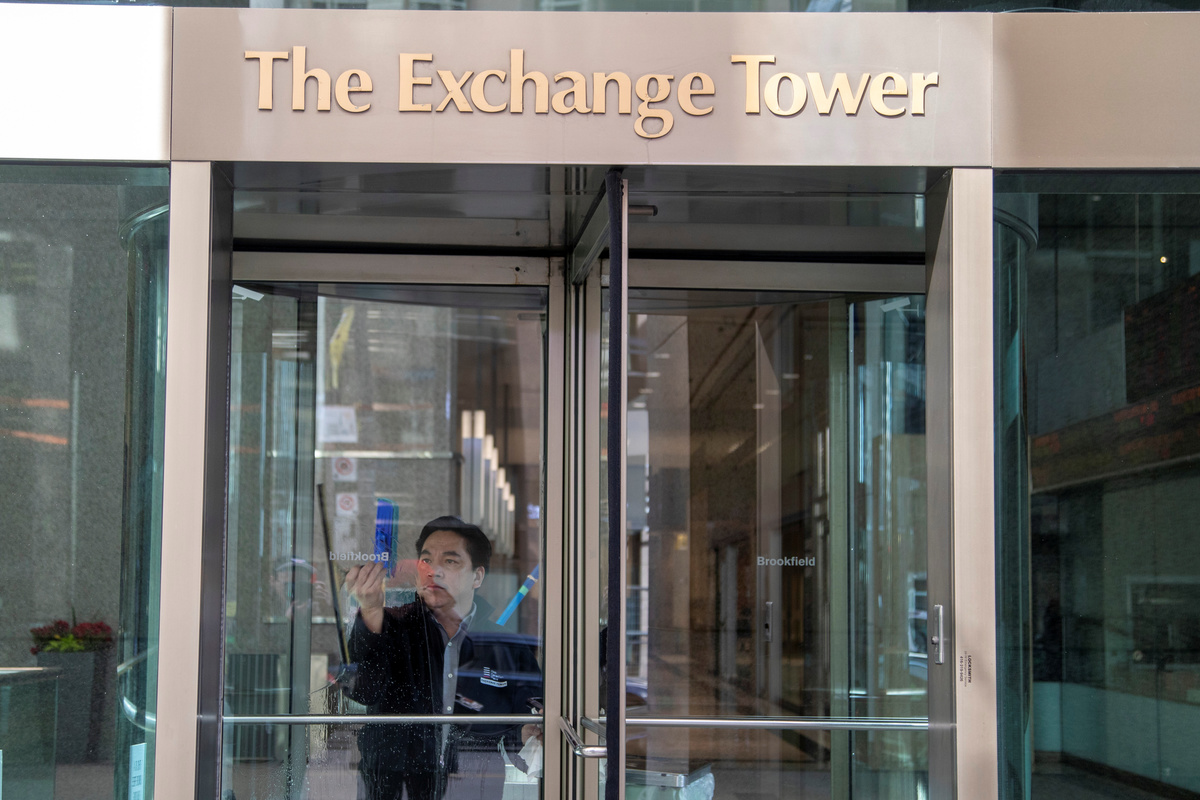
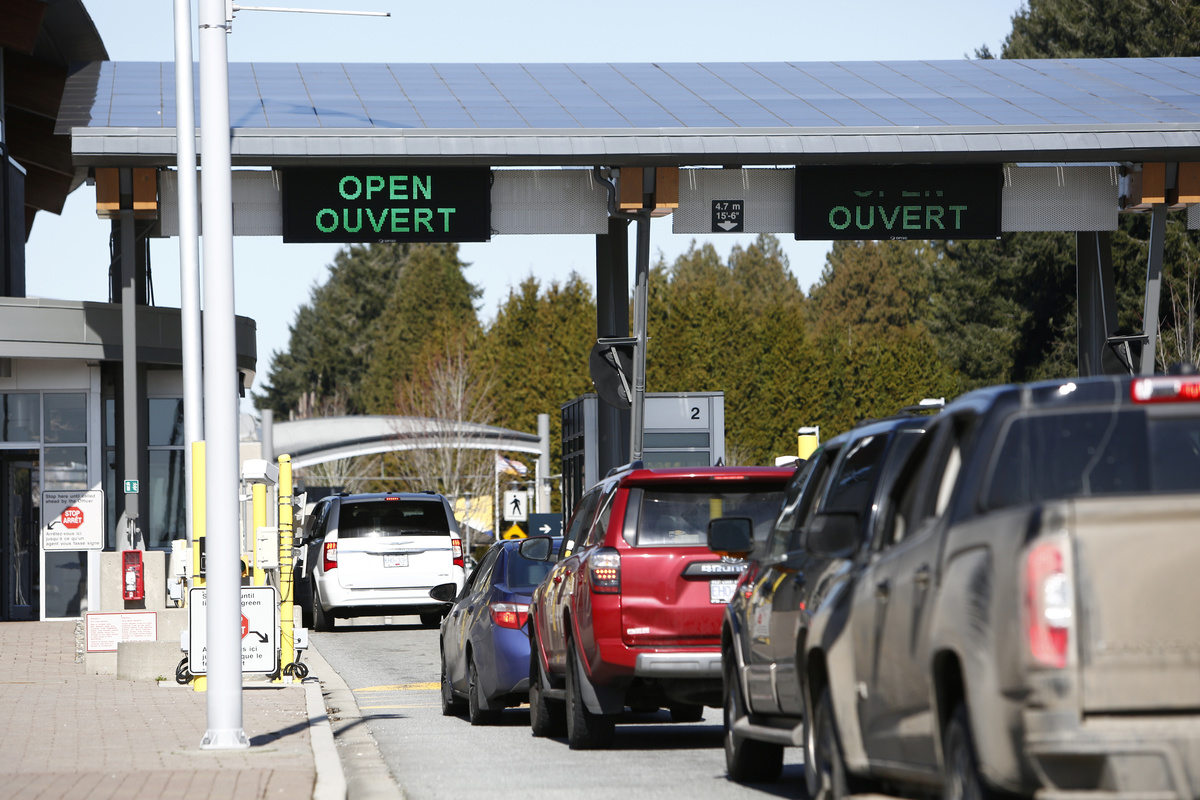
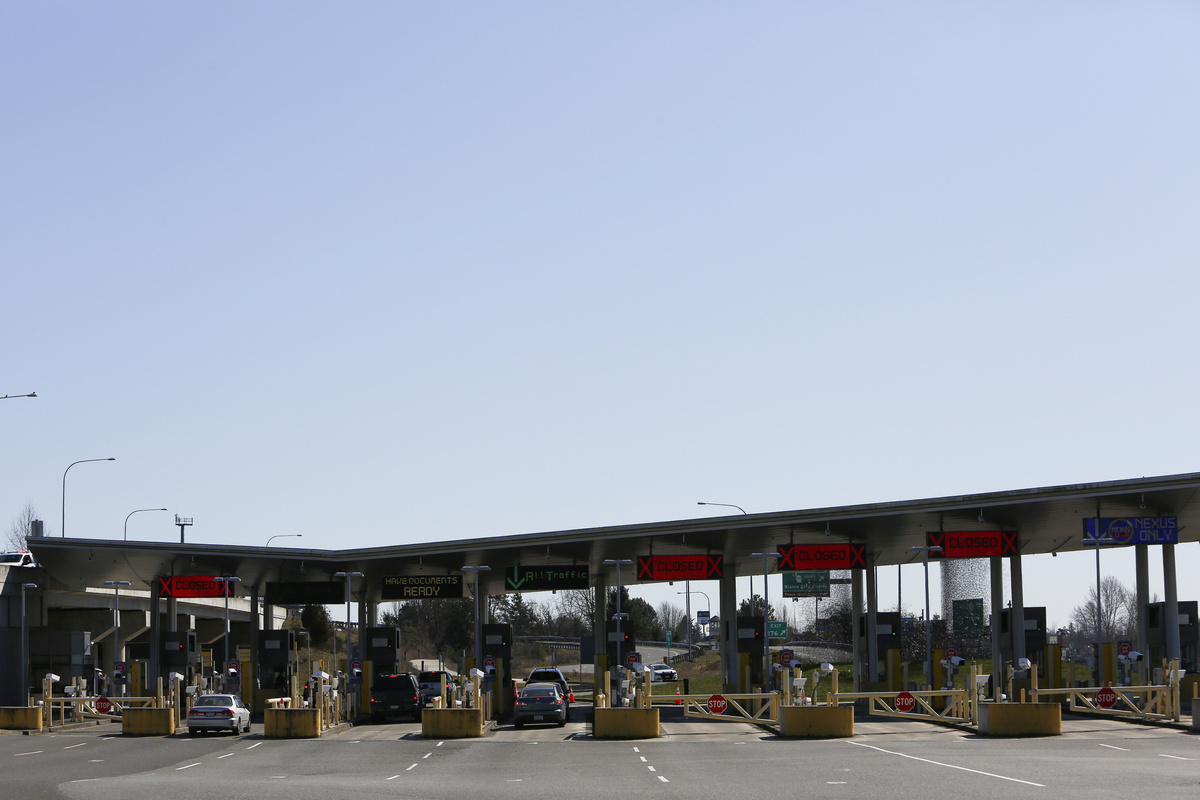
A man checks his cellphone in the financial district as the number of novel coronavirus cases continues to grow in Toronto, Ontario, Canada March 16, 2020. REUTERS/Carlos Osorio A woman wears a face mask while walking in the financial district as the number of novel coronavirus cases continues to grow in Toronto, Ontario, Canada March 16, 2020. REUTERS/Carlos Osorio People ride the subway through the financial district as the number of novel coronavirus cases continues to grow in Toronto, Ontario, Canada March 16, 2020. REUTERS/Carlos Osorio Monitors display the stock market numbers in the financial district as the number of novel coronavirus cases continues to grow in Toronto, Ontario, Canada March 16, 2020. REUTERS/Carlos Osorio A man cleans the door of The Exchange tower in the financial district as the number of novel coronavirus cases continues to grow in Toronto, Ontario, Canada March 16, 2020. REUTERS/Carlos Osorio Drivers wait to cross through Canadian customs at the Canada-US border near the Peace Arch Provincial Park in Surrey, British Columbia, Canada after Canada's Prime Minister Justin Trudeau announced additional measures to combat the spread of novel coronavirus disease (COVID-19) in Richmond, British Columbia, Canada March 16, 2020. REUTERS/Jesse Winter Few drivers wait to cross through US customs at the Canada-US border near the Peace Arch Historical State Park in Blaine, Washington, USA, after Canada's Prime Minister Justin Trudeau announced additional measures to combat the spread of novel coronavirus disease (COVID-19), in Richmond, British Columbia, Canada March 16, 2020. REUTERS/Jesse Winter
Sign up to read this article
Read news from 100’s of titles, curated specifically for you.