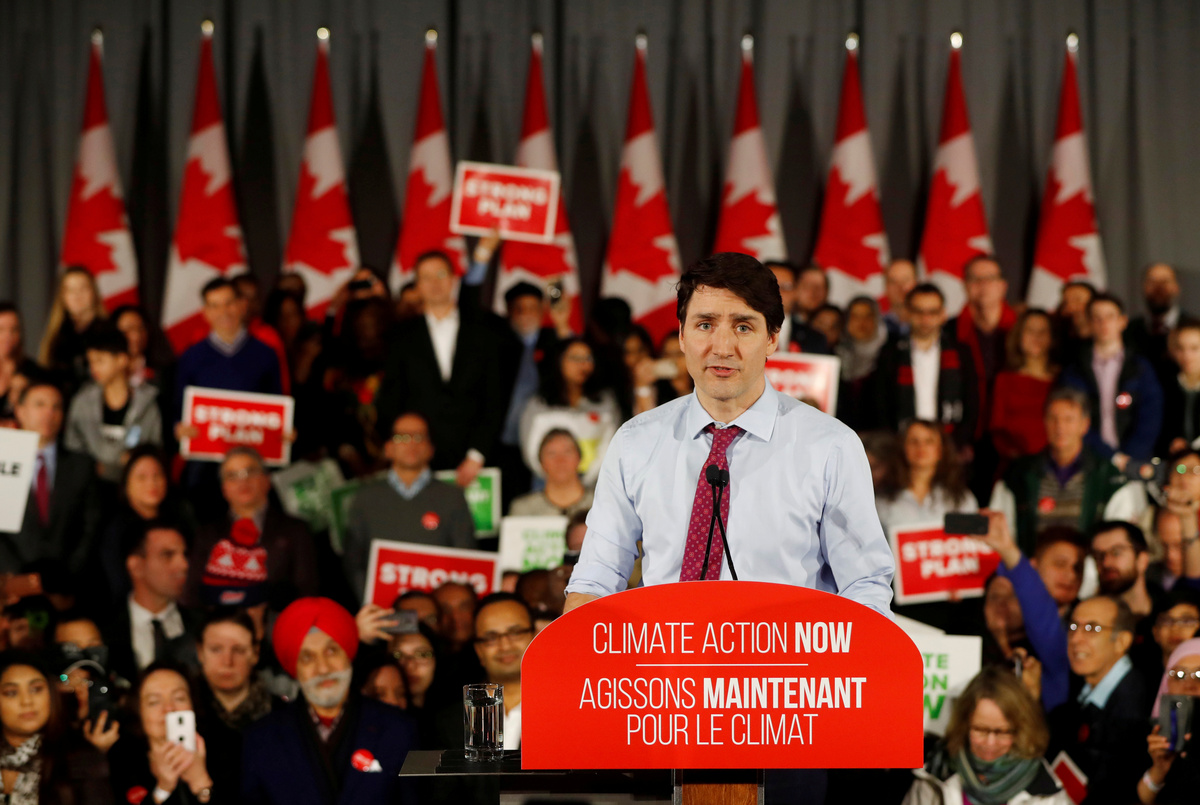
Canada's Supreme Court ruled in favour of the federal government's carbon pricing policy on Thursday, upholding a central pillar of Prime Minister Justin's Trudeau's climate plan and infuriating some provinces that opposed it.
The country's top court said climate change is a threat to Canada a whole and upheld the legality of the Greenhouse Gas Pollution Pricing Act, which had been challenged by Alberta, Saskatchewan and Ontario.
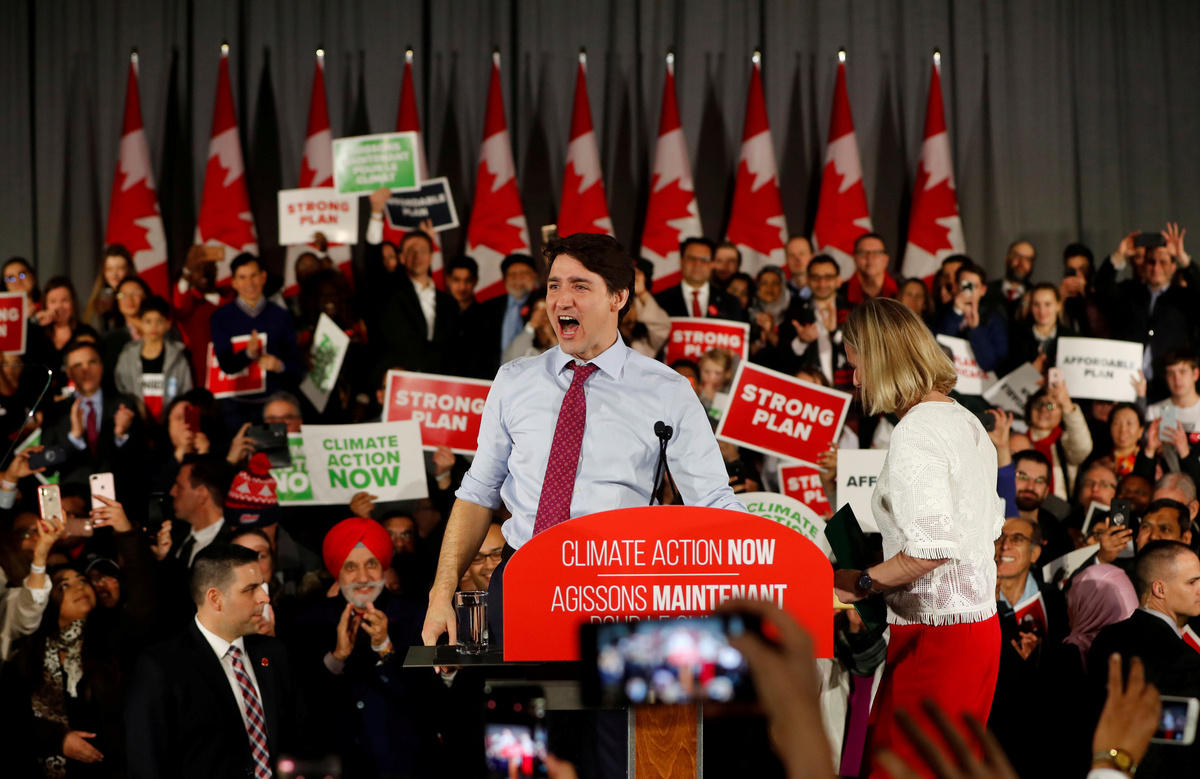
Carbon pricing, often called a carbon tax by opponents, is the lynchpin of the federal government's plan to ultimately reach net-zero emissions by 2050. Ottawa will steadily ramp up the price of carbon to C$170 ($135.08) a ton by 2030, from C$30 a ton currently.
Canada is the fourth-largest oil producer in the world and the fifth-largest greenhouse gas emitter on a per capita basis.
"Parliament has jurisdiction to enact this law as a matter of national concern," Chief Justice Richard Wagner wrote in the ruling. "All parties to this proceeding agree that climate change is an existential challenge. It is a threat of the highest order to the country, and indeed to the world."
Under the carbon pricing act, Ottawa can impose a federal levy on provinces that do not have an adequate carbon pricing system of their own. Opposing provinces argued this infringed on their jurisdiction, but the Supreme Court ruled federal intervention was justified.
The ruling was backed by six members of the nine-member court, with three dissenting opinions.
"Today's decision by the Supreme Court of Canada does not change our core conviction that the federal carbon tax is bad environmental policy, bad economic policy, and simply wrong," Saskatchewan Premier Scott Moe said in a statement.
Saskatchewan will unveil its own climate measures to avoid being subject to the "punitive and ineffective" federal tax, he added.
Alberta Premier Jason Kenney told a news conference the "disappointing" ruling undermined provincial authority, and set a dangerous precedent that allowed the federal government to overstep its constitutional powers.
Ontario released a statement outlining its own environment plan, and Finance Minister Peter Bethlenfalvy said the province would not stop investing in a green economy.
Canada needs to cut emissions by 30% below 2005 levels by 2030 to fulfil its international climate commitments, which would involve slashing annual emissions to 511 megatons, compared with 729 megatons in 2018.
The Liberals unveiled a strengthened climate plan last year aimed at reducing emissions to 503 megatons.
"This decision is a win for the millions of Canadians who believe we must build a prosperous economy that fights climate change," Environment Minister Jonathan Wilkinson said in a statement.
Senior Liberals have said they expect a snap election in 2021, two years ahead of schedule, and the Supreme Court ruling is a boon for Trudeau ahead of a possible vote. The opposition Conservative party said they would repeal federal carbon pricing, if elected.
($1 = 1.2585 Canadian dollars)
(Additional reporting by Fergal Smith in Toronto; Editing by Hugh Lawson, Nick Zieminski and Marguerita Choy)