
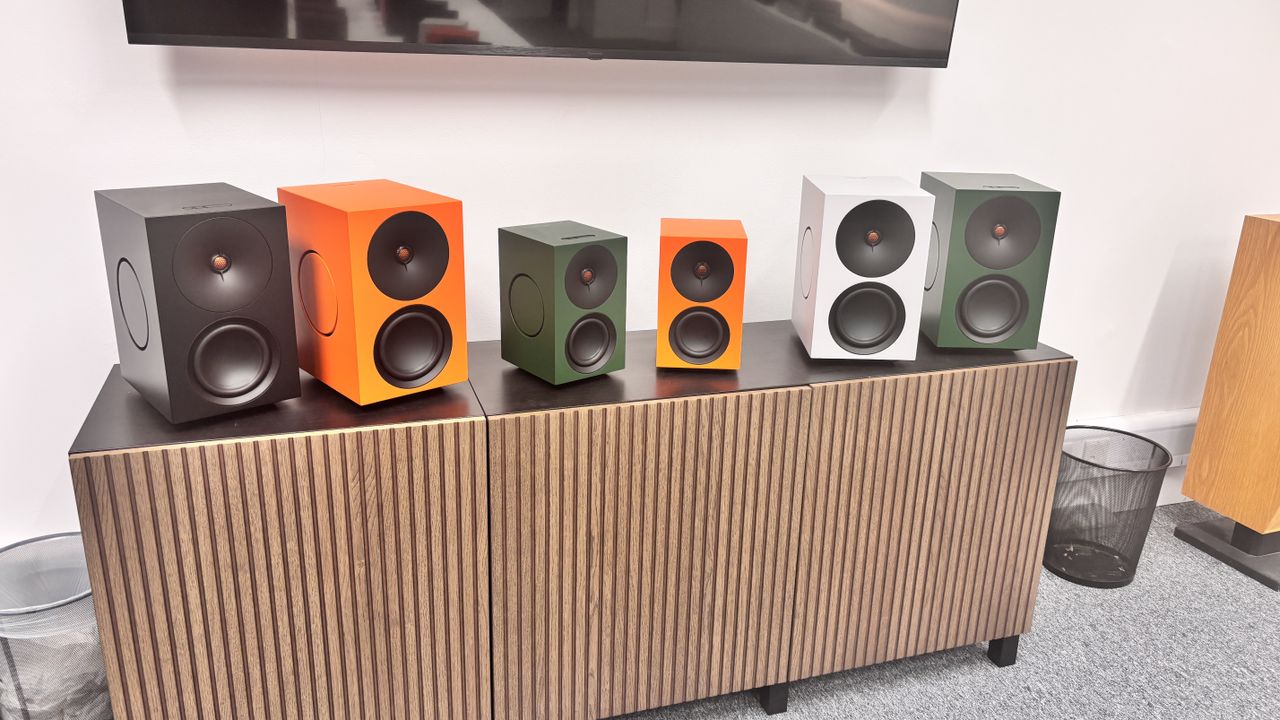
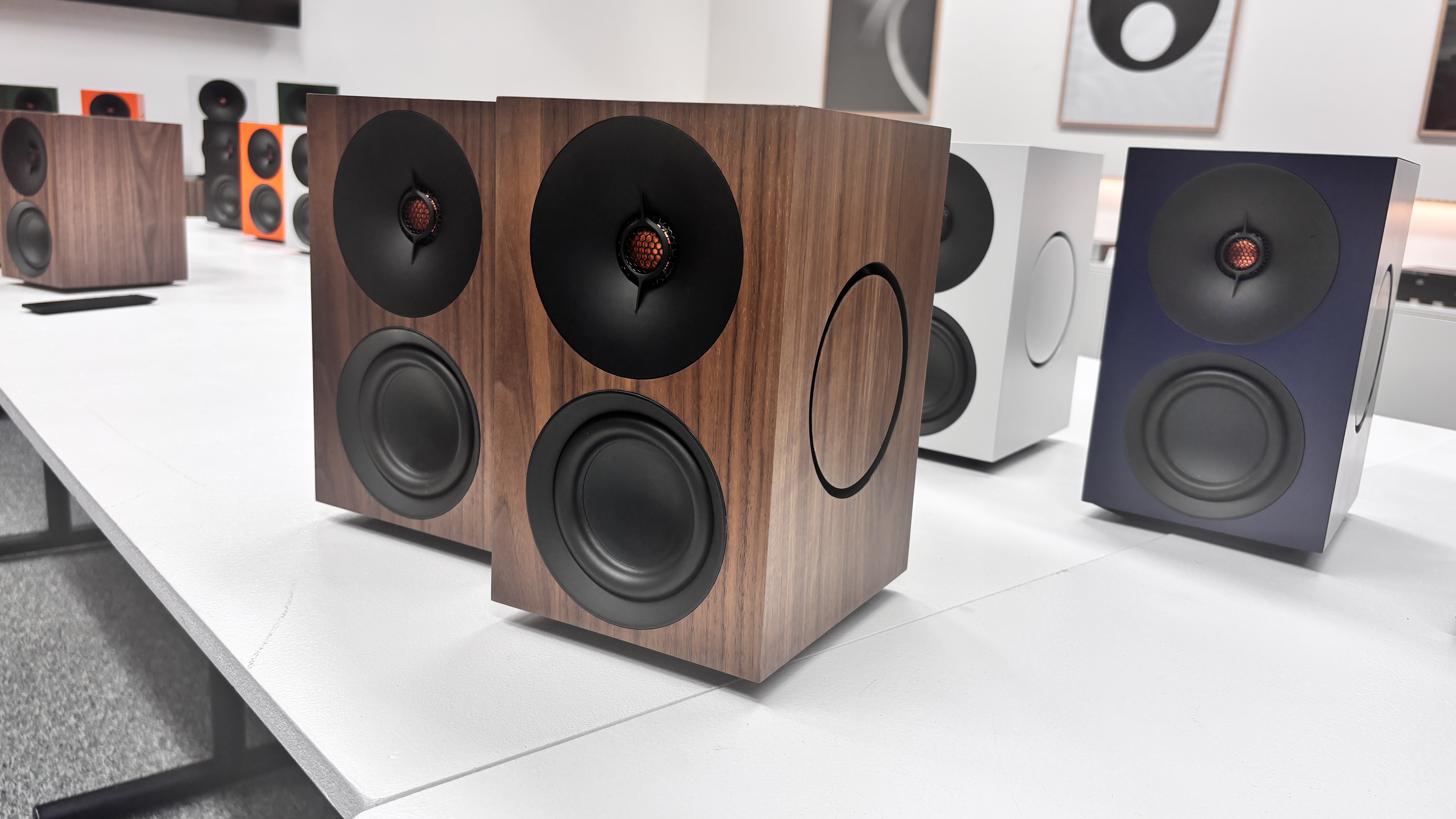
This week, British hi-fi audio brand Cambridge Audio all but called KEF outside for a “chat”, when it unveiled its new range of L/R active speakers.
The manufacturer went so far as to boast "it's ready for the fight" at the speakers' launch when we asked about it going toe to toe with KEF. It even ran the speakers head to head with their rivals during a demonstration.
This really is a pound-for-pound grudge match: the L/R range's pricing puts it in direct competition with KEF's LS range of speakers.
The middle-child L/R M, which Cambridge is marketing as “the best option for most people”, retails for £1199, the same price as the five-star KEF LSX II we have long recommended to any buyer on the hunt for a wireless speaker system.
How does Cambridge plan to succeed where other hi-fi heavyweights – including Technics with its three-star SC-CX700 system – have failed in their efforts to dethrone KEF?
We talked to the L/R range's architect, Cambridge Audio’s active systems development manager, Ollie Marshall, to find out.
Cambridge isn’t interested in its past
Cambridge Audio is a brand that has always sold itself on having a distinctive “British” sound. This was a key ingredient of the charm of its separates and speakers.
Highlight products include the five-star Cambridge Audio Aero 6 floorstanders and 5.1 Aero surround sound package we reviewed in 2015, as well as its CXN (V2) network streamer, which entered our Hall of Fame in 2023.
Ollie Marshall says, however, that the firm is not taking any cues or inspiration from its past efforts. He tells us that Cambridge Audio is interested only in what’s to come – as evidenced by its recent rebrand.
“If I’m honest, no, we didn’t borrow anything [from our existing products],” Marshall says.
Instead, he is focusing on using his experience gained working on speakers and systems at hi-fi rival Naim / Focal, with a goal to create something entirely new.
“These are the first speakers I’ve worked on [at Cambridge], so they’re completely different. For example, I used to work at Naim / Focal, so I really appreciate the hard domes, where it’s a bit like playing with fire: there’s so much to gain with hard diaphragms, but you can definitely get it wrong as well. So for these, it’s about trying to find that balance.”
He adds that the end goal is to create something that treads the tightrope of being enjoyable and energetic enough to delight regular music fans, while also being clear and transparent enough to appeal to audiophiles. He openly admits that that's a tall order for any hi-fi company.
“I just wanted to make something that I really wanted to listen to. I consider myself an audiophile, but also someone who loves music and just wants something fun to listen to,” Marshall tells us.
“I want it to communicate the music. I wanted these to be a balance between audiophile and my style. I wanted it to be something that has the credentials to excite the audiophiles but also the simplicity and features that are appealing to other, I guess you would call them, normal people.”
He adds that this is a key reason Cambridge still puts great emphasis on tuning to its team’s ears, as well as measurements.
“We use a mix [of listening and measuring]. There’s a huge part of it, with the drive-unit design, using simulation tools, using systems and tools to get the drive units to behave as you want them to on paper. But so much more of it is done by listening to music through them,” he says.
“Measurements are a useful tool, but it’s about judgment; I’m always thinking, maybe I could try something here, or something there to make it better. Ultimately, it comes down to whether or not it sounds good.”
Separates are important, but systems are the future
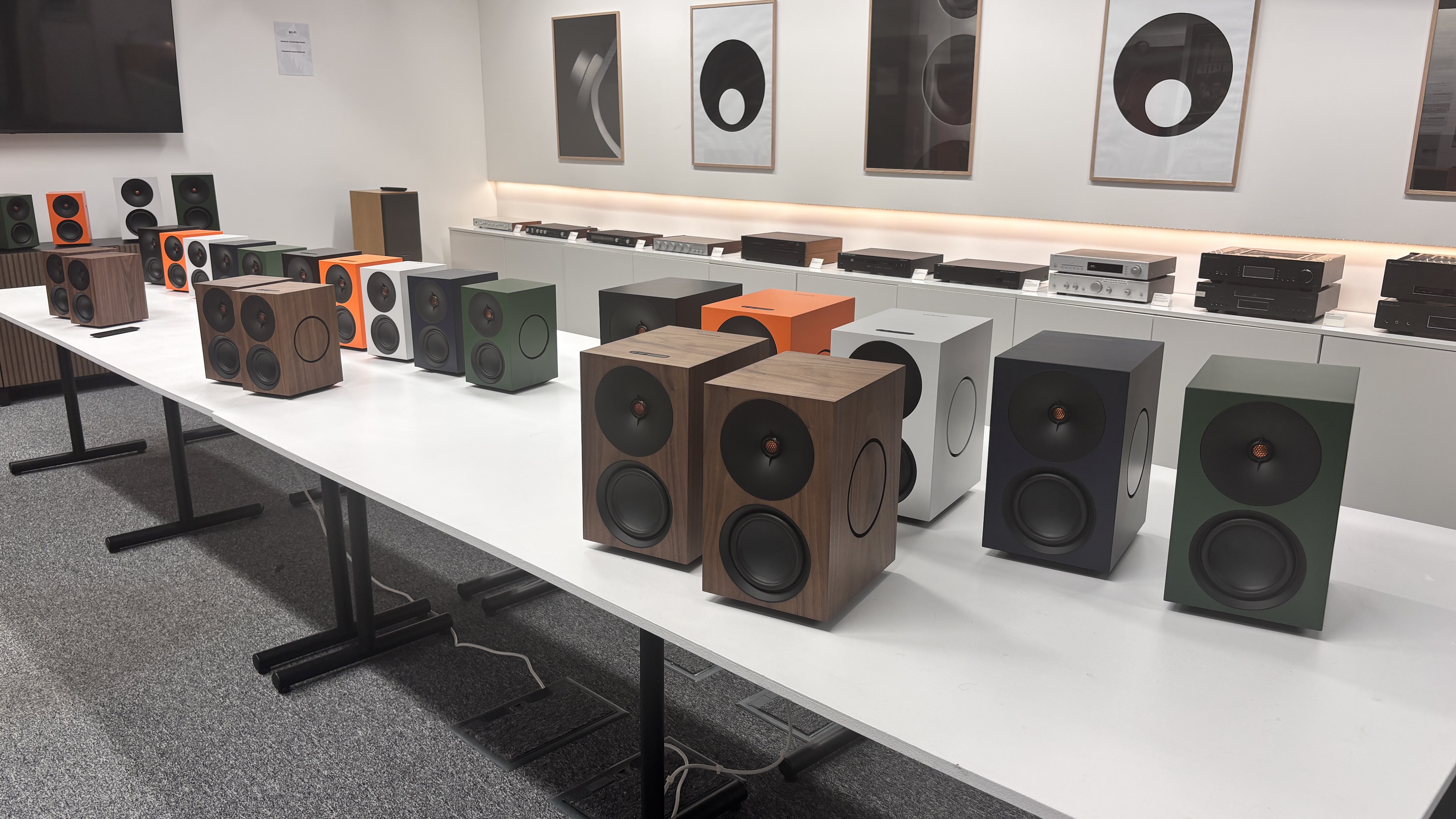
Marshall adds that the new active speakers are also a sign of a shift in thinking by Cambridge, which now views systems as the future of hi-fi.
“I think long-term, this is the future of hi-fi. Sure, sometimes it won’t be all built in, there will be add-speaker boxes. But I think even then, this is the long-term future of the industry. So it makes sense for us to lean into it. I don’t want to undermine the other products we make, but they’re for a different customer,” he says.
“There will be some customers with big passive systems that are interested [in the L/R series] because they want to simplify; but there are a lot of lifestyle buyers – people who don’t know what to get, but want to level up from basic stuff. They don’t want to worry about what cables to buy, what pre-amp to get. They want a system that’s just there for them. That’s what this is.”
He adds that, while separates will remain the best port of call for pure performance, there are advantages to systems at a technical level.
“You can get the absolute best from separates if you have a bigger box, with more muscle, etc., but you can get pretty close with this. You can optimise so many things that you simply can’t do in a passive system – protecting the drivers, making it so you can get close to their limit but retain their musicality, things like that. It’s quite powerful to have this closed system for the acoustics and amplifiers,” Marshall tells us.
Do you agree with Marshall’s thoughts on the future of hi-fi? Are you tempted by one of its new L/R Series of over KEF’s alternatives? Let us know in the comments section below, or get involved with the conversation on our forums. We’re eager to hear your thoughts.
MORE:
These are the best speakers we have tested
We rank the best hi-fi systems
Our picks of the best wireless speakers