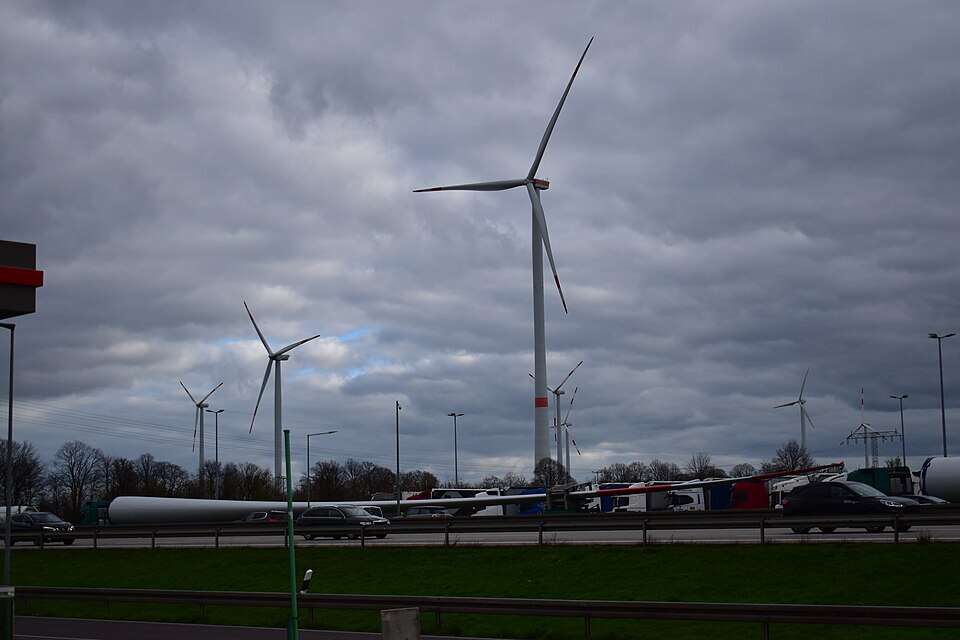
Wind turbines generate electricity without direct emissions, but their enormous blades create a difficult waste problem. According to a study published in Resources, Conservation and Recycling, b y 2050, the United States is expected to generate about 2.2 million tons of retired wind-turbine blade material, much of it made from tough fibreglass composites that are difficult and expensive to recycle. For now, some discarded blades are being cut into sections and buried in landfills, turning a symbol of renewable energy into an unexpected waste management challenge.
Get breaking news anytime, anywhere. Download the TOI app now!
Why wind-turbine blades are so difficult to recycle
According to the U.S Department of Energy , almost all contemporary blades are produced using fibre-reinforced composite materials where glass or carbon fibres are joined by means of a tough resin, resulting in a light but highly durable construction that is hard to decompose because its components are strongly united. Unlike metals, which can be melted down and reused, composite blades cannot simply be melted in a furnace to recover raw materials for a new blade. Composite blades can be mechanically recycled by grinding them down, but the resulting material is usually less valuable and is often used in other industries.
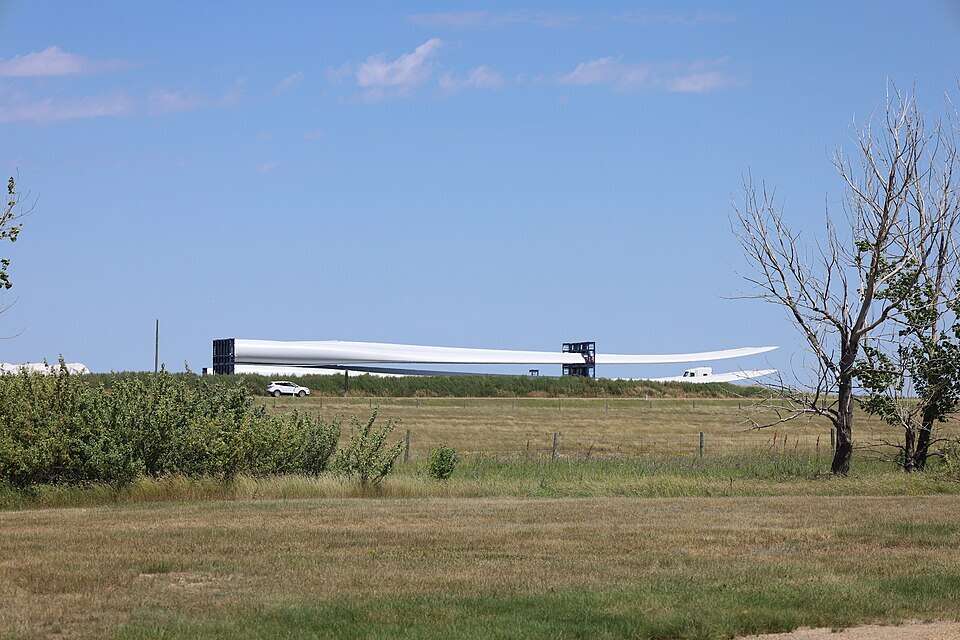
Research on Resources, Conservation and Recycling also estimates that cumulative US wind-turbine blade waste could reach approximately 2.2 million tons by 2050, assuming a typical 20-year turbine lifetime. The researchers found that although the total volume would represent a relatively small share of the country's overall landfill capacity, recycling technologies and policies would still need to improve if the industry is to move towards a circular system. Modern designs can stretch for tens of metres, making them difficult to transport and bury without cutting them into smaller pieces. In some cases, sections of old blades have been taken to landfills that are equipped to handle large composite waste.
As turbines age, the search for better blade disposal grows
South Dakota is facing a growing challenge as more wind turbines reach the end of their service lives. The precise number of blades sent to individual landfills can change over time, and not every retired blade ends up being buried. Some are stored, repurposed or processed through emerging recycling facilities.
The US Department of Energy notes that most composite turbine components have historically gone to landfill because recycling options were limited and often more expensive. That is beginning to change, with mechanical recycling, thermal processing and direct repurposing gaining ground. Retired blades can now be transformed into products such as pedestrian bridges, playgrounds, benches, bicycle shelters and noise barriers.
The race to give old blades a second life
The growing waste stream has prompted researchers and companies to search for ways to keep blades out of the ground. One approach is mechanical recycling. Blades can be cut and shredded into composite material that is then incorporated into products such as cement, concrete or asphalt. Another method uses heat to recover glass fibres from the composite structure, potentially allowing them to be used in new materials.
There is also a simpler solution: do not break the blades down at all. Their enormous strength makes them suitable for direct reuse in structures such as bridges, shelters and barriers. In this approach, a retired blade becomes a component in a new product rather than waste that must be separated into its original ingredients.
The industry is also trying to solve the problem at the design stage. Newer recyclable blades are being developed with materials that can be separated more easily at the end of their service life. Some designs replace traditional thermoset resins with thermoplastic materials that can potentially be processed and reused more efficiently. The scale of the challenge, however, is growing as early large wind farms reach the end of their operational lives. Turbines are typically designed to operate for roughly two to three decades, although individual components may be replaced earlier and projects can sometimes be extended through repowering. That means the United States is entering a period when increasing numbers of blades will need to be removed, transported and processed.