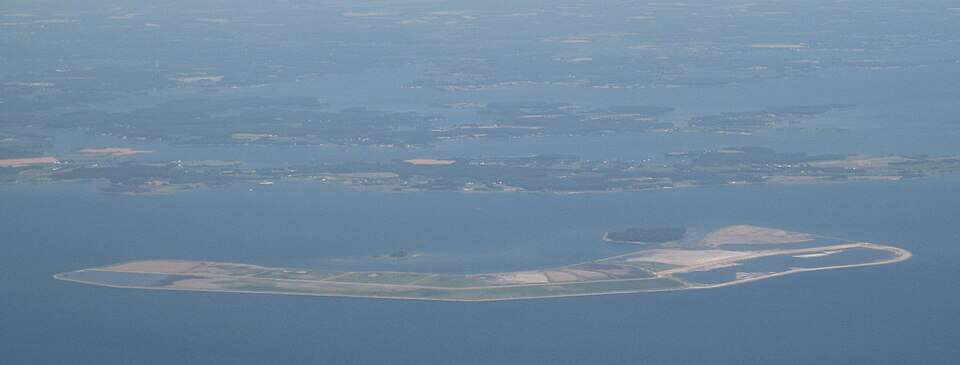
Well over a century ago, Poplar Island in Maryland’s Chesapeake Bay was home to houses, farms, a school and a post office. However, several decades of continued erosion resulted in the island’s gradual loss until it had shrunk to only four acres from its initial more than 1,100 acres during the early 1990s. Rather than watch the island disappear, engineers developed a plan to rebuild it with sediment dredged from Baltimore Harbour to keep the channel navigable.
Get breaking news anytime, anywhere. Download the TOI app now!
This plan has grown into one of the country’s major ecosystem restoration projects. The project not only restores and recreates wetland habitats but also helps solve the problem of what to do with millions of cubic yards of dredged material. According to the U.S. Army Corps of Engineers , the project has evolved into a global example of the beneficial use of dredged sediment.
An island began to disappear into the Chesapeake Bay
Poplar Island measured more than 1,100 acres of land in the middle of the nineteenth century and had approximately 100 inhabitants at the beginning of the twentieth century. Unfortunately, years of coastline erosion, rising water levels, and weather conditions continued to reduce the size of the island.
According to the U.S. Army Corps of Engineers, by 1994 only a few small remnants of the island remained, totaling four acres. Because of the island’s environmental value, federal and state agencies decided it should be saved rather than disappear beneath the Chesapeake Bay.
Harbor dredging becomes an environmental solution
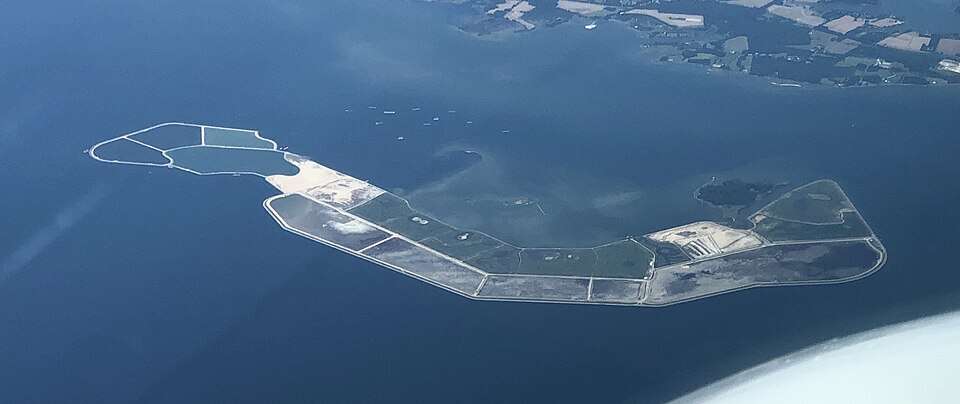
The restoration has produced visible results. Sediment naturally accumulates each year in the navigation channels leading to the Port of Baltimore. To keep the navigation channels open, the harbor must be dredged regularly. Instead of disposing of the dredged material elsewhere, officials decided to pump the clean sediment to Poplar Island to rebuild the island and create habitat.
The project started in the late 1990s with cooperation between the U.S. Army Corps of Engineers, the Maryland Department of Transportation and the Maryland Port Administration. According to the Corps, large containment dikes were first built around the remaining fragments of the island, and dredged material was then pumped inside. Over time, the sediment formed wetlands, uplands, ponds and open-water habitats.
Wildlife is now flourishing at the restored island
The changes made have been significant. The U.S. Army Corps of Engineers reports that the restored island provides habitat for wildlife, including birds such as ospreys, herons, egrets, terns and bald eagles. The habitat restoration effort also supports diamondback terrapins and several fish and shellfish species that depend on Chesapeake Bay wetlands.
Wildlife began returning soon after the first dredged material was placed. Fish have also been seen using the restored marshes. According to NOAA Fisheries , monitoring has shown that restored wetlands can serve as important nurseries for fish.
Success of Poplar Island influencing another restoration project
Poplar Island’s success has encouraged Maryland to pursue similar restoration work at other disappearing Chesapeake Bay islands. The U.S. Army Corps of Engineers has awarded a contract for the first phase of the project to restore James Island through the Mid-Chesapeake Bay Island Ecosystem Restoration Project.
Like Poplar Island, James Island will be restored with dredged sediment from the shipping lanes serving the Port of Baltimore. As reported by the Corps, the larger Mid-Bay project will restore 2,072 acres of land on James Island and an additional 72 acres on the neighbouring Barren Island.
The construction phase of the project will prepare James Island to receive dredged material starting in 2030. As restoration continues at James Island, Poplar Island remains a model for turning an environmental challenge into a success.