Imagine going to the grave with a gold mask and three swords, only for every generation after you to hand the credit to the man beside you.
This is precisely what happened to a woman whose remains were discovered in the 1950s in Mycenae, the legendary Greek citadel of King Agamemnon. She died about 3,500 years ago, before the Trojan War ever took place, and for decades the simple assumption was that she was someone's wife. The mask of gold? His. The swords? Also his.
New science completely changed that story. The results of their DNA tests came as a surprise. The man and woman buried together were not husband and wife. They were brother and sister. According to research published in the Journal of Archaeological Science, the two skeletons had mitochondrial DNA that matched, suggesting a sibling relationship, meaning she was in that royal tomb because of her own bloodline, not her marriage.
She was not a wife. She was nobility.
We can finally see her face
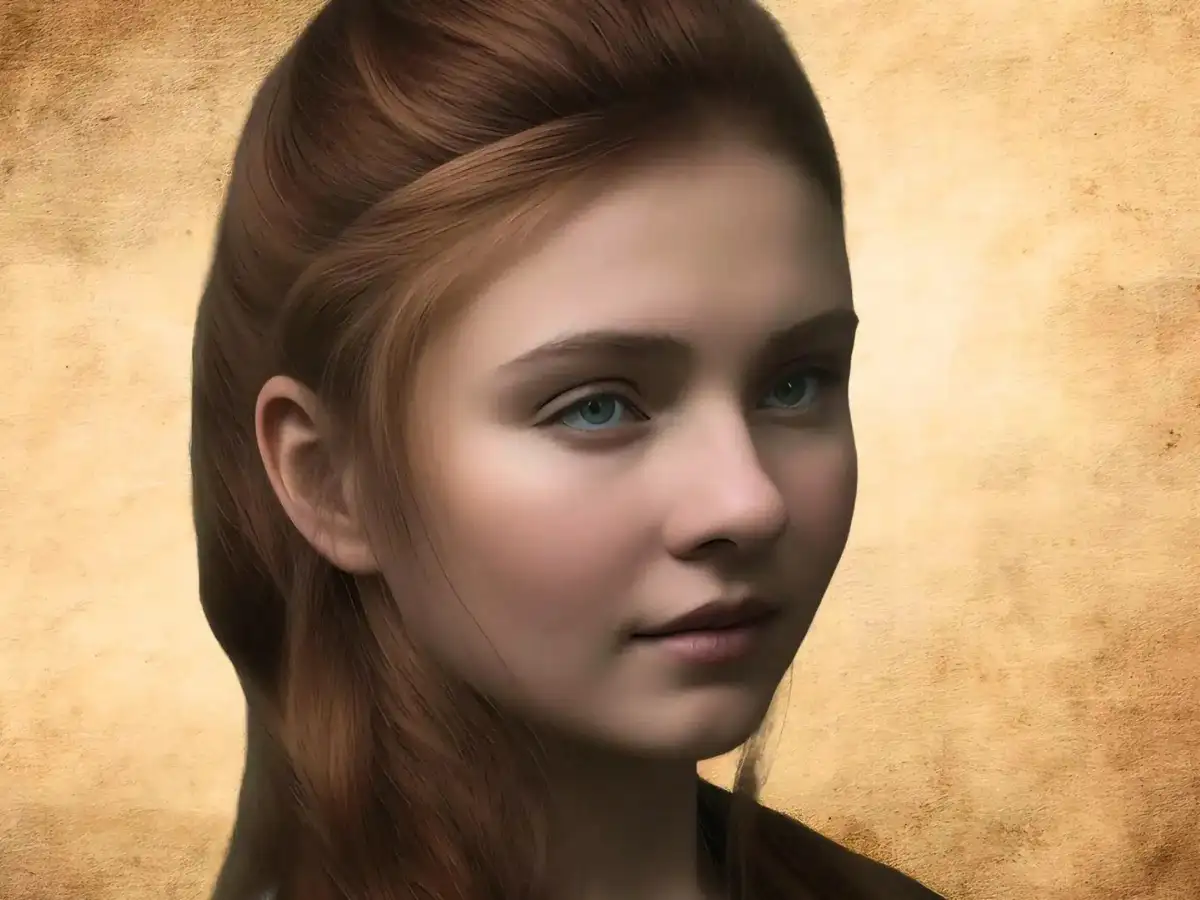
A clay mold of the woman’s skull, made in the 1980s by researchers at the University of Manchester, has been used to create a digital facial reconstruction commissioned by historian and University of Exeter lecturer Dr Emily Hauser. That mold was then used by digital artist Juanjo Ortega G. to reconstruct her face with modern DNA data and forensic analysis.
The result is beautiful. The woman, in her early to mid-thirties, looks back at you with an expression that is almost too present. Hauser called it "unexpectedly modern" and said, "We're looking at the face of a woman from a world tied to figures like Helen of Troy and Clytemnestra.” She said: “For the first time, we can truly look the past in the eye.”
Here is where it gets a little more interesting. Those three swords in that grave? Researchers believe they were hers.
The DNA testing of bones from Grave Circle B at Mycenae raises serious questions about the role of high-status women in Bronze Age society, questions that archaeology has been slow to ask. Hauser's research adds one more layer: new data shows warrior kits, weapons, armor, the whole setup, turn up next to women more often than next to men in some burial sites in Late Bronze Age tombs. That's no small footnote. That's a pattern that turns the way historians have pictured ancient Greek women upside down.
Her bones tell a story, too
Then there was the evidence of her skeleton, beyond the DNA and the swords. Her spine and hands showed arthritis consistent with decades of hard labor, probably in the textile industry. The famous example is Helen weaving in Homer’s Iliad. Here, that image becomes something real and aching, written into the joints of an actual woman who lived and worked and wore her body out doing it.
This is what happens when you stop treating ancient women as footnotes. You find someone with a face, a bloodline, a job, maybe a sword collection.
Why this is important now
For anyone raised on myths or the movie Troy, or even just the vague notion that ancient Greece was a man's world, this is a real gut check. Burial by burial, the assumption that women in antiquity were passive, peripheral, or defined by the men next to them is being broken down.
Hauser makes precisely that argument in his new book, Mythica: A New History of Homer’s World, Through the Women Written Out of It. Its strongest exhibit is the anonymous woman of Mycenae: a royal, possibly warrior woman whose identity has been erased for 70 years by assumption, and is only now being restored.
She was there the whole time. We just weren't looking properly.