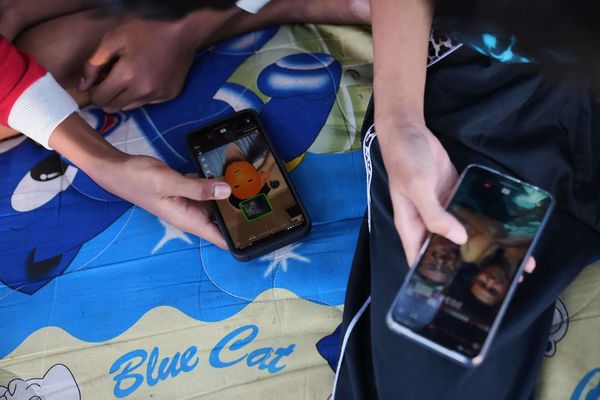
When a powerful earthquake struck Myanmar in March 2025, Wai, a 29-year-old mother of two, could no longer support her family through her tailoring work just as food and water prices rose.
Wai accessed 360,000 MMK – around £100 – to spend according to her family’s needs from the humanitarian and girls’ rights organisation Plan International. She used it to buy rice, cooking oil and household items, and begin rebuilding the tailoring work she had relied on before the disaster.
“When I received it, tears came to my eyes,” she said. “It was the first time since the devastation that I had felt a sense of security again.”
What mattered was not only the money itself, but the ability to decide what her family needed most.
That is why the current debate about aid cannot be reduced to politics, institutional reform or abstract arguments about efficiency. A family forced from home by conflict, disaster or hunger does not experience an aid budget as a line in a spreadsheet. They experience it as food, shelter, medicine, a bus fare to safety, or the ability to keep a child in school.
As development leaders gather at the Global Partnerships Conference in London, Westminster is consumed by questions over the government’s political direction. But whoever leads the government, one key test for any “reset” of development policy should be the same: will it enable aid to reach more people in crisis, faster and more effectively?The conference comes as official development assistance in 2025 fell by 23 per cent in real terms - the largest annual fall on record - while around 239 million people are expected to need humanitarian assistance in 2026.
A major new study commissioned by our CALP Network, a community of more than 100 organisations involved in delivering cash aid, finds that between $1.1bn and $3.3bn in aid could be used more effectively each year by changing how assistance is delivered - enough to reach up to 60 million more people in crisis.
One of the clearest findings of the study – which analysed $11.4bn of humanitarian spending – is that cash assistance can allow significantly more funding to reach people directly than aid delivered as goods such as food or supplies. In the programmes analysed, up to 38 per cent more funding reached people in need when assistance was provided as flexible cash support rather than food aid.
Cash is not always the right answer. Humanitarian response must be shaped by context: whether markets are functioning, whether people can safely access goods, and whether specialist items or services are needed. Value for money must never mean simply choosing the cheapest option.
But where cash is appropriate, it gives people something too many aid systems still deny them: choice. A parent knows whether their family most urgently needs food, rent, transport, medicine or school materials - and should have the right to decide.
Evidence shows that local organisations are highly efficient at delivering cash assistance. In cash initiatives led by local groups studied by CALP, 84 per cent of the money went directly to those who needed it. But according to a separate report published last week by ODI Global, local and national actors still receive only a small fraction of international humanitarian funding: just under 10 per cent in 2024 – far below the humanitarian sector’s 2016 commitment to direct 25 per cent of funding to local and national organisations.
“Modern partnerships” cannot just be a conference slogan. If the UK wants new partnerships to sit at the heart of its development agenda, shifting resources, risk-sharing and decision-making closer to the people and organisations rooted in crisis-affected communities must be part of the conversation.
As these debates continue, one thing must be clear: better delivery is not a substitute for adequate funding. The humanitarian system needs more resources, not fewer. But while needs rise and budgets fall, there is also a moral imperative to make every available pound go further - by backing approaches that help more support reach people directly, including cash assistance delivered locally and at scale.
The UK has been an important supporter of cash assistance and this week has an opportunity to help set the direction again. But leadership will not be judged by speeches, communiqués or conference panels. It will be judged by whether more families can survive, recover and rebuild when disaster strikes.
Cate Turton is director of the CALP Network and Dr Unni Krishnan is the CALP board co-chair and global humanitarian director at Plan International
This article has been produced as part of The Independent’s Rethinking Global Aid project
Politics latest: Burnham is Labour’s best chance to win next election, say members
Ebola outbreak a ‘wake-up call’ to the danger of US and UK aid cuts
80 charity leaders call on UK to show more ambition over international aid
UK launches $300m fund to accelerate renewable power projects in India
World ‘sleepwalking into food crisis’, Cooper warns amid Iran disruption
80 charity leaders call on UK to show more ambition over international aid