For many households, replacing a gas or oil boiler has been a long-running source of deliberation. Heat pumps make environmental and economic sense in principle, but the upfront cost can be a real barrier. The Boiler Upgrade Scheme exists to help, and from 21 July, it will be the most generous it has ever been for a significant group of homeowners.
Here's everything you need to know about how the scheme works, who qualifies, how to apply, and whether it's worth your time.
What is the Boiler Upgrade Scheme?
The Boiler Upgrade Scheme (BUS) is a government grant programme administered by Ofgem on behalf of the Department for Energy Security and Net Zero. It launched in May 2022 as part of the UK's broader strategy to reduce carbon emissions from domestic heating, and has been extended to run at least until 2030 as part of the Warm Homes Plan.
The scheme supports the replacement of fossil fuel heating systems with low-carbon alternatives, primarily heat pumps. The grant is applied directly to your installer's invoice, so you simply pay less up front.
It's also worth knowing the scheme is open to all homeowners in England and Wales, regardless of income. What matters is your property and your existing heating system.
Is the £7,500 grant still available?
Yes, and it has been announced that the scheme is becoming more generous for a significant group of households.
The standard grant of £7,500 remains in place for air source heat pumps (specifically air-to-water systems, which heat water and connect to radiators or underfloor heating) and ground source heat pumps. Here's the full current grant table:
- Air-to-water (air source) heat pumps: £7,500
- Ground source heat pumps: £7,500
- Air-to-air heat pumps: £2,500 (residential properties only)
- Biomass boilers: £5,000 (rural, off-gas-grid properties only)
Zero VAT currently applies to all qualifying installations alongside the grant.
A significant update for oil and LPG households
From 21 July 2026, households currently heating with oil or LPG can claim £9,000 towards the cost of installing an air-to-water or ground source heat pump. This is the highest level of support the Boiler Upgrade Scheme has ever offered, and it applies specifically to off-gas-grid homes replacing oil or LPG systems. Gas-heated homes continue to qualify for the standard £7,500.
The uplift runs until 31 March 2027, making this financial year a strong window for oil and LPG households to act. Vouchers already in progress before 21 July remain at £7,500. Only fresh applications made on or after that date qualify for the higher rate.
The scheme runs on a fixed annual budget, and if applications exceed that budget Ofgem will stop issuing vouchers. So if you're on oil or LPG, it's worth acting fast to make sure you don't miss out.
Who is eligible for the Boiler Upgrade Scheme?
The core eligibility requirements are:
- Your property is in England or Wales (Scotland has separate schemes through Home Energy Scotland; Northern Ireland residents should check nidirect.gov.uk for current options, as the Boiler Replacement Scheme has now closed)
- You own the property, as a homeowner or landlord (social housing is excluded)
- Your current heating system is either fossil fuel-based, such as gas, oil, LPG or coal, or an electric heating system, such as storage heaters, panel radiators or an electric boiler
- Your property doesn't already have a heat pump installed
- Installation is carried out by an MCS-certified installer
- Your property isn't a new-build (some self-build homes may qualify under specific criteria)
Landlords can apply on the same terms as owner-occupiers, regardless of tenancy type or their tenant's income.
The EPC requirement: What changed in April 2026
A significant update came into force on 28 April 2026: the requirement for a valid Energy Performance Certificate (EPC) was removed from the scheme.
Previously, an EPC was mandatory and could block applications where it listed outstanding recommendations for loft or cavity wall insulation. Where an EPC did exist with those recommendations on it, homeowners had to either carry out the insulation work first or get evidence from their installer that those measures were unsuitable for their property. The April 2026 rule change removed that requirement entirely.
Where a valid EPC does exist, installers will still use it as supporting evidence. Where one is absent or out of date, the installer can use alternative documentation – typically a recent utility bill and photographs of the existing heating system – to confirm eligibility. This has made the scheme more accessible for older and rural properties that have historically had limited EPC coverage.
A note on insulation
Insulation remains central to your heat pump's performance. Air-to-water heat pumps work by delivering steady, lower-temperature heat over longer periods, which means they're most efficient in homes that retain warmth well. If your property has significant heat loss through walls, roof or floors, addressing insulation alongside installation will deliver better efficiency and lower running costs over time. A good MCS-certified installer will assess this as part of the initial survey.
How can I apply for the Boiler Upgrade Scheme?
One of the easier aspects of the scheme is that you don't deal with Ofgem directly at all. Your MCS-certified installer manages the whole process on your behalf. In practice, it works like this:
- Find an MCS-certified installer. The MCS website lists accredited companies by location.
- The installer assesses your property, confirms your existing heating system and checks eligibility.
- You receive a quote with the grant already deducted from the total.
- If you agree to proceed, the installer submits a voucher application to Ofgem.
- Once installation is complete, the installer claims the grant and your final invoice reflects the reduced amount.
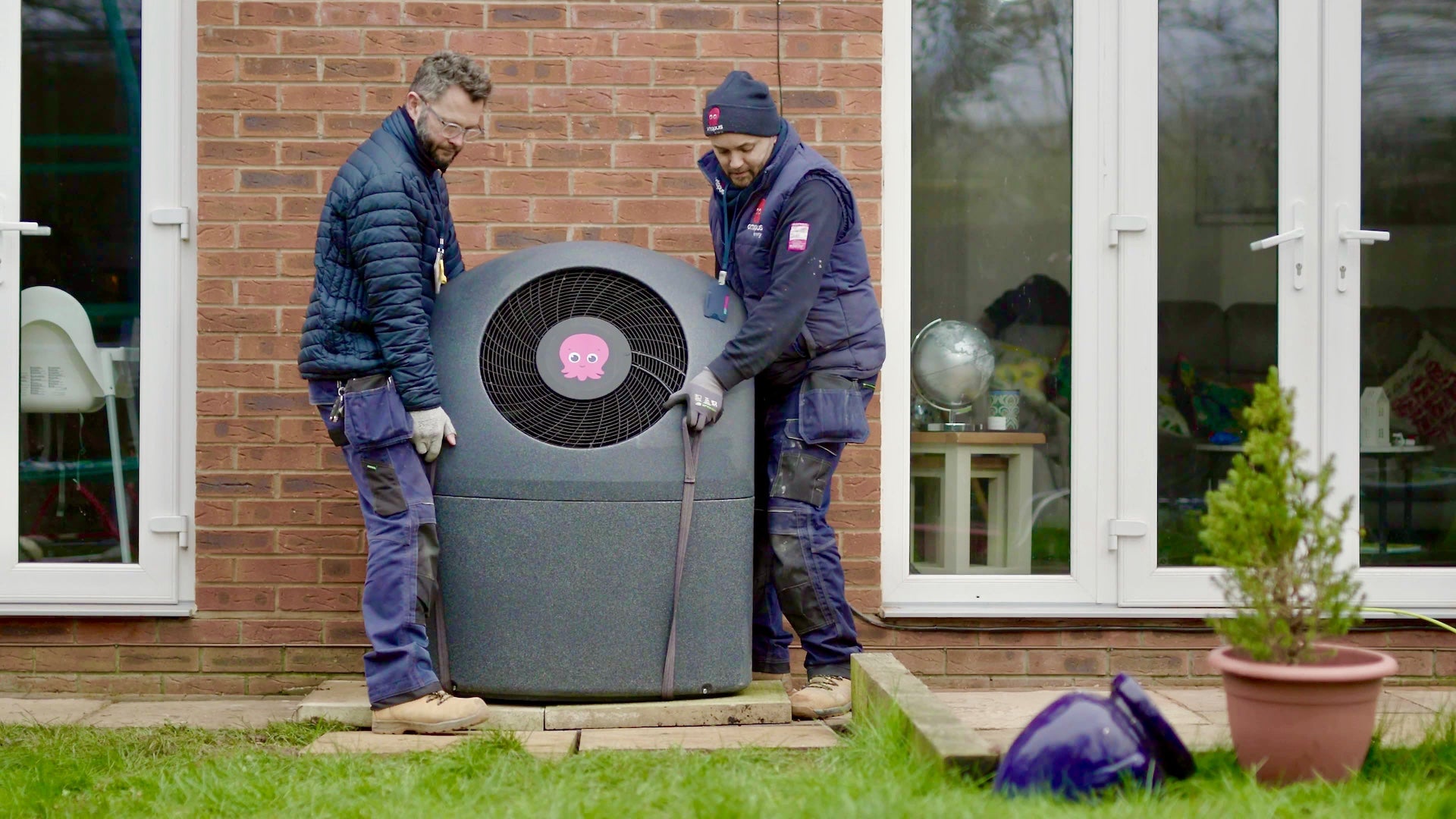
For most homeowners, the process is largely hands-off. Octopus Energy offers heat pump installation services and works with MCS-certified installers, which can help streamline things from initial assessment through to a working system.
Be wary of unsolicited contact from companies promising free or heavily discounted heat pumps. Legitimate BUS installers offer free grant application handling and always carry out a proper property assessment before any commitment is made.
Is the Boiler Upgrade Scheme actually worth applying for?
For many households, yes. The answer depends on your starting point.
The financial case
After the £7,500 grant and zero VAT, a typical air source heat pump installation for a three or four-bedroom home can cost between £2,000 and £6,500, depending on the system specified. For context, a premium gas boiler replacement runs to £3,000 to £5,000. The cost gap between the two options has closed significantly.
For oil and LPG households who can apply for the £9,000 uplift from 21 July and act before March 2027, the financial case is set to be stronger than it has ever been. Oil and LPG prices are volatile and carry no energy price cap protection. Combined with meaningful running cost savings, particularly if you switch to a time-of-use electricity tariff, the payback period stacks up well against staying on fossil fuel heating.
When the scheme makes most sense
The strongest case for applying comes when:
- Your boiler is approaching the end of its life and replacement is on the horizon anyway
- Your home is reasonably well insulated, or you're prepared to address insulation alongside installation
- You heat with oil or LPG and can act before March 2027
- You're willing to adopt smart controls or a suitable electricity tariff to get the most from the system
When to think carefully
If your current boiler was recently installed and is running efficiently, the urgency is lower. A heat pump in a poorly insulated home will also underperform its potential until the fabric of the building is addressed, which may make a phased approach more financially sensible.
The longer view
Heat pumps last 15 to 20 years or more with proper maintenance, and electricity is widely expected to become more cost-competitive relative to gas over that period as the UK grid decarbonises. The Boiler Upgrade Scheme reduces the upfront cost that has historically put many households off making the switch. For households where the timing is right, particularly those on oil or LPG who can act before March 2027, the financial case has never been stronger.