The body of British-Nepali mountaineer Nirmal Purja has been recovered from Pakistan's Broad Peak, where he was killed in an avalanche that claimed the lives of all 10 climbers in his expedition team.
The Alpine Club of Pakistan said that rescuers found Purja at an altitude of about 5,700m and that his remains were being brought down by a ground rescue team. His body was among four recovered on Sunday, taking the total to seven.
Purja, 43, a celebrated mountaineer, was confirmed dead by his company and the Nepali government after the avalanche that swept away his 10-person expedition team on Thursday morning.
Elite Exped said in a statement on social media on Saturday: “Today it is with profound sadness and immense heartbreak that we confirm that Nirmal 'Nimsdai' Purja tragically lost his life following the avalanche on Broad Peak.”
“We have also received confirmation that other members of the expedition sadly did not survive.”
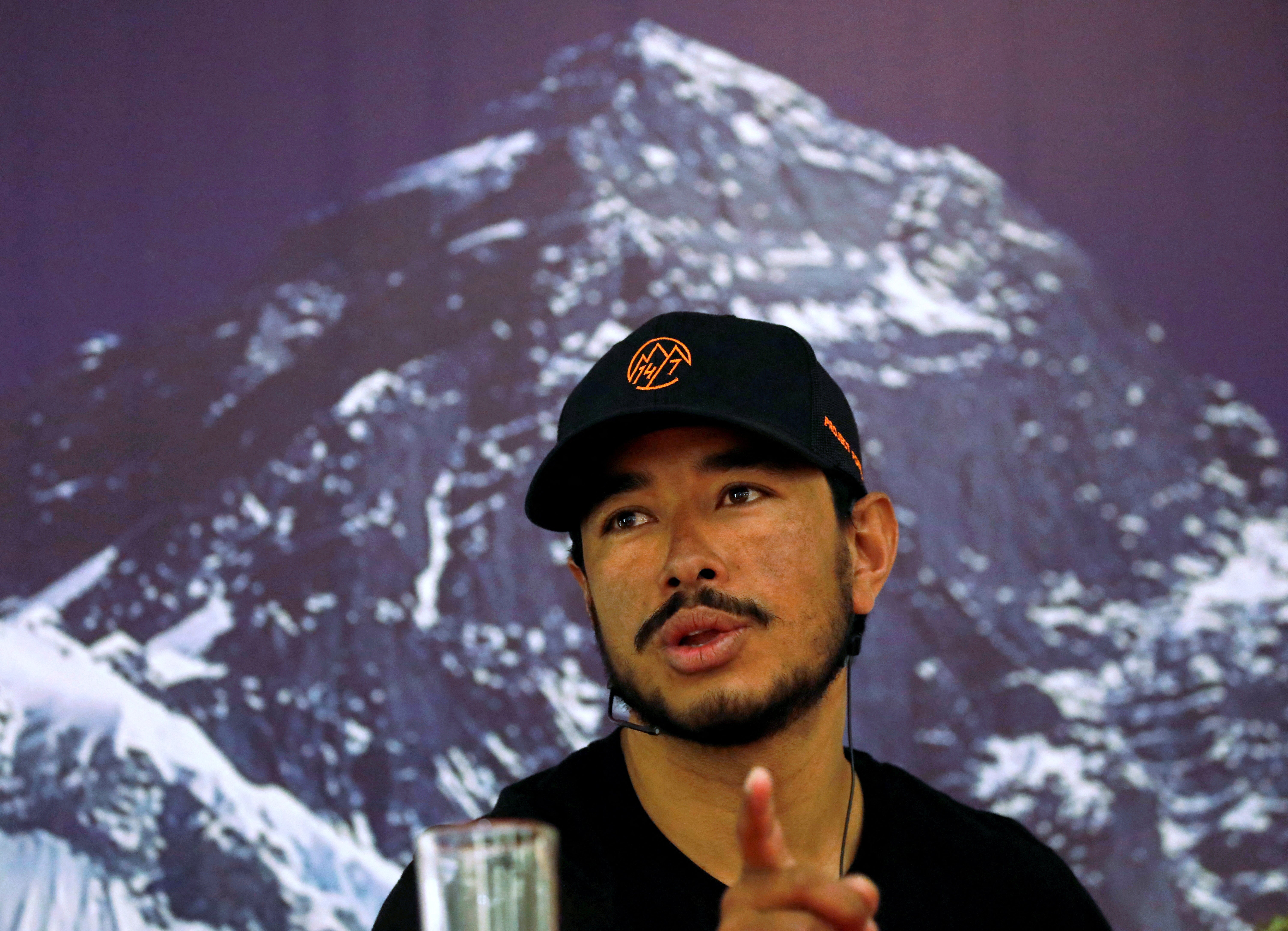
The Alpine Club of Pakistan said in an update on Sunday afternoon that four more bodies had been recovered, and identified them as Purja, Chinese climber Wang Zhong, and Nepalese climbers Nima Sherpa and Kili Pemba Sherpa. They were in the process of being transported down to Camp 1, it said.
It said rescuers have also confirmed the “presence of one additional body at a significantly higher elevation”.
“Due to the extremely hazardous terrain and prevailing conditions, it is unlikely that a recovery attempt will be made at this stage,” it said.
Nepal prime minister Balendra Shah said the tragic loss of six Nepalese and four foreign climbers, including team members from the US, Oman, China and Pakistan, “has shocked us”.
"Only [the] physical journey of the climbers has stopped. But the history of their courage, dedication and contributions will always remain alive and inspiring," Mr Shah said.
The three climbers who were earlier recovered were US climber Sarah Mallory Geis, Nadhira Ahmed Abdullah Al Harthy from Oman, and Nepalese citizen Pur Bahadur Gurung.
American climber Geis was among the first victims of the avalanche identified on Friday, as drone footage showed signs of several more bodies in the search area that ground teams had been unable to reach due to bad weather.
On Sunday, Mingma David Sherpa, a Nepali mountaineer and expedition leader who is part of a ground recovery team, said they plan to move the bodies to Camp I and transfer them to another camp. If conditions remain favourable, rescuers will then attempt to airlift the bodies by helicopter from the Japanese Camp, he said.
Sherpa said the operation's primary objective is to recover the climbers with dignity and return them to their families.
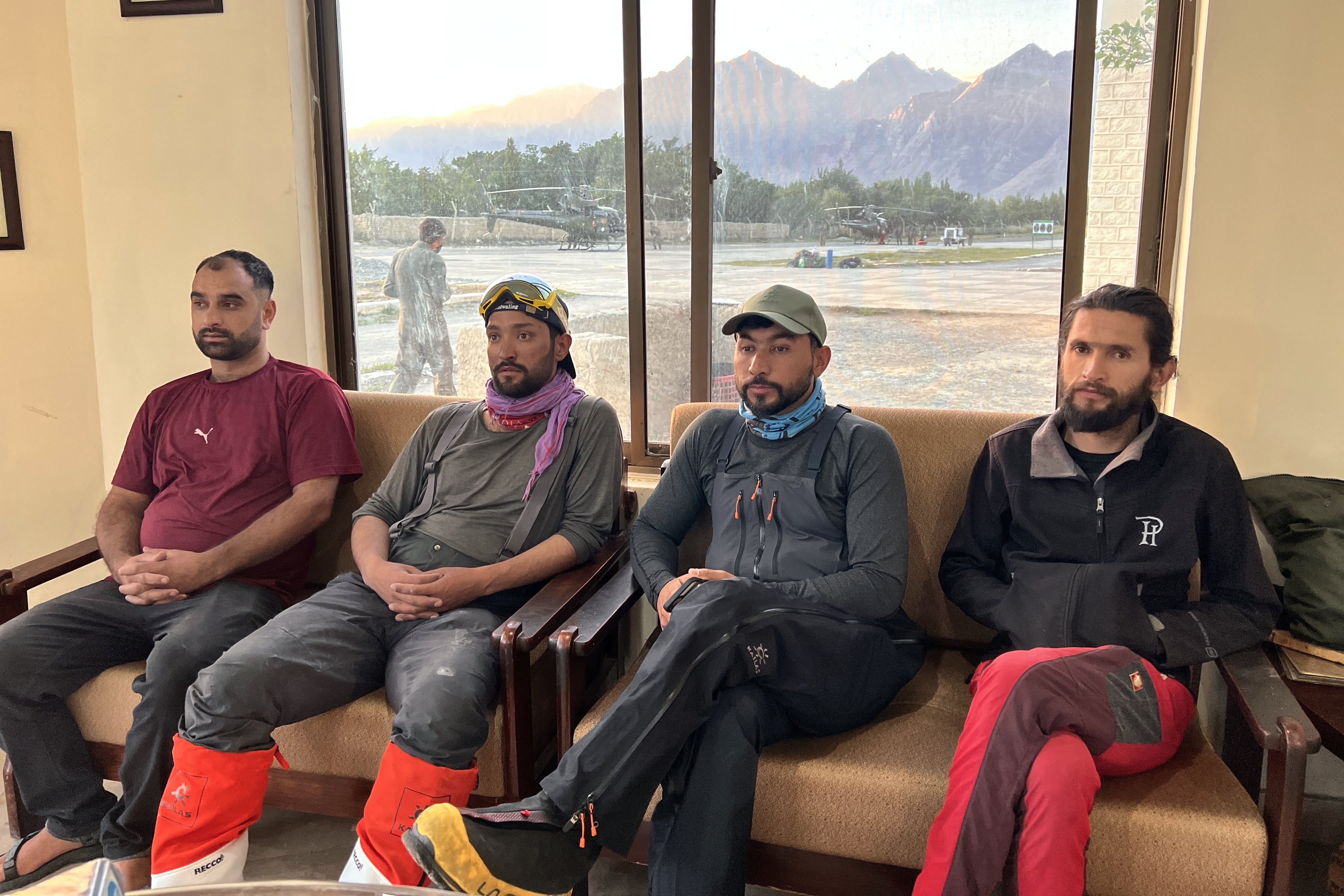
Sajid Hussain, deputy director of the tourism department of Gilgit-Baltistan region of Pakistan, said the rescue operation was ongoing.
"Rescue teams have successfully identified the location of the victims; however, they have not yet been able to recover and bring them down safely," he told Reuters.
While drone surveillance and aerial reconnaissance had helped identify the exact location, reaching the dead and safely recovering them remains a difficult task, he said.
The area in which the operation is taking place is “remote and difficult”, said Sajid Hussain, deputy director of the tourism department in Gilgit-Baltistan.
Geis, 39, a resident of San Antonio, was an avid traveller who loved being outdoors, according to her Instagram page.
She announced on social media earlier this year that she was closing her pilates studio to take “a giant leap of faith into the unknown to see where life goes. I have a sneaking suspicion there will be lots of helmets, harnesses, and crampons involved”.
Tributes have poured in for all the climbers, with those who knew them expressing shock and sadness over the deaths.
The Prince of Wales expressed his profound sorrow, describing British citizen Purja as "one of the world’s greatest mountaineers" and "truly unique".
In a social media post on Saturday evening, Prince William shared his condolences. "I was truly saddened to hear of the tragic death of Nirmal Purja and those who lost their lives in the avalanche on Broad Peak," he wrote.
UK defence secretary Wes Streeting said in a post on X: "Incredibly sad to learn of the passing of Nirmal (Nims) Purja and those he was climbing with.
"He was an inspirational man who served in our Armed Forces for many years – and whose incredible mountaineering adventures are known the world over."
With an altitude of 8,051 metres (26,414 feet), Broad Peak is considered one of the most challenging mountains to climb in Pakistan. It saw its first successful ascent in 1957 when an Austrian expedition reached the summit.
The team of 10 was last in contact with their tour operator at 9am local time on Thursday. An avalanche struck the team when they were ascending from Camp II to Camp III at an approximate altitude of 6,600 metres, the commissioner of Gilgit-Baltistan announced late that night.
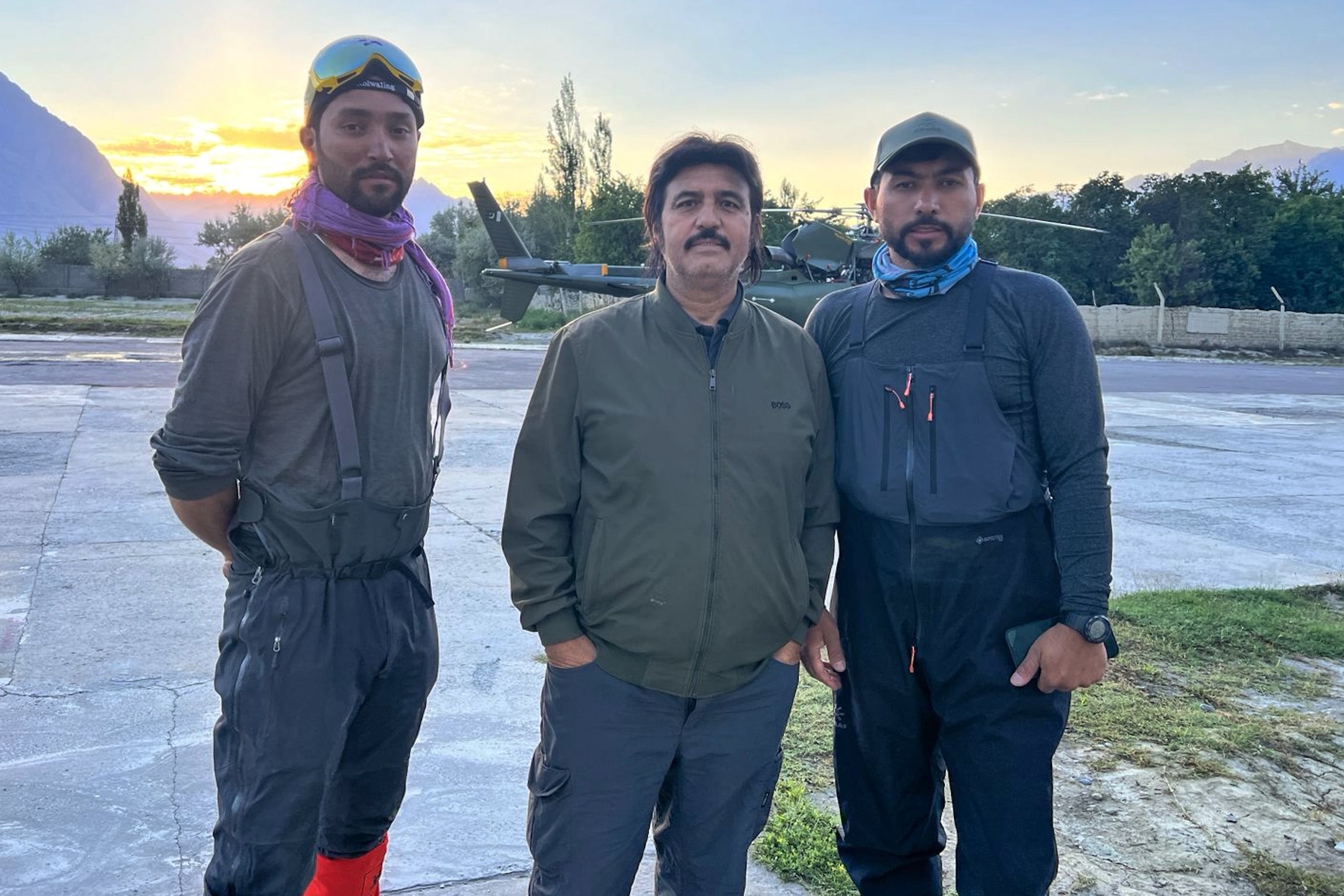
The rescue mission began at 8.30am on Friday after the tour agency made a formal request to the Pakistan army, which then deployed three helicopters to join the effort.
But later on Friday it was announced that rescue teams were stuck at base camp because of challenging weather conditions.
Purja was a British citizen who was awarded an MBE by the late Queen in 2018 for his achievements in extreme high-altitude mountaineering.
In 2019 he smashed the speed record for scaling the world’s 14 highest peaks, summiting them in just over six months compared to the prior record of around eight years.
Though his time was eclipsed four years later by Norwegian climber Kristin Harila, Purja’s efforts were immortalised in the popular Netflix documentary, 14 Peaks: Nothing Is Impossible. It charted Purja's ambitious “Project Possible”, documenting his journey starting with Nepal’s Annapurna on 23 April 2019, through Everest in May and finishing after 189 days with K2 in July.