The article below is an excerpt from Steve Fowler’s DriveSmart newsletter. To get the email delivered straight to your inbox every Monday, simply enter your email address in the box above.
For car companies, the lure of having a premium brand in the line-up brings not only a huge amount of kudos, but also the prospect of bigger margins – these are cars aimed at well-heeled customers willing to pay more for a posh badge.
So it’s no surprise that many of the world’s biggest car makers have tried – and often failed – to take a slice of this lucrative premium pie.
The world’s largest car company, Toyota, has had its Lexus brand for 36 years, yet it still isn’t quite regarded in the same way as BMW, Mercedes-Benz and Audi. Nissan’s Infiniti continues in some markets, but it withdrew from the UK and Europe at the end of the last decade. Jaguar, meanwhile, has stopped trying to rival the German heavyweights altogether, and is now hell-bent on reinventing itself as a luxury rather than premium brand.
Volvo has done a better job than most and is now firmly considered a premium marque, while Hyundai’s Genesis remains – like Lexus – very much a work in progress.
Last week in Paris, amid plenty of expensive fanfare and a marketing campaign fronted by Daniel Craig (proof that some people will do anything if the cheque is large enough), Chinese giant BYD launched its Denza brand. Its USP is the fastest-charging electric cars in the world, but – as Stellantis’ struggles with DS show – it will be a long road to challenge the established German players.
BYD has shown in short order that it can compete with mainstream car makers in the UK, but Denza will be an altogether tougher proposition. Its first car, the Denza Z9 GT, certainly looks the part, but brand building, premium positioning and upmarket retail networks will all be crucial.
Other Chinese car giants – including Chery, SAIC and Nio – will be watching closely, each with premium ambitions of their own. But rather than looking east for the next big premium brand, perhaps we should be looking west.
Just over a week ago, I was at the New York Auto Show handing out World Car of the Year awards to a fortunate few manufacturers, with BMW taking the overall 2026 title for the iX3.
There was, however, a surprise in the World Luxury Car category. Volvo’s excellent ES90 was up against a resurgent Cadillac, which is preparing another push into the UK and Europe.
But it wasn’t Cadillac that took the trophy – it was Lucid, the high-tech start-up headquartered in Silicon Valley (within sight of Tesla’s Fremont factory), with production based in Casa Grande, Arizona.
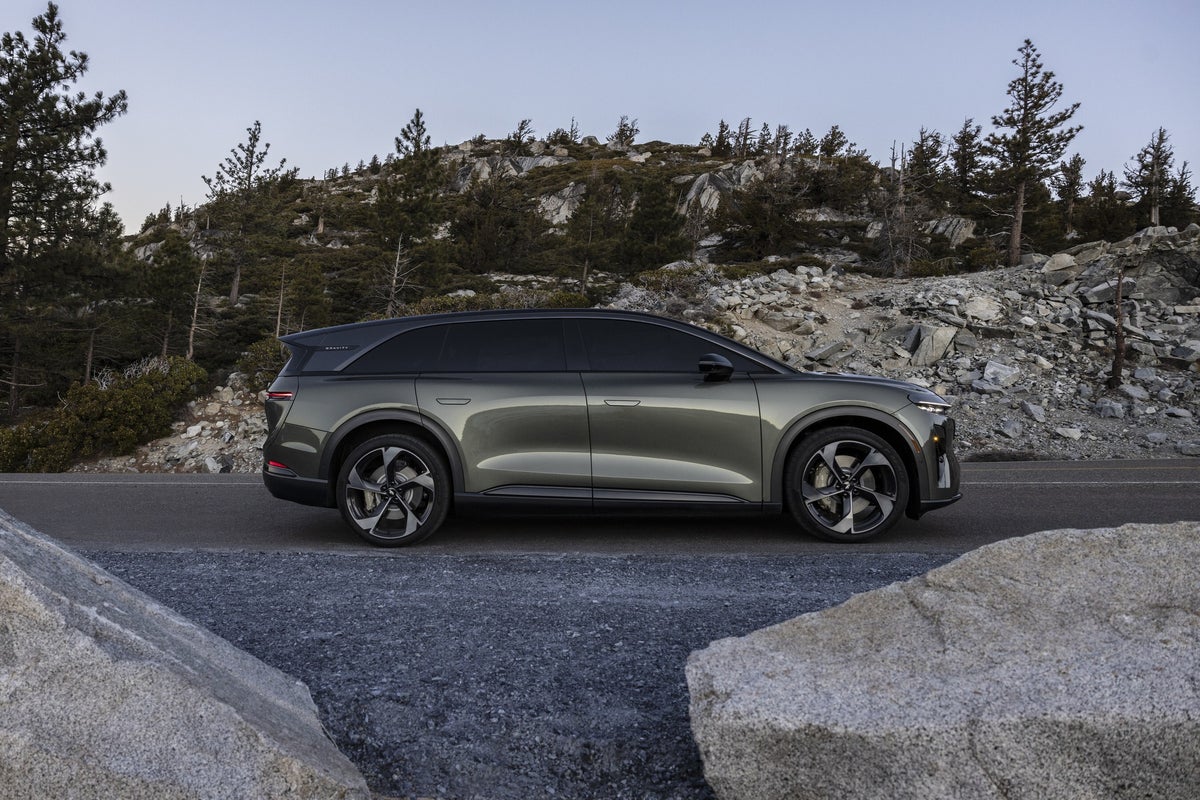
Lucid’s first car, the all-electric Air, won the same award in 2023. This year, it was the turn of the seven-seat Gravity.
I drove a Lucid Air around London a few years ago and came away hugely impressed, but the Gravity takes things up a notch in terms of style, quality, technology and comfort – a tremendous achievement.
A key part of Lucid’s success is its relentless focus on efficiency, particularly in its electric motors. Its technology is likely to appear in future electric Aston Martins – and probably elsewhere. But the cars the company is building under its own name are already something special.
The Gravity is just going on sale across Europe, but not yet in the UK. It’s a big car – at over five metres in length – but Lucid has confirmed it will arrive here, most likely alongside its next, smaller model, the Lucid Cosmos. This will be the first of a range of mid-sized EVs and is set to rival the BMW iX3.
Leading Lucid in Europe is Brit Lawrence Hamilton, who brings plenty of industry experience, including a stint heading up Genesis. The company is backed by Saudi Arabia’s Public Investment Fund, so it’s no surprise that the Cosmos could be built in the Kingdom at Lucid’s plant there.
I had a brief drive in the Gravity in the US last year and came away hugely impressed by the quality, comfort, technology and, yes, the efficiency. Of all the potential newcomers targeting the premium car market, this is the one I find most interesting – and the one I suspect has the establishment sitting up and taking notice.
It won’t be easy, but whether it’s Lucid, Denza or another new brand, the market feels ripe for a genuine challenger to the established premium players. It should be fascinating to watch – and, as ever, let me know what you think.
Sign up for the DriveSmart newsletter
To get the latest motoring insights from EV editor Steve Fowler delivered straight to your inbox, simply enter your email address in the box at the top of this page.
Each edition of DriveSmart offers clear, expert guidance on the fast-moving world of electric vehicles and modern motoring, from trusted reviews and practical tips to the biggest industry news of the week.
You can also head to our newsletter preference centre to sign up for the email.